Gemstone Inclusions Bibliography

Gemstone Inclusions Bibliography

Explore books, articles and historical sources on inclusions in gemstones in Four Treasures, the Lotus Gemology reference database. This bibliography brings together matching records from the collection, with publication details, abstracts and cover images where available.

Gemstone Inclusion References

The list below matches the terms inclusion or inclusions in the database's searchable fields. Some references discuss inclusions as part of a broader subject.
921–940 of 1,354 matching references

Sunstone labradorite from the Ponderosa Mine, Oregon
Journal Article
Johnston, C.L., Gunter, M.E. and Knowles, C.R. (1991) Sunstone labradorite from the Ponderosa Mine, Oregon. Gems & Gemology, Vol. 27, No. 4, Winter, pp. 220–233.
Record No. 5323  |  ISBN/ISSN: 0016626X  |  Sinkankas/Born No.: NIS/NIB  |  RWHL
The Ponderosa mine is now producing commercial quantities of the gem-quality labradorite feldspar known as sunstone. This gem material exhibits unique optical and physical properties that include a wide range of saturated body colors, aventurescence, and strong pleochroism. The feldspar is An₇₀ labradorite, a high-calcic plagioclase; the aventurescence-causing inclusions have been identified as pure native copper. Microprobe analyses conducted on colorless, red, and green samples did not reveal any obvious causative mechanism for the exhibited colors, although ongoing research is investigating intervalence charge transfer, possibly involving colloidal copper. Gemological identification involves the use of R.I., S.G., and microscopy. Locality determination (Oregon) is based on the copper inclusions and a distinct pleochroism.

A study of natural and synthetic rubies by PIXE
Journal Article
Tang, S.M., Tang, S.H., Mok, K.F., Retty, A.T. and Tay, T.S. (1991) A study of natural and synthetic rubies by PIXE. Gemological Digest, Vol. 3, No. 2, pp. 63–67.
Record No. 5037  |  Sinkankas/Born No.: NIS/NIB  |  RWHL
Investigates the use of proton-induced X-ray emission (PIXE) to distinguish natural from synthetic ruby and assess relationships between trace-element composition and source. The study analyzes 160 specimens comprising 133 natural rubies from Afghanistan, Burma, two Indian localities, Kenya, Sri Lanka and Thailand, together with 27 synthetic rubies representing Chatham, Inamori, Kashan, Knischka, Ramaura, Seiko and an unidentified flame-fusion source. Some natural origins were supported by characteristic inclusions, whereas others depended on supplier information because the specimens were insufficiently transparent for microscopic verification. Measurements employed 2 MeV protons from a Van de Graaff accelerator, a silicon-lithium detector and a counting time of 150 seconds per specimen. Spectra were fitted using the AXIL program, with calibration standards enabling quantitative determination of trace-element concentrations relative to aluminum oxide. Natural rubies generally contained a greater variety and higher concentrations of impurities than synthetic specimens. Besides chromium, detected elements included silicon, chlorine, sulfur, potassium, calcium, titanium, vanadium, manganese, iron and gallium. Vanadium was undetectable in every synthetic specimen but occurred in most natural rubies, with exceptions among Thai and Indian samples. The detection limit was approximately 20 ppm in the absence of titanium. Burmese rubies had the highest mean vanadium concentration, with one specimen reaching 1800 ppm, while Thai rubies had the lowest mean. Consequently, detectable vanadium strongly supported natural origin within the studied population, although its absence did not establish synthetic origin. Most synthetic rubies contained little iron, with the Knischka specimen providing an exception; Thai rubies and some Sri Lankan specimens were comparatively iron-rich. Chromium concentrations varied considerably between groups but were relatively consistent within several individual sources, suggesting additional discriminatory value. The authors emphasize that source attribution requires combinations of elements rather than a single concentration. For example, high iron together with low chromium and vanadium favored a Sri Lankan attribution within their dataset. Titanium, calcium and potassium also offered potentially useful information in some cases. The results agree with published analyses obtained by energy-dispersive X-ray fluorescence and neutron activation. PIXE is presented as a rapid and useful identification technique, and the authors recommend developing a larger database of specimens with known origins. They nevertheless caution that synthetic ruby manufacturers could modify product compositions, potentially reducing the future reliability of distinctions based on trace-element chemistry.

Analysis of Burmese and Thai rubies by PIXE
Journal Article
Tang, S.M., Tang, S.H., Tay, T.S. and Retty, A.T. (1991) Analysis of Burmese and Thai rubies by PIXE. Gemological Digest, Vol. 3, No. 2, pp. 57–62.
Record No. 5004  |  Sinkankas/Born No.: NIS/NIB  |  RWHL
Examines the potential of proton-induced X-ray emission (PIXE) analysis to distinguish Burmese from Thai rubies through their trace-element compositions, supplementing identification by color and inclusions. Sixty specimens were studied: 29 purchased as Burmese rubies in Thai wholesale markets and 31 obtained from cutters in Chanthaburi and initially regarded as Thai. Microscopic examination supported the proposed origins of 57 specimens, while three lacked diagnostic inclusions. Measurements employed 2 MeV protons from a Van de Graaff accelerator at the National University of Singapore, a silicon-lithium detector and a counting time of 150 seconds per specimen. Samples required only cleaning and mounting. X-ray spectra were processed using the AXIL least-squares fitting program, and calibration standards prepared in an aluminum oxide matrix allowed concentrations to be expressed as weight percentages relative to Al₂O₃. More than ten trace elements were detected, with chromium and iron producing prominent signals; other constituents included silicon, sulfur, chlorine, potassium, calcium, titanium, vanadium, manganese and gallium. Vanadium and iron provided the clearest distinction between the two groups. All initially identified Burmese specimens displayed detectable vanadium peaks, whereas all but one presumed Thai specimen contained very little vanadium. The exceptional specimen also had the lowest iron concentration among the presumed Thai stones and lacked diagnostic inclusions. Its Burmese-like composition led the authors to reassign it provisionally to the Burmese group, producing final groups of 30 specimens each. Average vanadium concentrations were approximately 0.048% in the Burmese group and 0.002% in the Thai group, while average iron concentrations were approximately 0.122% and 0.444%, respectively. Burmese rubies also had higher average concentrations of the other tabulated impurities, although substantial variation occurred within each group. A plot combining vanadium and iron concentrations separated the studied populations more effectively than either visual color assessment or iron content alone. The authors present these compositional relationships as preliminary criteria, emphasizing that additional specimens are needed to establish reliable boundaries and confidence levels. PIXE offers simultaneous multielement measurement, sensitivity at parts-per-million levels for many elements, and analysis without conductive coating, stringent surface preparation or induced radioactivity. Its principal limitation is shallow sampling: the technique measures surface layers rather than the stone’s interior, and near-surface inclusions may distort concentrations interpreted as representative of the ruby itself.

Almandine garnet in Montana sapphire

Journal Article
Koivula, J.I., Fryer, C.W. and Kammerling, R.C. (1991) Almandine garnet in Montana sapphire. Zeitschrift der Deutschen Gemmologischen Gesellschaft, Vol. 40, No. 2/3, pp. 89–92.
Record No. 4870  |  Sinkankas/Born No.: NIS/NIB  |  RWHL

Rubine aus Vietnam

Rubies from Vietnam
Journal Article
Henn, U. and Bank, H. (1991) Rubine aus Vietnam. [Rubies from Vietnam] Zeitschrift der Deutschen Gemmologischen Gesellschaft, Vol. 40, No. 1, pp. 25–28.
Record No. 4808  |  Sinkankas/Born No.: NIS/NIB  |  Language: In German  |  RWHL
Reports on rubies from northern Vietnam, believed at the time to originate in Hoang Lien Son Province, about 250 km northwest of Hanoi. Rough crystals range from pale to strong red, sometimes with a distinct violet component, and show weak red to yellowish-red pleochroism. The authors describe their standard gemological properties, absorption characteristics and internal features, comparing the material with rubies from other deposits. The study was among the earliest gemological reports on the newly important Vietnamese ruby occurrences, whose material could closely resemble ruby from Myanmar.

Die chemischen Eigenschaften der Smaragde II, Australien und Norwegen
The chemical properties of the emerald II, Australia and Norway
Journal Article
Schwarz, D. (1991) Die chemischen Eigenschaften der Smaragde II, Australien und Norwegen. [The chemical properties of the emerald II, Australia and Norway] Zeitschrift der Deutschen Gemmologischen Gesellschaft, Vol. 40, No. 1, pp. 39–66.
Record No. 4199  |  Sinkankas/Born No.: NIS/NIB  |  Language: in German  |  RWHL
The second installment of Schwarz’s systematic study of the chemical properties of emeralds from different geographic sources, dealing with material from Australia and Norway. Norwegian specimens are from Eidsvoll near Lake Mjøsa, while the Australian material represents several occurrences, including Pilangoora, Wodgina, Calvert White Quartz Hill, Warda Warra, Melville, Torrington, Emmaville and Menzies. Chemical analyses are used to compare major and trace-element compositions and to evaluate variations among deposits and against previously studied Brazilian emeralds. Schwarz notes, among other distinctions, generally lower magnesium contents than in Brazilian material. The paper demonstrates the usefulness of chemical composition, considered together with gemological properties, for characterizing emeralds and assessing their geographic origin.

Die chemischen Eigenschaften der Smaragde III. Habachtal/Österreich und Uralgebirge/UdSSR
The chemical properties of the emerald III. Habachtal/Austria and Ural Mountains/USSR
Journal Article
Schwarz, D. (1991) Die chemischen Eigenschaften der Smaragde III. Habachtal/Österreich und Uralgebirge/UdSSR. [The chemical properties of the emerald III. Habachtal/Austria and Ural Mountains/USSR] Zeitschrift der Deutschen Gemmologischen Gesellschaft, Vol. 40, No. 2/3, pp. 103–143.
Record No. 4198  |  Sinkankas/Born No.: NIS/NIB  |  Language: in German  |  RWHL
The third installment of Schwarz’s comparative study of the chemical properties of emeralds from different deposits, here treating Habachtal, Austria, and the Ural Mountains of the USSR. After reviewing the regional geology, occurrence and genesis of emerald at the two localities, Schwarz presents chemical data and compares the ranges and average concentrations of the principal minor and trace constituents. Particular attention is given to variations in chromium, iron, magnesium and sodium, demonstrating compositional differences both within and between the two deposits. The study evaluates chemical composition as an aid to characterizing emerald populations and determining geographic origin, while placing the analytical results within their geological and genetic settings.

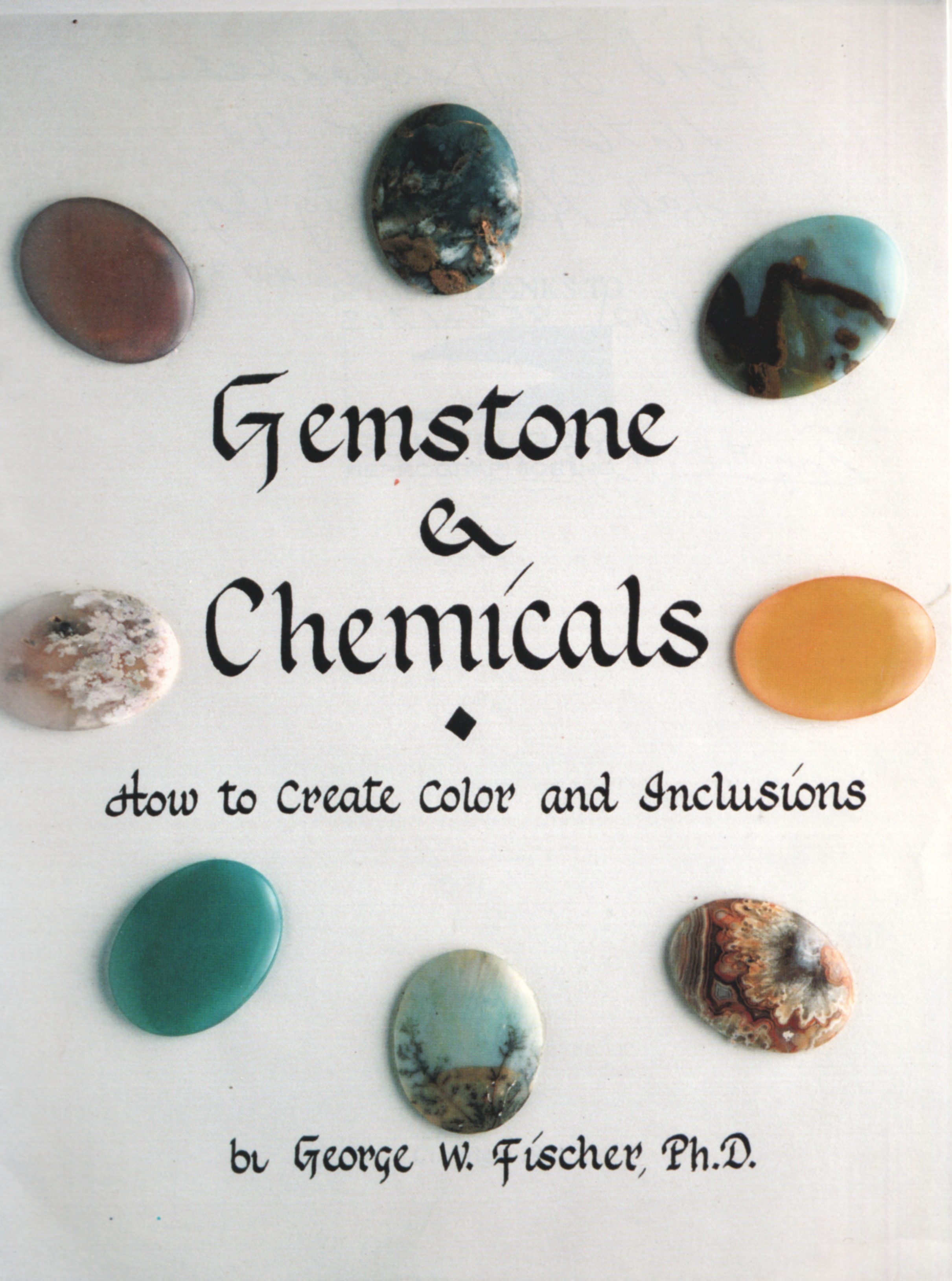
Gemstone & Chemicals: How to Create Color and Inclusions
Book
Fischer, G.W. (1991) Gemstone & Chemicals: How to Create Color and Inclusions. No city, self published, 74 pp.
Record No. 3231  |  Sinkankas/Born No.: NIS/NIB  |  RWHL

Into the abyss: inclusion photos

Journal Article
Goutiere, A., de (1991) Into the abyss: inclusion photos. Gemological Digest, Vol. 3, No. 2, p. 43.
Record No. 1972  |  Sinkankas/Born No.: NIS/NIB  |  RWHL
Two colour photomicrographs document an unusual thin-film inclusion in a 462 ct aquamarine crystal from Pakistan. Published under the subtitle “An Aquamarine Adventure”, the brief contribution combines the photographs with the author’s account of changes observed during gentle heating and subsequent cooling. The inclusion is described as apparently containing two immiscible liquids, one of which has a syrupy appearance. When the specimen is gently heated, this liquid disappears into a dark portion of the inclusion; as the aquamarine cools, it reappears as slowly moving droplets. The photographs show different configurations of the internal liquid features within a brightly coloured, irregularly bounded film. Yellow and orange areas dominate the central field, with green, blue and violet colours towards its margins, while dark elongated features interrupt the illuminated region. Rounded and extended droplet-like forms differ between the two views, illustrating the changing appearance that accompanies the author’s observations. On the basis of its response at approximately 32 °C, the author suggests that one liquid is probably liquid carbon dioxide. This identification is explicitly tentative: the note provides an observational interpretation rather than a chemically confirmed analysis of the trapped fluids. It does not identify the second liquid or establish the geological conditions under which the inclusion formed. The photographic procedure was adapted to record the changing features. Although the author normally used professional Ektachrome 160 Tungsten film for photomicrography, Ektar 1000 print film was selected for these images because its higher speed was needed to arrest movement. The contribution therefore records both the visual character of a colourful aquamarine inclusion and the practical challenge of photographing mobile internal phases. Its principal evidence consists of the paired images and the reported reversible behaviour during warming and cooling, rather than a detailed experimental or compositional investigation. Together, these observations present an example of dynamic fluid behaviour within a gemstone and demonstrate how photomicrography can preserve successive appearances of an inclusion that changes during examination.

The Smithsonian Treasury: Minerals and Gems
Book
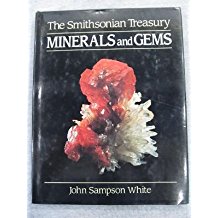
White, J.S. (1991) The Smithsonian Treasury: Minerals and Gems. Washington, D.C., Smithsonian Institution Press, 96 pp.
Record No. 1844  |  Sinkankas/Born No.: NIS/NIB  |  RWHL
An illustrated introduction to mineralogy and gemstones, drawing chiefly on specimens in the Smithsonian Institution’s National Museum of Natural History. White explains how chemical composition and atomic structure distinguish minerals, how they form in different geological environments, and how crystallization produces varied shapes, intergrowths, inclusions, and replacements. Sections on physical and optical properties, classification, mineral groups, modern analytical methods, and collecting establish a foundation for understanding the specimens illustrated. The gemstone chapters discuss discovery, mining, cutting, and polishing, followed by accounts of diamond, ruby and sapphire, beryl, opal, quartz, garnet, jade, and less familiar gem materials. Decorative stones and organic gems, including pearls, coral, and amber, broaden the coverage beyond transparent faceted stones. Gem nomenclature, color modification, laboratory-grown crystals, imitations, and assembled stones are also explained. Historical accounts trace the development of the Smithsonian’s mineral and gem collections, emphasizing the complementary roles of exhibition specimens, reference material, and scientifically documented samples. Famous jewels, including the Hope diamond and earrings associated with Marie Antoinette, illustrate the collections’ historical significance. Color photographs, many specially taken by Chip Clark, combine specimen portraits with explanatory captions, making the volume both an accessible scientific introduction and a visual companion to the museum’s displays.

Some comparisons between Kenyan, Australian and Sri Lankan sapphires
Journal Article
Tombs, G.A. (1991) Some comparisons between Kenyan, Australian and Sri Lankan sapphires. Australian Gemmologist, Vol. 17, No. 11, pp. 446–449.
Record No. 1732  |  Sinkankas/Born No.: NIS/NIB  |  RWHL
Sapphires from Garba Tula, Lodwar, and Samburu in Kenya are compared with Australian and Sri Lankan material through geological observations, appearance, experimental heat treatment, chemical analyses, and microscopic inclusions. The Kenyan occurrences are associated with metamorphic terrains. At Garba Tula, corundum occurs with metamorphosed basic to ultrabasic rocks and is interpreted as possibly resulting from desilicification during metamorphism. Lodwar corundum is dispersed over an extensive area, with an unconfirmed source in the metamorphic rocks of the Pelekech Range. Samburu material occurs in a highly metamorphosed terrain where formation is attributed to reactions between aluminum-rich metasomatic fluids and carbonated metabasic rock. Garba Tula and Lodwar produce blue, green, and yellow sapphires; examined Samburu specimens are blue to reddish blue, commonly milky, fractured, and iron-stained. Rough Kenyan specimens show sub-conchoidal fractures and strongly etched surfaces rather than simple waterwear. Experimental heating under both oxidizing and reducing conditions gives generally disappointing results. Garba Tula and Lodwar stones tend to turn green and lack the fine silky structure whose removal improves transparency in some Australian sapphires. Samburu stones show some color improvement at relatively low temperatures, but higher temperatures would be needed to remove milkiness, with uncertain consequences for color retention. Spark-source mass spectrometry identifies substantial differences in iron, titanium, and several trace elements among the Kenyan, New England, and Sri Lankan samples. Despite lower iron and titanium contents, Kenyan blue sapphires resemble Australian material more closely in untreated color than Sri Lankan stones. Blue and yellow Samburu samples differ particularly in iron while containing similar titanium concentrations. Nickel and its proportion relative to iron are considered possible influences on the blue-to-green change during heating, but no explanation is established. The heating behavior prompts a practical warning against heating set sapphires during jewelry repairs. Garba Tula and Lodwar specimens share conspicuous twinning, parting, predominantly two-phase fingerprint inclusions, and hair-like silk, suggesting a possible common source or similar formation conditions. Typical Sri Lankan pyrite inclusions were not observed, and zircon inclusions characteristic of some Australian material appeared scarce. Samburu sapphires show red–blue zoning, fingerprints, iron-stained fractures, and parting. The comparisons reveal regional similarities alongside chemical and treatment-response differences, while leaving several questions about origin and heating behavior unresolved.

Burma-type rubies from Vietnam

Journal Article
Henn, U. (1991) Burma-type rubies from Vietnam. Australian Gemmologist, Vol. 17, No. 12, November, pp. 505–509.
Record No. 963  |  Sinkankas/Born No.: NIS/NIB  |  RWHL
Rubies from newly developed deposits near Luc Yen in northern Vietnam are described through their geological occurrence, physical properties, absorption spectra and microscopic features, with particular emphasis on their resemblance to rubies from Mogok, Myanmar. First reported in 1988 and received by the author for examination in September 1989, the Vietnamese material ranges from pale to dark red, sometimes with a weak to moderate violet tint. The deposits lie approximately 270 km northwest of Hanoi. Marble is identified as the source rock, although the stones are recovered from secondary deposits, particularly brownish lateritic sediments, as rounded, water-worn pebbles. A direct geological connection between the Vietnamese and Myanmar marble-hosted ruby occurrences had not been established. Measured physical properties fall within the normal range for corundum, including birefringence of 0.008 and specific gravity of 3.93–3.98. Absorption spectra exhibit the characteristic chromium bands in the green and violet regions and a red chromium line at 692 nm. Fluorescence is strong red under long-wave ultraviolet radiation and red under short-wave ultraviolet radiation. Microscopic examination reveals the inclusions and structural features characteristic of marble-hosted ruby. Common observations include twinning lamellae, fine rutile, healed fractures, crystal inclusions, and growth and colour zoning. Twin lamellae parallel rhombohedral faces and intersect at approximately right angles; tubes containing a polycrystalline substance, probably boehmite, may occur within them or along their intersections. Fine rutile needles form dust-like clouds that commonly follow growth planes. Healed fractures contain either small rounded liquid-filled cavities or more elongated cavities. Heat treatment can modify the latter into worm-like shapes, which may be partly filled with an artificial glass-like substance. Discrete crystal inclusions are comparatively uncommon, but rounded transparent carbonates and zircons, sometimes accompanied by tension cracks, were observed. Distinct growth structures frequently coincide with colour zoning, and colour can be distributed unevenly. The study concludes that these Vietnamese rubies display the typical internal characteristics of marble-hosted ruby and closely resemble material from the commercially important Mogok deposits.

Gem Trade Lab Notes: Synthetic sapphire with triangular inclusions
Journal Article
DelRe, N. (1991) Gem Trade Lab Notes: Synthetic sapphire with triangular inclusions. Gems & Gemology, Vol. 27, No. 1, Spring, p. 45.
Record No. 659  |  ISBN/ISSN: 0016626X  |  Sinkankas/Born No.: NIS/NIB  |  RWHL

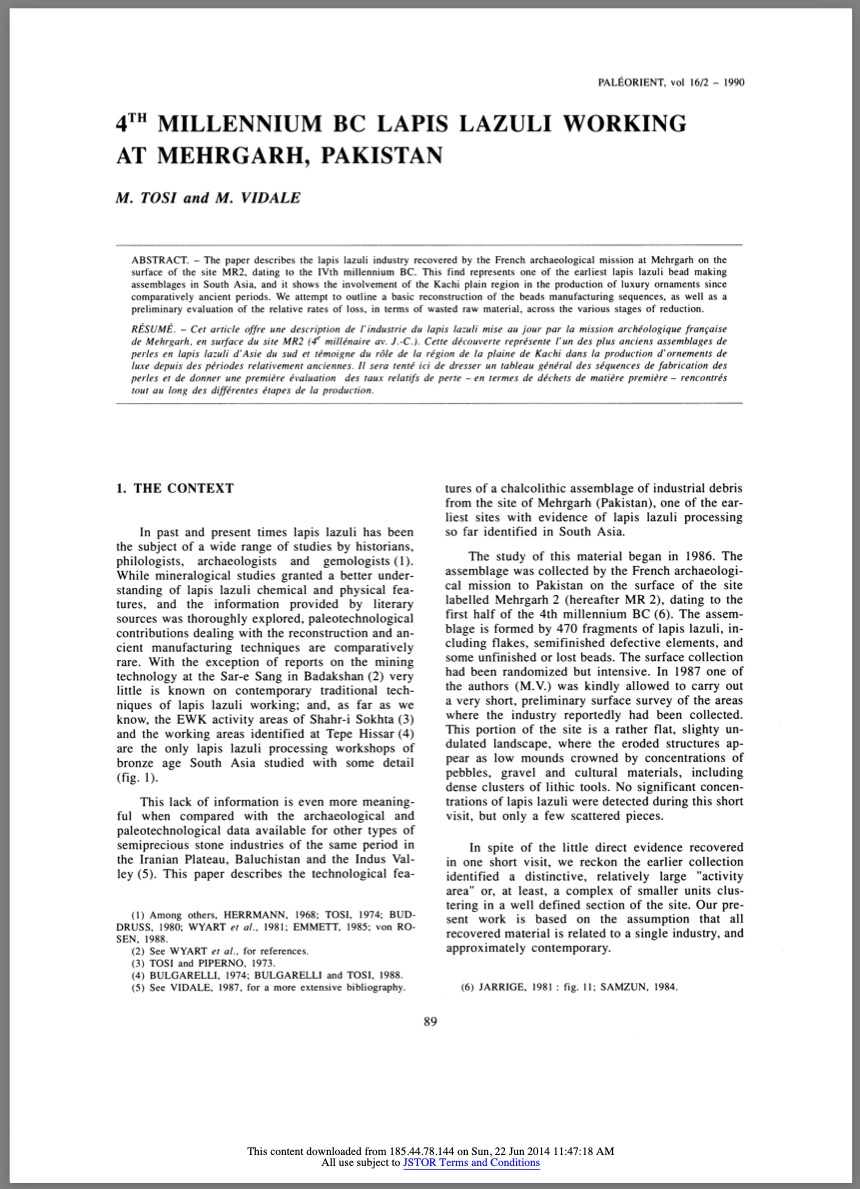
4th millenium BC lapis lazuli working at Mehrgarh, Pakistan
Journal Article
Tosi, M. and Vidale, M. (1990) 4th millenium BC lapis lazuli working at Mehrgarh, Pakistan. Paléorient, Vol. 16, No. 2, pp. 89–99.
Record No. 26927  |  Sinkankas/Born No.: NIS/NIB  |  RWHL
Lapis lazuli working at Mehrgarh, Pakistan, dates back to the 4th millennium BC, as documented by Massimo Vidale and Maurizio Tosi in their 1990 study published in Paléorient (Vol. 16, No. 2, pp. 89–99). Their research highlights evidence of early lapis working techniques in one of the earliest Neolithic settlements of South Asia. The Chagai Hills are considered a possible source of the material, with lapis lazuli from this region characterized by a greenish hue due to diopside inclusions—an observation consistent with later gemological accounts, including those in ExtraLapis. Earlier use of lapis at Mehrgarh has also been noted by Jarrige (1985: 285), who reports finds from Period I, dating to the 7th millennium BC, making it one of the earliest known occurrences of lapis lazuli use, as later referenced by Moorey.

Star rhodolite garnet from Tanzania

Journal Article
Kammerling, R.C. and Koivula, J.I. (1990) Star rhodolite garnet from Tanzania. Journal of Gemmology, Vol. 22, No. 1, pp. 16–18.
Record No. 26707  |  ISBN/ISSN: 221252  |  Sinkankas/Born No.: NIS/NIB  |  RWHL
This article describes the first reported occurrence of asteriated rhodolite garnet from Tanzania and details the specimen’s gemmological properties. Acicular rutile crystals are well-known inclusions in almandine garnets (Webster, 1983; Gübelin and Koivula, 1986; Liddicoat, 1987), and when fashioned en cabochon, stones with a relatively dense and even distribution of these needle-like inclusions may exhibit asterism, typically as a four- or six-rayed star. Sources of star almandine garnet include India (Webster, 1983; Rohrbach, 1986) and the Emerald Creek area of Idaho, USA (Zeitner, 1986; Rohrbach, 1986). Rhodolite, a reddish-purple to purple garnet composed of a mixture of almandine and pyrope, was first described from North Carolina, USA (Hidden and Pratt, 1898), and is also found in Sri Lanka (Webster, 1983), a major commercial source (Federman, 1984). In recent decades, African localities such as Zimbabwe (Campbell, 1972), Madagascar (Campbell, 1973), and Tanzania (Phillips, 1962; Sinkankas, 1968; Sarofim, 1970; Pough, 1973) have also produced rhodolite, with Tanzania now serving as an important commercial source (Federman, 1984). Like almandine, rhodolite from several sources may contain acicular rutile inclusions (Campbell, 1972; Webster, 1983), though few references have noted these inclusions producing asterism in rhodolite (Rohrbach, 1986). The authors recently examined a rhodolite garnet cabochon that displayed a four- or six-rayed star, depending on the viewing angle. The stone was cut from rough purchased and fashioned by Mr. Barton Curren of Glyptic Illusions, Topanga, California, USA, from a Tanzanian parcel reportedly originating from the Kangala mine. According to Curren, the rough was relatively inexpensive due to its higher inclusion content compared to other Tanzanian rhodolite he had previously acquired.

The Pharoahs’ forgotten emerald mines
Journal Article
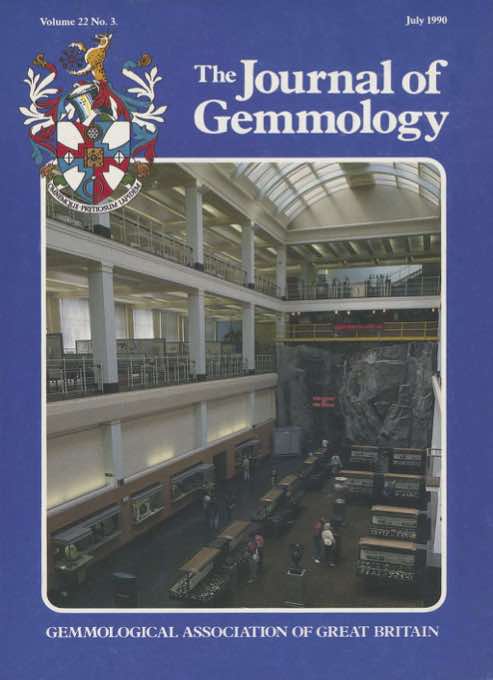
Grubessi, O., Aurisicchio, C. and Castiglioni, A. (1990) The Pharoahs’ forgotten emerald mines. Journal of Gemmology, Vol. 22, No. 3, July, pp. 164–177.
Record No. 6068  |  ISBN/ISSN: 221252  |  Sinkankas/Born No.: NIS/NIB  |  RWHL
The aim of latest expedition to Djebel Sikeit and Djebel Zabarah by the brothers Angelo and Alfredo Castiglioni was the re-discovery of the Pharaoh's emerald mines. The Castiglioni expedition was successful in the re-discovery of these forgotten ancient mines and has collected samples and documents on these famous deposits of precious stones, providing emer- ald specimens of great interest to gemmologists and archaeologists, as will be revealed in this paper.

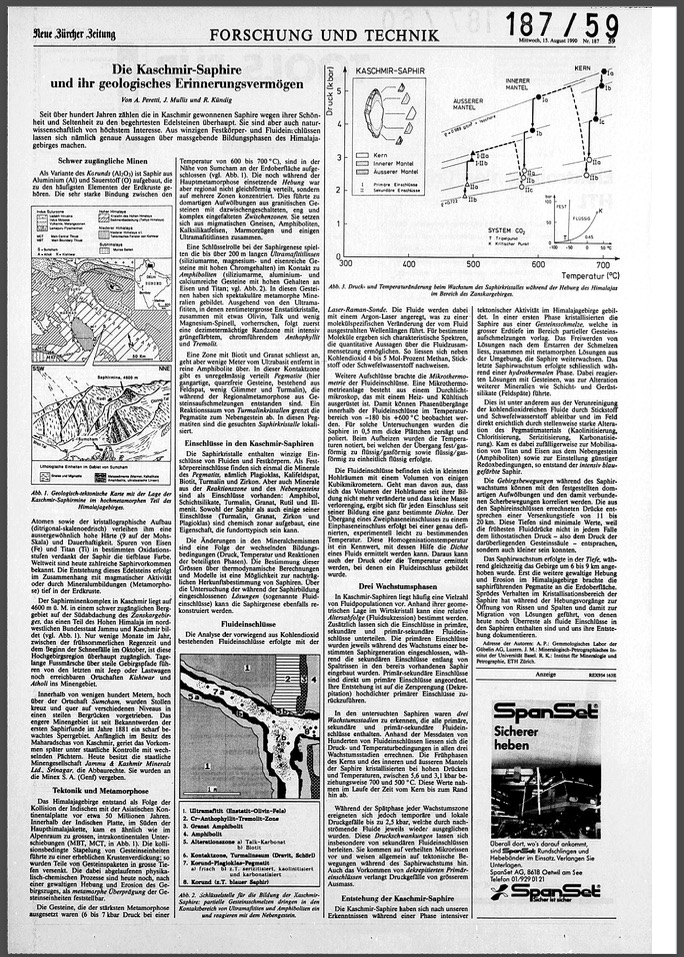
Die Kaschmir-Saphire und ihr Erinnerungsvermoegen
The Kashmir sapphires and their memory of the formation history of the Himalayas
Newspaper Article
Peretti, A., Mullis, J. and Kundig, R. (1990) Die Kaschmir-Saphire und ihr Erinnerungsvermoegen. [The Kashmir sapphires and their memory of the formation history of the Himalayas] Neue Zürcher Zeitung, Vol. 187, Zürich, pp. 59–65.
Record No. 5406  |  Sinkankas/Born No.: NIS/NIB  |  Language: in German  |  RWHL
Examines the geological history preserved in mineral and fluid inclusions in Kashmir sapphires from the Sumcham area of the Zanskar Himalaya. The sapphires occur in quartz-free pegmatites near contacts between ultramafic rocks and amphibolites. Mineral chemistry, Raman spectroscopy and microthermometry reveal three successive growth zones formed under declining pressures and temperatures, spanning approximately 5.6–3.1 kbar and 700–500°C. Predominantly carbon dioxide fluid inclusions record repeated pressure fluctuations, fracturing and fluid movement during crystal growth. The authors propose initial crystallization from partial melts, followed by growth involving residual magmatic and metamorphic fluids, and a final hydrothermal stage. Mobilization of iron and titanium from surrounding amphibolites under suitable redox conditions produced the intense blue colour. The inclusions document sapphire formation at substantial crustal depths during active deformation and uplift of the Himalaya.

Blaue saphire aus Malawi

Blue sapphires from Malawi
Journal Article
Henn, U. and Bank, H. (1990) Blaue saphire aus Malawi. [Blue sapphires from Malawi] Zeitschrift der Deutschen Gemmologischen Gesellschaft, Vol. 39, No. 1, pp. 89–92.
Record No. 4805  |  Sinkankas/Born No.: NIS/NIB  |  Language: In German  |  RWHL
Describes newly available gem-quality blue sapphires from Malawi. The material has refractive indices of 1.762–1.770, birefringence of 0.008, and specific gravity of 3.97–3.99. Chemical analyses detected FeO, TiO and Cr₂O₃, while absorption spectroscopy indicates that the blue coloration results principally from Fe²⁺–Ti⁴⁺ intervalence charge transfer, together with Fe³⁺ absorption. Microscopic examination revealed lamellar twinning and inclusions of boehmite, rutile and zircon. The report supplements earlier studies of red and orange corundum from Malawi and documents the occurrence there of transparent blue gem-quality sapphire.

Saphirs et rubis de Tanzanie

Sapphires and rubies of Tanzania
Journal Article
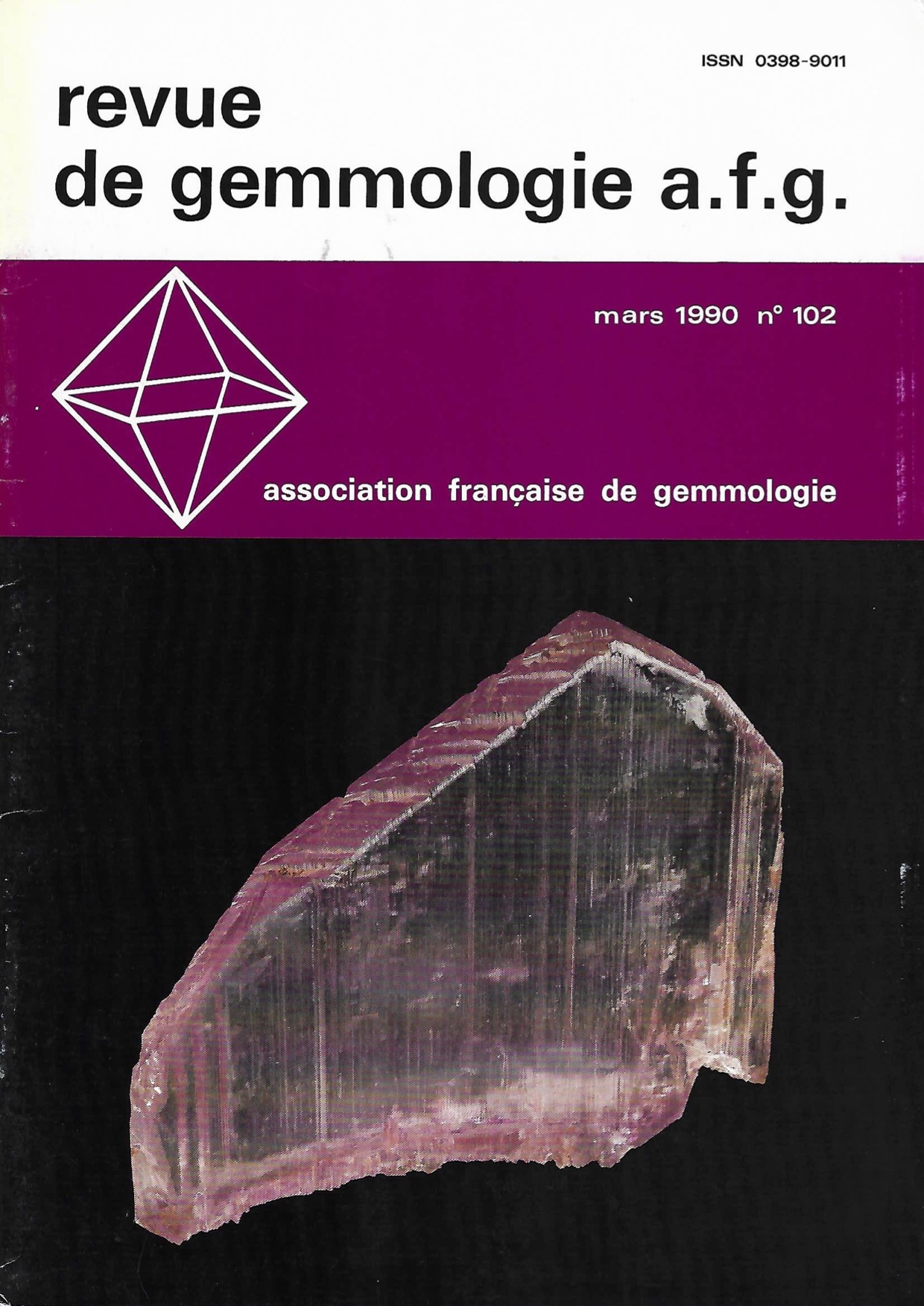
García Giménez, R. and Leguey, S. (1990) Saphirs et rubis de Tanzanie. [Sapphires and rubies of Tanzania] Revue de Gemmologie A.F.G., No. 102, March, pp. 6–8.
Record No. 4786  |  Sinkankas/Born No.: NIS/NIB  |  Language: in French  |  RWHL
Describes rubies, blue sapphires and other colored corundums from Tanzania, with particular attention to their gemological characteristics. The authors characterize the colors quantitatively using a chromaticity-coordinate diagram and examine the stones’ absorption spectra and mineral inclusions. The study compares the different color varieties and relates their optical behavior to their composition, providing analytical data useful for characterizing Tanzanian gem corundum. A contemporary Journal of Gemmology abstract specifically notes the treatment of color, inclusions and absorption spectra.

New technologies of the 1980s: Their impact in gemology

Journal Article
Fritsch, E. and Rossman, G.R. (1990) New technologies of the 1980s: Their impact in gemology. Gems & Gemology, Vol. 26, No. 1, Spring, pp. 64–75.
Record No. 4778  |  ISBN/ISSN: 0016626X  |  Sinkankas/Born No.: NIS/NIB  |  RWHL

Exploring the Literature of Gemstone Inclusions

The literature of gemstone inclusions covers identification, origin determination, treatments, synthesis, mineral inclusions, fluid inclusions and other internal features of natural and synthetic gems.

For a curated selection of important sources, read Inclusions in Gemstones — Hyperion Literature Sources.

About Four Treasures

Four Treasures is Lotus Gemology's freely accessible gemological reference database. Use the full database to search by author, title or keyword and explore literature on gemology, mineralogy, jewelry and related fields. Where available, hyperlinks on titles may lead directly to the full publication.

Search the Complete Four Treasures Database