Gemstone Inclusions Bibliography

Gemstone Inclusions Bibliography

Explore books, articles and historical sources on inclusions in gemstones in Four Treasures, the Lotus Gemology reference database. This bibliography brings together matching records from the collection, with publication details, abstracts and cover images where available.

Gemstone Inclusion References

The list below matches the terms inclusion or inclusions in the database's searchable fields. Some references discuss inclusions as part of a broader subject.
901–920 of 1,354 matching references

Gem News: Gems from Orissa, India

Journal Article
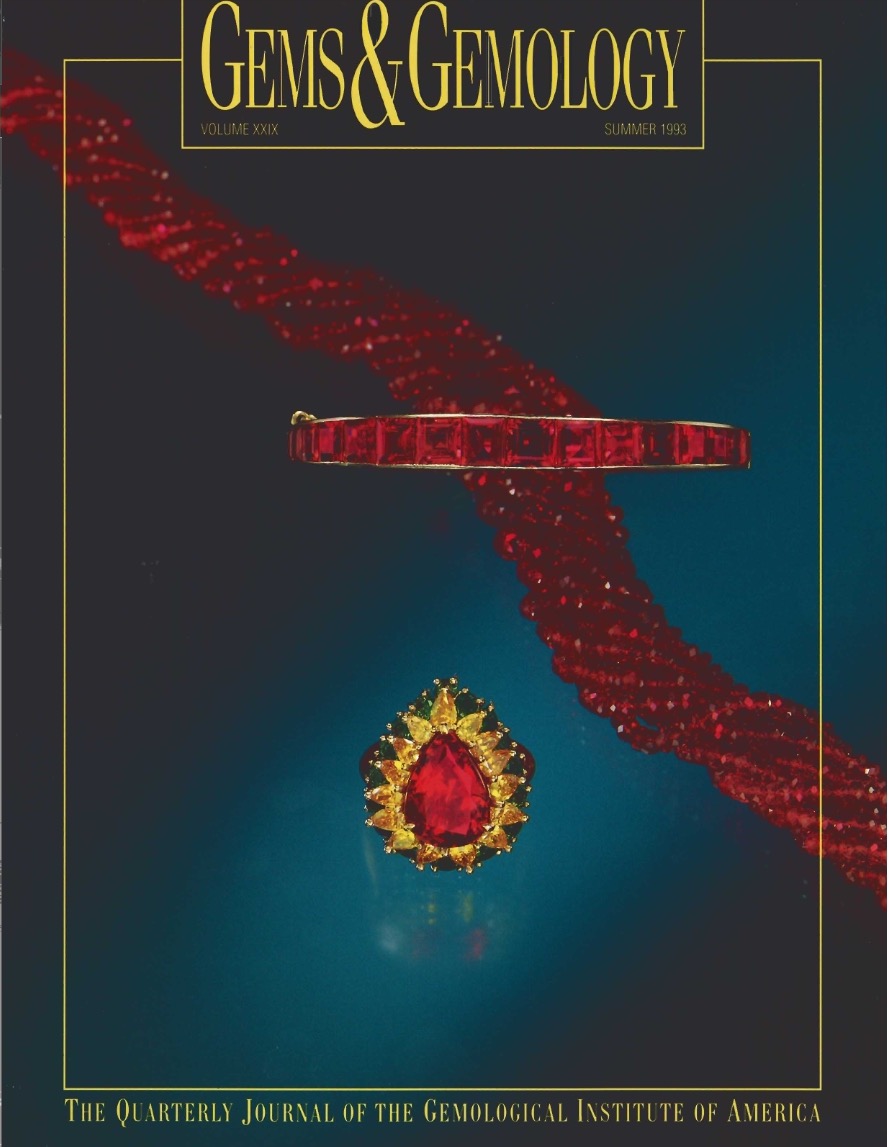
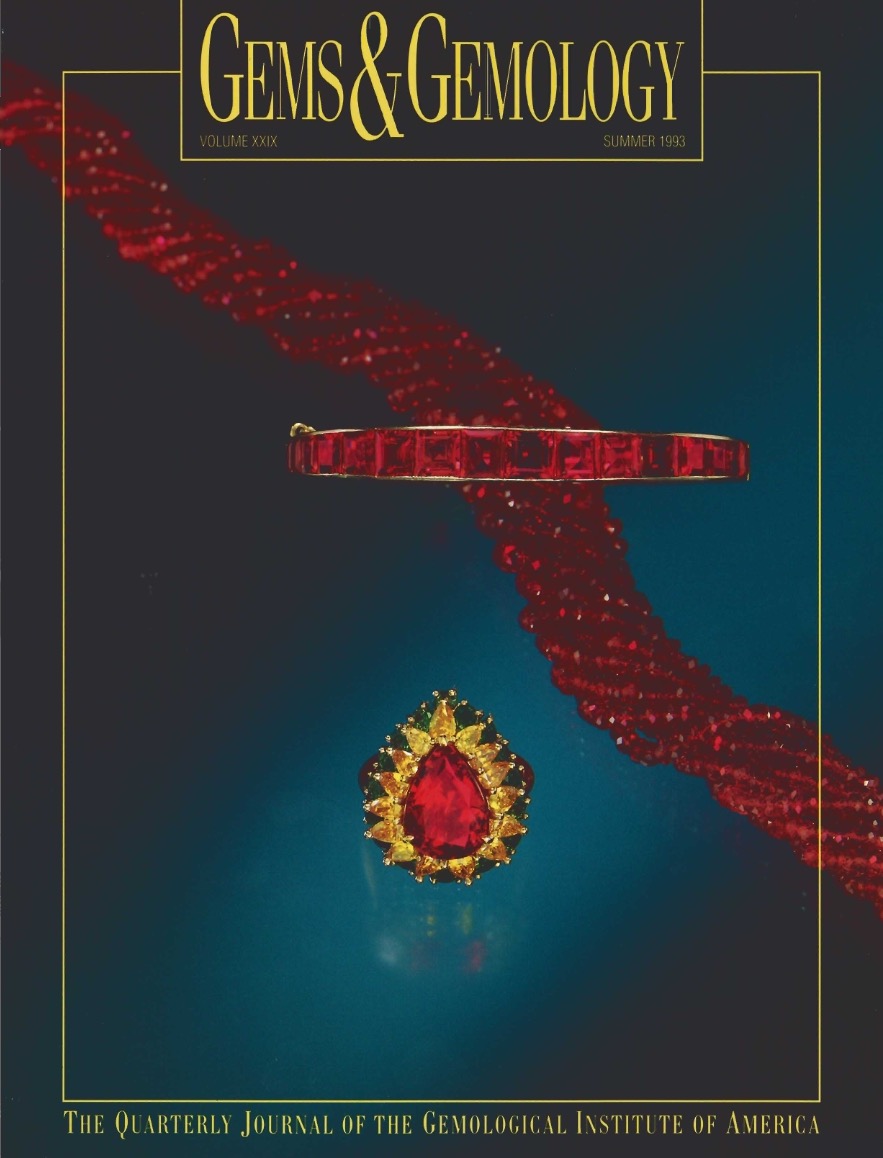
Koivula, J.I., Kammerling, R.C. and Fritsch, E. (1993) Gem News: Gems from Orissa, India. Gems & Gemology, Vol. 29, No. 2, Summer, pp. 133–134.
Record No. 26756  |  Sinkankas/Born No.: NIS/NIB  |  RWHL
The state of Orissa in eastern India has emerged as an increasingly important source of gemstones. Since 1989, rising quantities of rhodolite garnets from the region have been seen, followed by notable finds of aquamarine and ruby. At the 1993 Tucson Show, Amar J. Jain presented a 2.99 ct faceted alexandrite and dark grayish blue tourmalines from Orissa, one of which—a 1.74 ct emerald-cut specimen—showed gemological properties consistent with tourmaline from other locations, including refractive indices of 1.620 and 1.640, birefringence of 0.020, and specific gravity of 3.11. Hessonite (grossular) garnet is also being mined near Kanta Bhaji in the Kalahandi area, with faceted stones ranging from reddish orange to orangish brown; many exhibit a pronounced “roiled” appearance typical of Sri Lankan hessonites, sometimes resembling translucent sard. A 2.19 ct orange stone tested with an R.I. of 1.748 and S.G. of 3.65, confirming it as hessonite. Following the show, the editors received a report from Shyamala Fernandes of the Gem Testing Laboratory in Jaipur describing a December 1992 find of chatoyant sillimanite, initially misidentified and marketed as “moonstone cat’s-eye.” Identified as sillimanite, the material exhibited an R.I. of 1.659–1.678 (1.66 spot), S.G. of 3.25, biaxial optic character, and Mohs hardness of 7–8. Microscopy revealed parallel acicular inclusions responsible for the chatoyancy, along with “fingerprint” two- and three-phase inclusions and black platelets. The sillimanite occurs in colors ranging from colorless to gray, pinkish brown, yellow, green, and blue-green, typically in lighter tones, and most cabochons—some up to 20 ct—display sharp cat’s-eyes and a vitreous luster. Though precise production data is lacking, the material has been readily available in Indian markets since its discovery.

Gem Trade Lab Notes: Emerald, an ancient miniature carving
Journal Article
Moses, T. (1993) Gem Trade Lab Notes: Emerald, an ancient miniature carving. Gems & Gemology, Vol. 29, No. 2, Summer, p. 125.
Record No. 26751  |  Sinkankas/Born No.: NIS/NIB  |  RWHL
Common gem materials can present challenges in identification when fashioned into intricate carvings or altered by surface conditions. A miniature bust submitted to the East Coast lab—purported to depict the Roman Emperor at age 11–13 (circa 49–51 A.D.)—was examined for authenticity and composition. Due to the detailed carving, refractive index measurements were not possible, but hydrostatic testing gave a specific gravity of 2.70. Spectroscopy revealed weak chromium absorption typical of emerald, and a faint pink reaction under the Chelsea filter further supported this identification. The piece, semitransparent to translucent, displayed numerous fluid inclusions and small, unidentified crystals, one likely being biotite mica. Surface-reaching fissures exhibited yellowish brown iron staining, but no signs of oiling. Based on its properties, the bust was identified as natural emerald. If its reported provenance is genuine, it is probably Egyptian in origin. According to John Sinkankas, emeralds were mined in Egypt during the Graeco-Roman period through the 13th century A.D. Supporting this, Robert C. Kammerling of GIA collected samples from Egyptian mines in 1991 that matched the carving in color, transparency, inclusion patterns, and biotite presence.

Indications of crystal morphology in microgemmology as an aid to identification

Journal Article
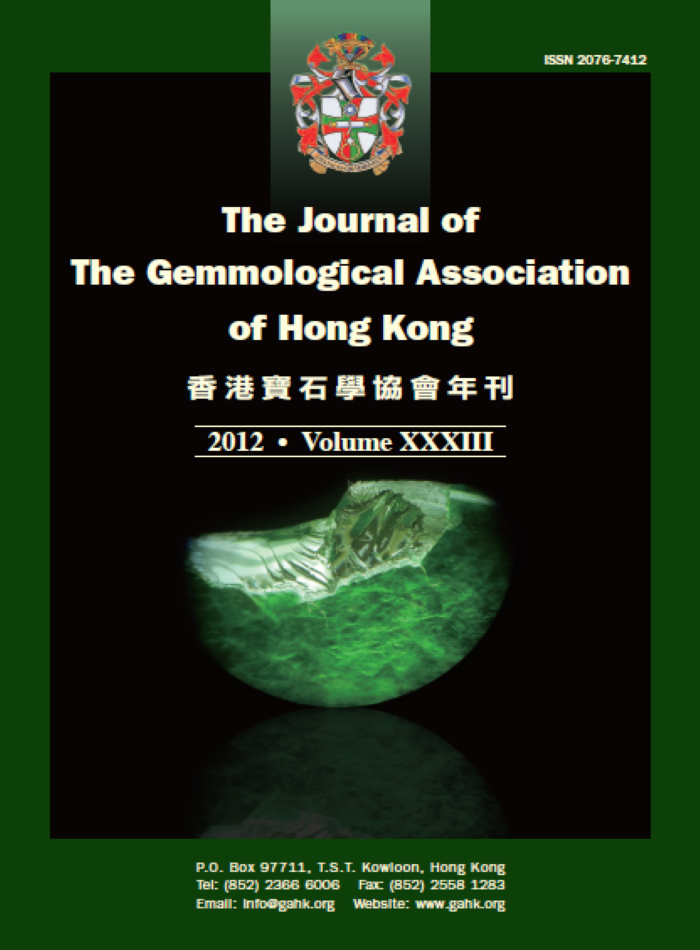
Kammerling, R.C., Koivula, J.I. and Scarratt, K.V. (1993) Indications of crystal morphology in microgemmology as an aid to identification. Journal of the Gemmological Association of Hong Kong, Vol. XVI, pp. 7–15.
Record No. 7651  |  Sinkankas/Born No.: NIS/NIB  |  RWHL

Gem News: Spinel from Vietnam

Journal Article
Koivula, J.I., Kammerling, R.C. and Fritsch, E. (1993) Gem News: Spinel from Vietnam. Gems & Gemology, Vol. 29, No. 3, Fall, pp. 213–214.
Record No. 5993  |  ISBN/ISSN: 0016626X  |  Sinkankas/Born No.: NIS/NIB  |  RWHL
Gem spinel from northern Vietnam is described through market observations and gemmological examination of eleven faceted specimens weighing 0.36–4.30 ct. Spinel occurs with corundum in the Vietnamese deposits, paralleling associations familiar from Sri Lanka and Myanmar. According to information obtained by Kenneth Scarratt from a knowledgeable Vietnamese colleague, gem spinel was discovered in Vietnam in 1984, before the discovery of ruby. By the time of this report, substantial quantities in varied colours and sizes were available in local markets, including Luc Yen. Saverio Repetto of the Gemmological Institute of Vietnam supplied the stones examined, which ranged from orangy red to purple, orangy pink to purplish pink, and violet to blue. Their measured properties agreed with published data for spinel: refractive indices were 1.714–1.719, hydrostatically determined specific gravities were 3.59–3.63, and weak to moderate anomalous birefringence was observed between crossed polarisers. Ultraviolet fluorescence varied with body colour. Predominantly red and pink stones showed weak to moderate red fluorescence under long-wave radiation, whereas specimens with a stronger purple component reacted more weakly or remained inert. Short-wave reactions were similar in colour but less intense, and the blue stones were inert under both wavelengths. Examination with a desk-model spectroscope revealed the characteristic organ-pipe fluorescence spectrum in most stones containing a pink or red component; blue specimens displayed spectral features attributed to iron. Microscopy disclosed inclusions and growth features already recorded in spinels from other localities. On the basis of appearance, mineral inclusions were tentatively identified as hexagonal muscovite platelets, apatite crystals, zircon crystals surrounded by radiation-induced strain halos, small opaque black graphite crystals, and bundles of fine parallel or intersecting rutile silk. Other internal characteristics included secondary healing planes forming fingerprint inclusions, decorated intergrowths and ribbon-like stepped growth planes. The note documents a broad colour range in Vietnamese spinel and records conventional physical properties, colour-related fluorescence and spectroscopic responses, together with a varied inclusion assemblage whose mineral identifications remain provisional.

An in-depth look at Russia's hydrothermal synthetic rubies
Journal Article
Peretti, A. and Smith, C.P. (1993) An in-depth look at Russia's hydrothermal synthetic rubies. JewelSiam, April-May, pp. 96–102.
Record No. 5552  |  Sinkankas/Born No.: NIS/NIB  |  RWHL
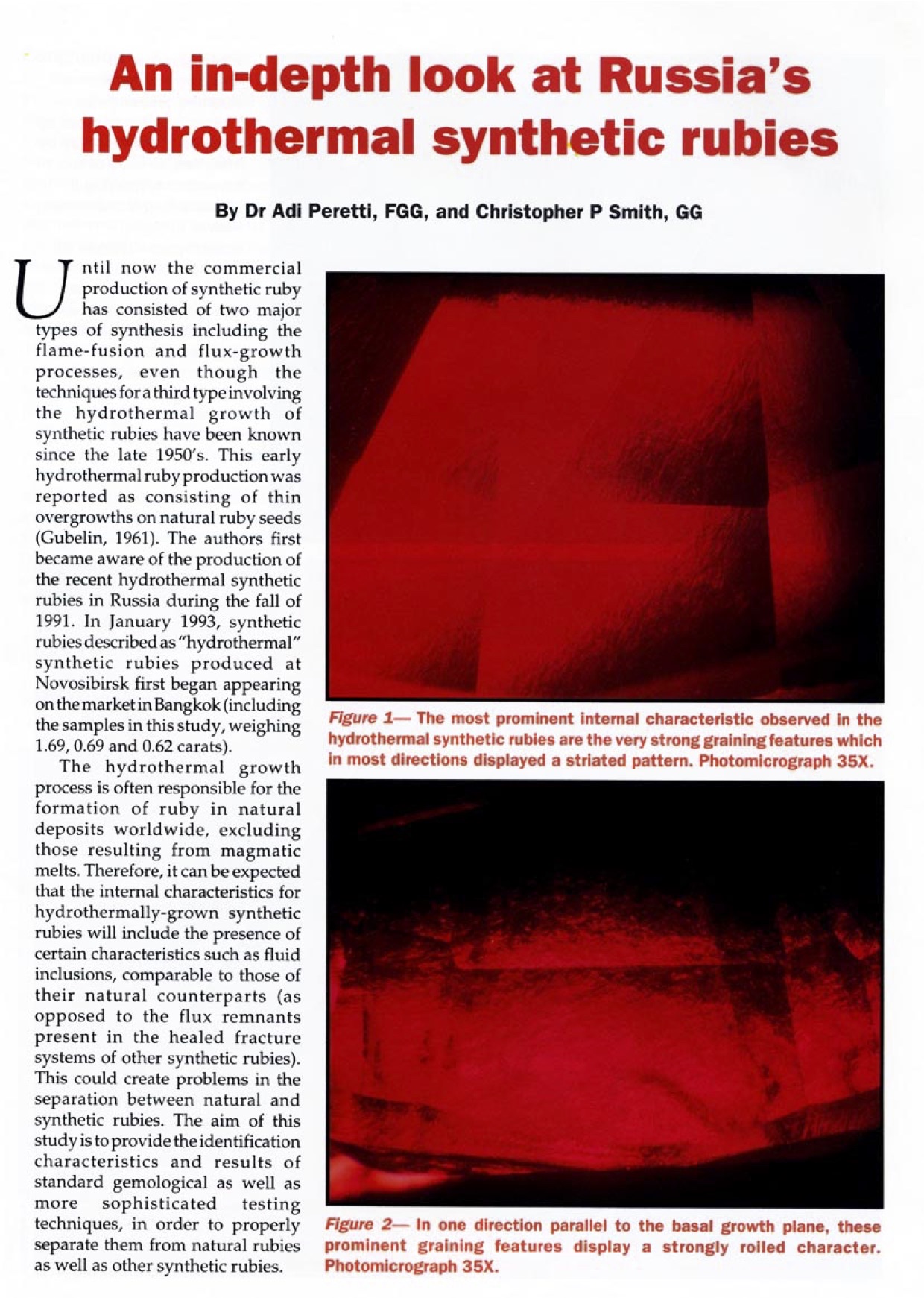
Three synthetic rubies marketed in Bangkok in January 1993 as hydrothermal products from Novosibirsk, Russia, were examined to establish characteristics useful for distinguishing them from natural ruby and other synthetic rubies. The faceted samples weighed approximately 0.62, 0.69, and 1.69 ct and displayed highly saturated red colors with medium to dark tones, resembling ruby from Thailand and Myanmar. Standard properties, including refractive indices, birefringence, specific gravity, pleochroism, ultraviolet fluorescence, and visible absorption spectra, broadly overlapped those of other natural and synthetic rubies. Their most conspicuous feature was strong internal graining that slightly reduced transparency and imparted a sleepy appearance. The graining appeared striated in most viewing directions and strongly roiled when viewed parallel to the basal growth plane; one specimen also displayed an unusual Christmas-tree pattern of uncertain origin. Color fluctuations followed these irregular growth structures rather than the planar or swirled zoning familiar in other rubies. Numerous highly reflective golden inclusions occurred as isolated platelets or small groups. Electron-microscope analysis identified two copper-rich inclusion types: one containing minor iron, nickel, and titanium, and another containing iodine and sulfur. No gold or platinum was detected. A slender, colorless needle-like feature was also observed, although its identity as a solid inclusion or negative crystal remained unresolved. Transparent fingerprint-like healed fractures, occasionally containing gas phases, resembled those in natural ruby and could complicate identification. Analysis of one surface-reaching healed fracture detected none of the lead, molybdenum, bismuth, or tungsten expected from certain flux residues. Chemical analyses showed chromium, iron, titanium, copper, and nickel, with vanadium and gallium absent or present only at very low concentrations. Iron contents were comparable to those of iron-rich natural rubies but higher than those previously observed by the authors in other synthetic rubies. The reported hydrothermal origin was consistent with the observations but remained unverified. Possible growth conditions, contamination from autoclave components, and the likely use of seed crystals are discussed as interpretations requiring further investigation. The distinctive graining and metallic inclusions provide practical identification criteria, although the latter could be mistaken for natural sulfides. Where microscopy is inconclusive, chemical analysis of the host and inclusions offers additional evidence for separation. Further study of rough crystals and fluid inclusions is recommended to clarify the growth process.

Two interesting double star" sapphires"
Journal Article
Koivula, J.I., Kammerling, R.C. and Fritsch, E. (1993) Two interesting double star" sapphires". Australian Gemmologist, Vol. 18, No. 7, pp. 235–236.
Record No. 5378  |  Sinkankas/Born No.: NIS/NIB  |  RWHL
Two natural sapphire cabochons displaying unusual double asterism are described, and microscopic examination establishes different structural causes for their superficially related phenomena. Both stones show two six-rayed stars under direct sunlight or a single point source of incandescent white light. They differ from twelve-rayed star corundum because their individual stars have separate centres. Both resemble Sri Lankan material, although only the smaller specimen is confirmed as originating there. This stone is a translucent bluish-grey oval cabochon weighing 0.87 ct and measuring 6.48 × 5.51 × 2.40 mm. It displays two complete six-rayed stars arranged side by side, separated by an obvious boundary that initially suggests an assembled gemstone. Microscopy instead reveals an interface between two distinct sapphire crystals that grew naturally interlocked in parallel orientation. Examination with a converging lens between crossed polarisers confirms that the two crystals have parallel optic axes. The authors compare this arrangement with a previously described double-star spinel whose appearance was likewise attributed to parallel growth rather than twinning. The larger sapphire is a translucent greyish-blue cabochon weighing 38.56 ct and measuring 17.09 × 15.44 × 12.43 mm. Its two overlapping six-rayed stars are slightly displaced, so that each ray has a nearby, nearly parallel counterpart of comparable strength. Pervasive lamellar polysynthetic twinning accounts for this arrangement. Fine needle-like inclusions, presumed to be exsolved rutile, occur throughout the stone. Within lamellae sharing a crystallographic orientation, the inclusions form three consistently aligned sets that scatter light to produce a normal six-rayed star. In the alternating twin lamellae, the needles have a slightly different orientation and generate the second, offset star. Under magnification, each set of rays is interrupted because its light scattering occurs in alternate lamellae; without magnification, the rays appear continuous and form two complete stars. The observations distinguish parallel intergrowth from polysynthetic twinning as separate mechanisms capable of producing double asterism, with markedly different visible arrangements. Although both examples were unfamiliar in the authors’ collective experience, the actual rarity of such sapphires remains undetermined.

A new type of synthetic ruby on the market: Offered as hydrothermal rubies from Novosibirsk
Journal Article
Peretti, A. and Smith, C.P. (1993) A new type of synthetic ruby on the market: Offered as hydrothermal rubies from Novosibirsk. Australian Gemmologist, Vol. 18, No. 5, pp. 149–156.
Record No. 4938  |  Sinkankas/Born No.: NIS/NIB  |  RWHL
Until now the commercial production oi synthetic mby has consisted of two may or types of synthesis, the flame-fusion and flux-growth processes, even though the techniques for a third type involving the hydrothermal growth of synthetic rubies have been known since the late 1950's. The early hydrothermal ruby production was reported as consisting of thin overgrowths on natural ruby seeds (C ubelin, 1961 'l. The authors first became aware of the recent production of hydrothermal synthetic rubies in Novosibirsk during the Fall of 1991. In lanuary 1993, synthetic rubies described as hydrothermal” synthetic rubies produced at Novosibirsk first began appearing on the market in Bangkok (including the samples in this study, weighing 1.69, 0.69 and 0.62 Cl). The hydrothermal growth process is often responsible for the formation of ruby in natural deposits worldwide, excluding those resulting from magmatic melts. Therefore, it can be expected that the internal characteristics for hydrothermally grown synthetic rubies will include the presence of fluid inclusions comparable to those oi their natural counterparts as opposed to the flux remnants present in the healed fracture systems of other synthetic rubies. This could create potential problems in the separation between natural and synthetic rubies. The aim of this study is to provide the identification characlenstics and results of standard gerrimological as well as more sophisticated testing."

The Appalacian star ruby

Journal Article
Anonymous (1993) The Appalacian star ruby. Australian Gemmologist, Vol. 18, No. 5, Feb., p. 174.
Record No. 367  |  Sinkankas/Born No.: NIS/NIB  |  RWHL
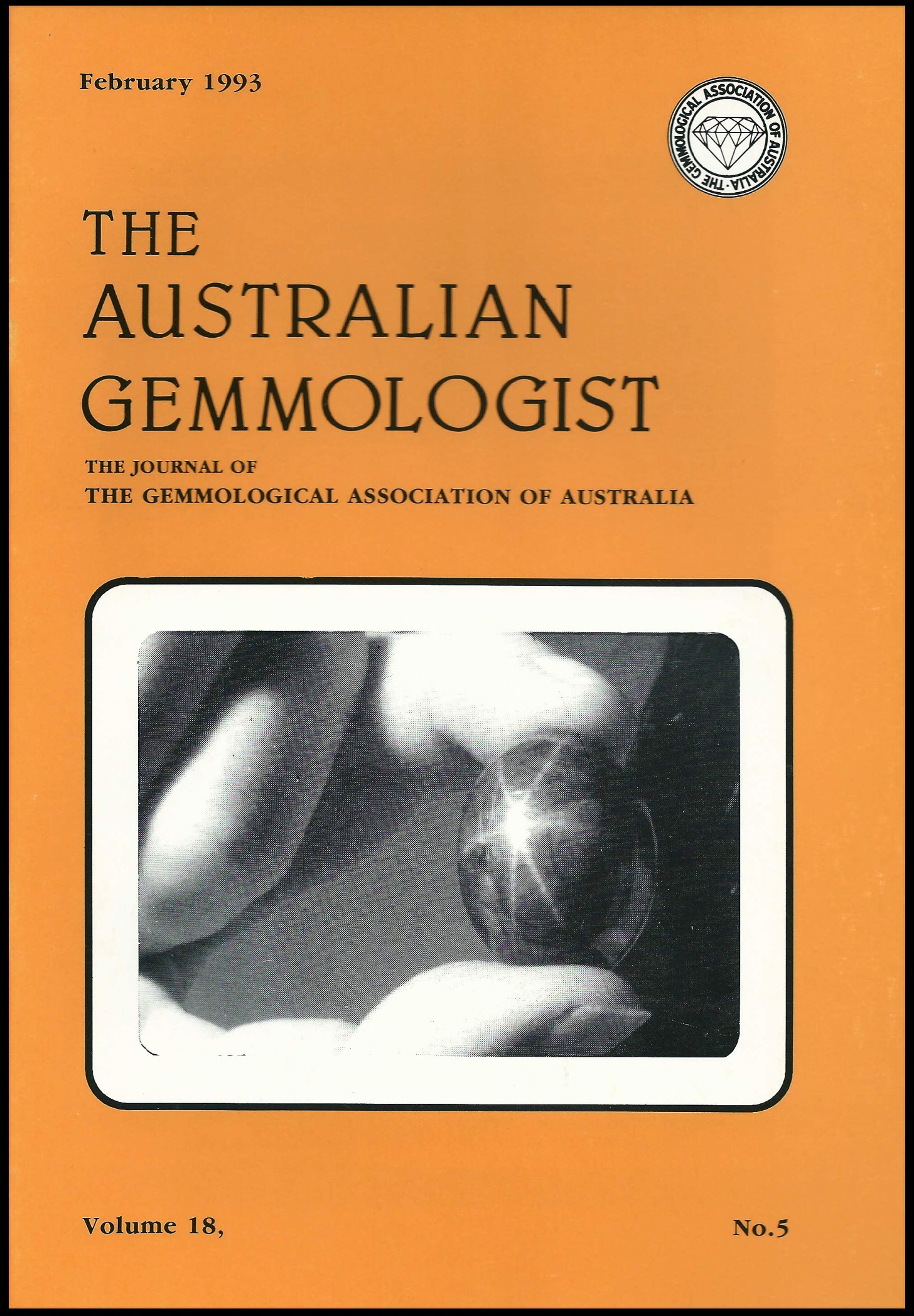
Describes the Appalachian star ruby, a large star ruby reported to originate from the northeastern United States and featured on the journal’s cover. The stone weighs 139.43 carats and measures 28.6 mm in length. Its principal distinguishing feature is a six-rayed star, described as perfect, which becomes visible when the stone catches the light. The account emphasises the quality of this star alongside the ruby’s substantial weight, presenting the combination of size and a well-defined optical effect as the specimen’s notable attributes. It explicitly distinguishes this assessment from a claim to record size: the Appalachian ruby is not described as the heaviest star ruby in the world. In discussing larger examples, the note refers to a ruby from India believed to weigh more than 1,000 carats. That comparison is qualified as a belief rather than presented as a documented measurement of an identified specimen, and the Indian stone is not named. A second comparison concerns the famous Rosser Reeves ruby displayed at the Smithsonian Institution. The Appalachian specimen is stated to exceed the Rosser Reeves ruby in weight, although the latter’s weight and dimensions are not supplied. These comparisons establish the emphasis of the report: the Appalachian ruby is noteworthy for its fine star and considerable size even though heavier star rubies are reported. The geographical description remains broad, identifying only the northeastern United States rather than a particular state, mine, or deposit. The account provides no information about the stone’s discovery, ownership, cutting history, colour, transparency, or treatment status. Nor does it report laboratory measurements beyond its weight and length, or describe microscopic inclusions or tests used to establish its nature or origin. The six-rayed star is reported as a visual characteristic without discussion of its internal cause. The contribution is therefore a brief descriptive notice of a featured gemstone, supported by reference to the cover illustration, rather than a detailed gemmological investigation.

The North-African diamondiferous province
Journal Article
Kaminsky, F.V., Verzhak, V.V., Dauev, Y.M., Buima, T., Boukhalfa, L., Kaui, M., Salhi, A. and Slugi, M. (1992) The North-African diamondiferous province. Russian Geology and Geophysics, Vol. 33, No. 7, pp. 91–95.
Record No. 27473  |  Sinkankas/Born No.: NIS/NIB  |  RWHL
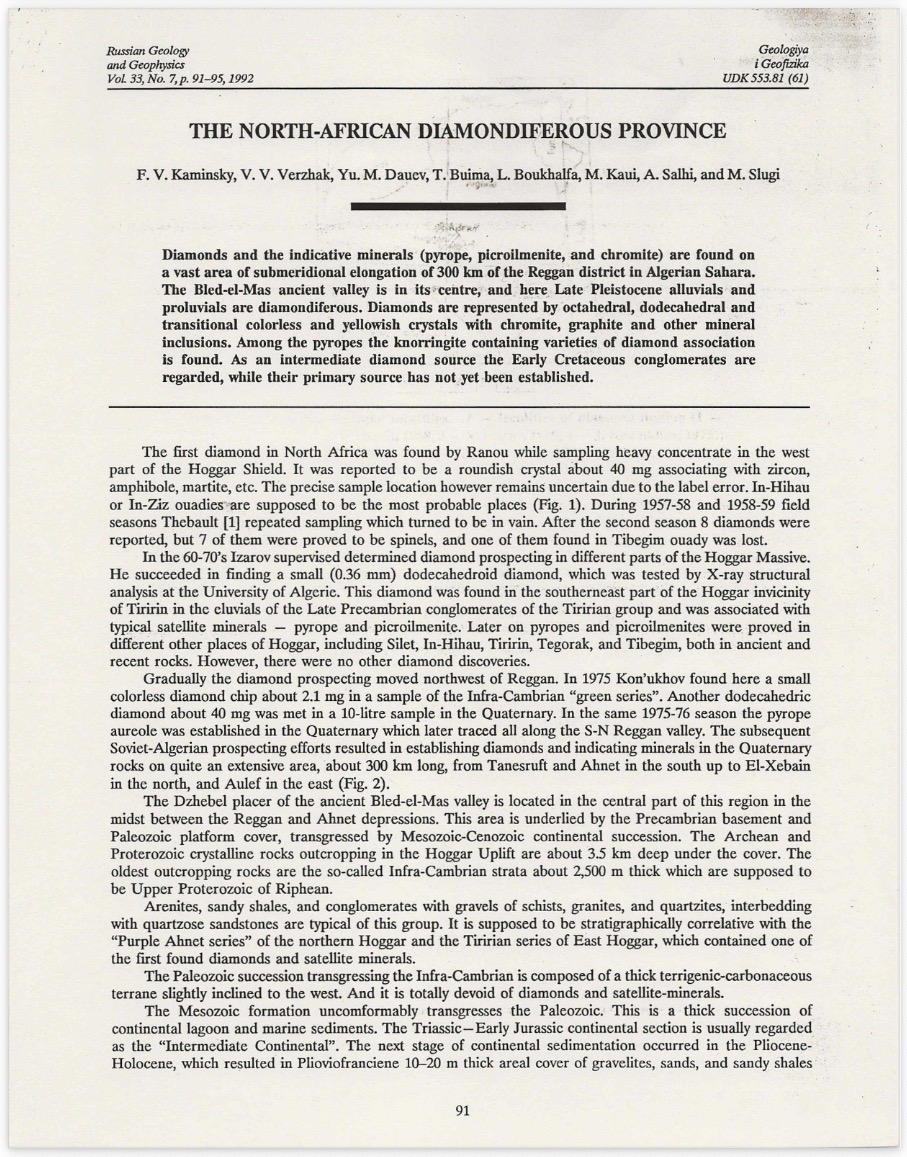
Diamonds and the indicative minerals (pyrope, picroilmenite, and chromite) are found on a vast area of submeridional elongation of 300 km of the Reggan district in the Algerian Sahara. The Bled-el-Mas ancient valley is in its centre, and here Late Pleistocene alluvials and proluvials are diamondiferous. Diamonds are represented by octahedral, dodecahedral and transitional colorless and yellowish crystals with chromite, graphite and other mineral inclusions. Among the pyropes the knorringite-containing varieties of diamond association is found. As an intermediate diamond source the Early Cretaceous conglomerates are regarded, while their primary source has not yet been established.

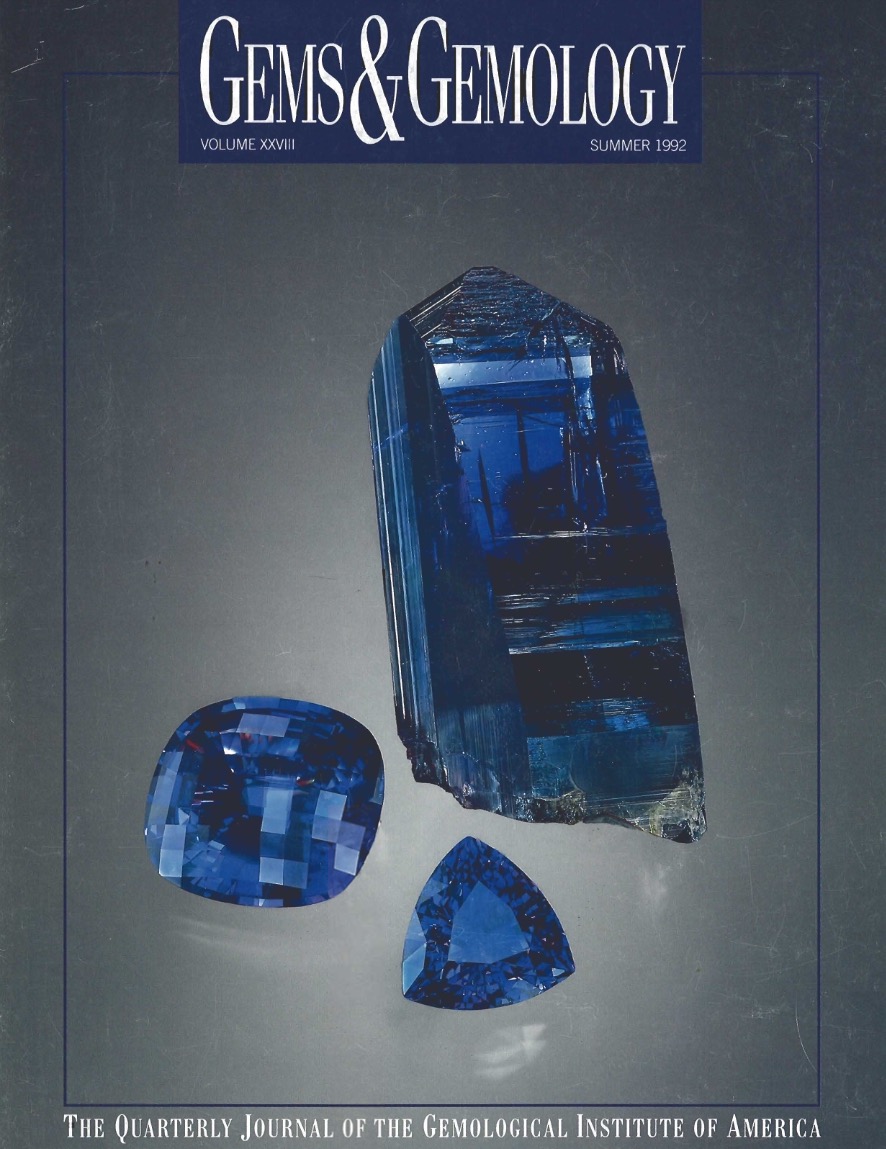
Gem News: Feldspar and amphibole gem from Egypt
Journal Article
Koivula, J.I., Kammerling, R.C. and Fritsch, E. (1992) Gem News: Feldspar and amphibole gem from Egypt. Gems & Gemology, Vol. 28, No. 4, Winter, pp. 271–272.
Record No. 26787  |  Sinkankas/Born No.: NIS/NIB  |  RWHL
A mottled blue-to-green gem material from Egypt, observed in Cairo and said to be sporadically collected by Bedouin tribespeople, was found to resemble the well-known copper-colored “Eilat stone” of Israel. Two cabochons—a 7.05-ct pear shape and a 3.29-ct oval—were semitranslucent with greenish blue and nearly black dark green areas, the former highly fractured and veined, and the latter containing metallic-luster inclusions. Additional inclusions of saturated greenish blue with lower diaphaneity and some brownish red (likely limonitic) staining were noted. Spot refractive index measured 1.54, and the gems appeared green through the Chelsea filter. The translucent zones fluoresced faint yellowish green under long-wave UV, while the material was inert to short-wave UV. Specific gravity values were 2.67 and 2.74. As standard tests were inconclusive, X-ray powder diffraction revealed the greenish blue areas to be feldspar and the dark green areas amphibole, though species were not identified. EDXRF analysis detected Al, Si, K, Ca, Ba, Mn, Fe, and Cu, with copper likely responsible for the blue coloration. The stones were thus identified as rocks composed of feldspar and amphibole, with other minor mineral components.

Garnets from Egypt

Journal Article
Koivula, J.I., Kammerling, R.C. and Fritsch, E. (1992) Garnets from Egypt. Gems & Gemology, Vol. 28, No. 2, Summer, p. 132.
Record No. 26755  |  Sinkankas/Born No.: NIS/NIB  |  RWHL
During a 1991 visit to Egypt, a Gem News editor observed gem-set antiquities in the Egyptian Museum in Cairo, including dark brownish red stones in Greco-Roman jewelry that resembled almandine garnet. A museum chart listed garnet among the materials used by ancient Egyptians, though without specifying species. Later, in Luxor, the editor encountered a necklace of similarly colored beads from a gem dealer, who claimed they were garnets sourced from the south-central Sinai Peninsula, near Gebel Musa (Mt. Sinai), though the exact mine location was lost. John D. Rouse, in Garnet, referenced Pliny’s mention of Egypt as a source of “carbuncles,” likely garnets, possibly originating from a Theban trading station rather than a mine. The necklace, acquired for gemological study, comprised 36 off-round beads, 12.3–13.0 mm in diameter, appearing brown and opaque in reflected light but brownish red and transparent in transmitted light. Magnification revealed dark inclusions and stained fractures. Spot refractive index readings exceeded 1.80, and spectroscopic analysis showed absorption features typical of almandine and spessartine. EDXRF analysis confirmed the presence of iron and manganese, leading to the identification of the beads as almandine–spessartine garnets.

Emeralds from Madagascar

Journal Article
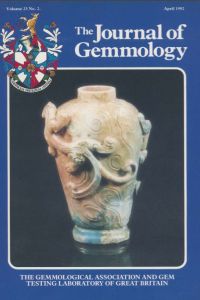
Schwarz, D. and Henn, U. (1992) Emeralds from Madagascar. Journal of Gemmology, Vol. 23, No. 3, pp. 140–149.
Record No. 6049  |  ISBN/ISSN: 221252  |  Sinkankas/Born No.: NIS/NIB  |  RWHL
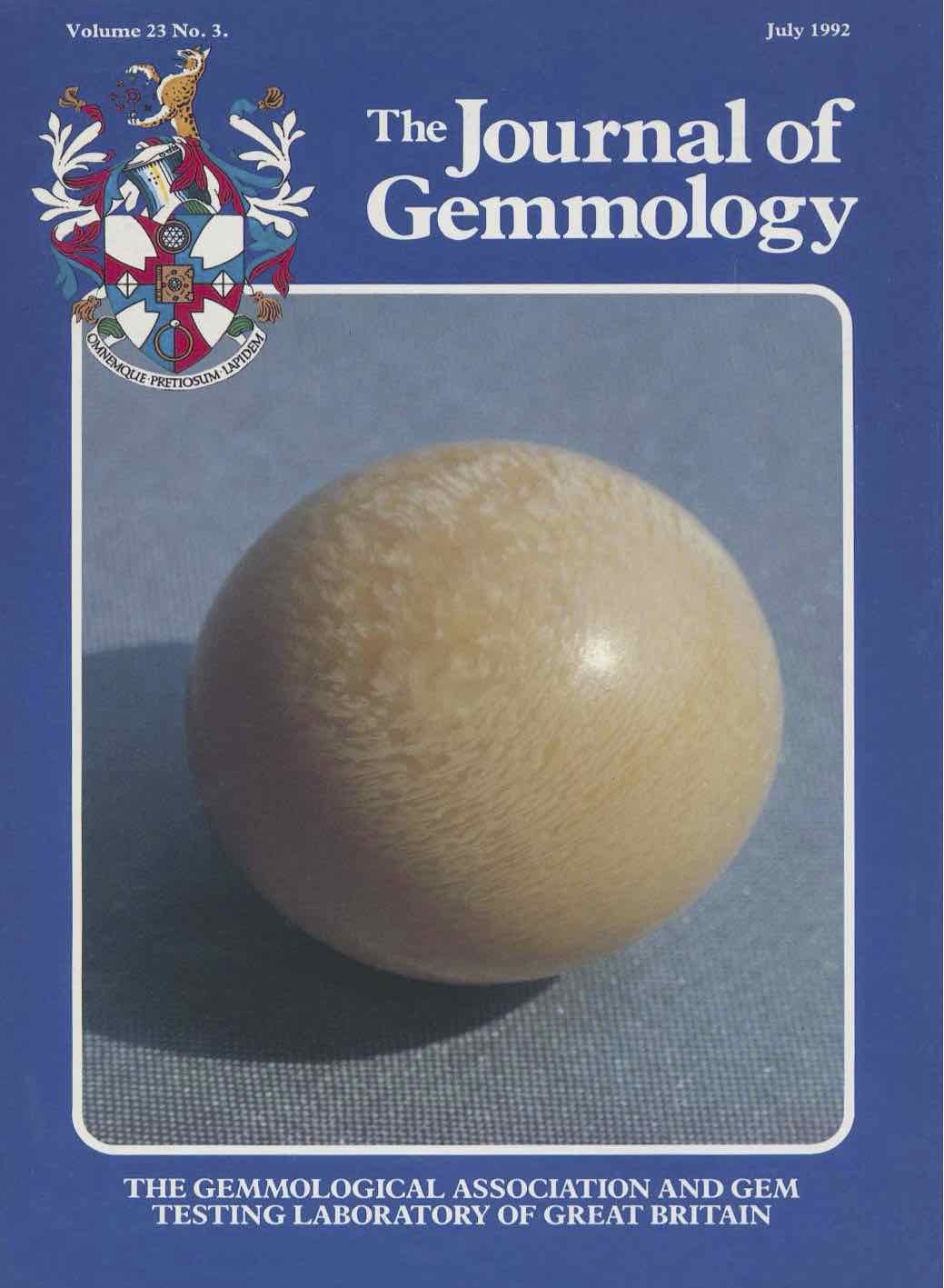
Emeralds from the Morafeno mining region near Mananjary, Madagascar, are characterized through measurements of physical properties, electron-microprobe analyses, polarized absorption spectroscopy, and microscopic examination of inclusions. The study places these commercially exploited mica-schist-hosted deposits within the history of Malagasy beryl discoveries and distinguishes true emerald from earlier reports of iron-coloured green beryl. Morafeno produces partly transparent emerald crystals several centimetres in size embedded in dark mica. Measured extraordinary refractive indices range from 1.580 to 1.582 and ordinary indices from 1.588 to 1.591, with birefringence of 0.008–0.009 and densities of 2.68–2.71 g/cm³. These properties broadly agree with earlier Malagasy data and overlap the lower range reported for Zambian emeralds, whose colour is also comparable. Analyses of six emeralds reveal medium to high magnesium and sodium concentrations, with 1.71–3.00 wt% MgO and 1.28–2.16 wt% Na₂O, together with 0.08–0.34 wt% Cr₂O₃ and 0.91–1.30 wt% total iron expressed as FeO. Element-correlation diagrams compare the samples with emeralds from other African deposits, Brazil, Australia, and Norway. Decreasing aluminium with increasing magnesium, accompanied by increasing sodium, is explained by magnesium substitution for aluminium and charge compensation by sodium occupying channels in the beryl structure. Visible and near-infrared spectra combine chromium-related emerald absorption with iron-related components characteristic of aquamarine. Principal iron features occur near 835 nm for divalent iron and 371 nm for trivalent iron. Chromium absorption is modified by overlapping iron bands, and observed pleochroism ranges from yellowish green in the ordinary direction to greenish blue or blue in the extraordinary direction. Longer-wavelength near-infrared absorptions are assigned to water molecules within structural channels. Characteristic inclusions comprise brown mica and unevenly distributed greenish-brown tremolite–actinolite rods and needles, commonly with a bamboo-like appearance. Colourless prismatic inclusions aligned with the c-axis and associated fluid inclusions resemble features of Brazilian emeralds from Belmont and Capoeirana, although the Malagasy material shows less fluid-inclusion diversity. Liquid–gas inclusions predominate, with three-phase and multiphase examples also present. Additional features include rounded transparent crystals, opaque grains and plates, healed or partly healed fractures, localized inclusion concentrations, and nearly colourless cores surrounded by green rims.

Lamellar inclusions in spinels from Morogoro area, Tanzania
Journal Article
Schmetzer, K. and Berger, A. (1992) Lamellar inclusions in spinels from Morogoro area, Tanzania. Journal of Gemmology, Vol. 23, No. 2, April, pp. 93–94.
Record No. 5875  |  ISBN/ISSN: 221252  |  Sinkankas/Born No.: NIS/NIB  |  RWHL
Lamellar inclusions in gem spinels reportedly originating from the Morogoro area of Tanzania are identified as an iron-free, titanium-rich member of the högbomite series. The investigation concerns rough and faceted material obtained through several independent trade sources following the first receipt of samples in June 1987. The crystals include red, pink, orange, reddish purple, purplish blue and blue octahedra reaching approximately 1 cm. Most suppliers independently reported Morogoro as the source, and the occurrence of similar inclusions across the parcels supported a common locality; an earlier attribution to the Umba Valley was therefore considered probably incorrect. Conventional physical properties, trace-element compositions and absorption spectra did not distinguish these stones significantly from natural spinels from Sri Lanka and Myanmar. Their colour-related absorption was attributed to chromium, vanadium, iron in different valence states and cobalt, with cobalt detected by X-ray fluorescence despite concentrations below the electron microprobe detection limit. In contrast, approximately 70% of the examined Tanzanian samples contained characteristic lamellar inclusions. These occur in four orientations parallel to the octahedral {111} faces of the spinel host. Viewed along a ⟨110⟩ direction, two sets intersect at angles of 109.47° and 70.53°. Immersion microscopy with crossed polarizers established that the lamellae are doubly refractive. Their extreme thinness prevented successful identification by electron microprobe, but transmission electron microscopy of ion-beam-thinned petrographic sections resolved their structure and composition. Individual lamellae measured 0.01–0.1 µm thick. Electron diffraction indicated trigonal, rhombohedral symmetry, with unit-cell dimensions of approximately a = 5.7 Å and c = 55.8 Å. Quantitative energy-dispersive X-ray analyses using a 15 nm electron probe identified magnesium–aluminium–titanium oxides, supporting their assignment to iron-free, titanium-rich högbomite. The structural relationship between högbomite and spinel is discussed in terms of titanium substituting for magnesium, with related structures also occurring in taaffeite and musgravite. The authors propose these oriented, birefringent inclusions as a practical indication of natural Tanzanian spinel, potentially useful in distinguishing such material as flux-grown synthetic spinels become increasingly available.

Vietnamese ruby fakes: A problem requiring urgent resolution
Journal Article
Brown, G. and Beattie, R. (1992) Vietnamese ruby fakes: A problem requiring urgent resolution. Australian Gemmologist, Vol. 18, No. 4, pp. 108–114.
Record No. 4724  |  Sinkankas/Born No.: NIS/NIB  |  RWHL
Investigates fraudulent ruby and sapphire marketed as Vietnamese material following the emergence of commercial production at Luc Yen and Quy Chau and the arrival of such stones in Australia from mid-1990. A collection assembled over twelve months from parcels purchased in Vietnam or Bangkok revealed numerous methods of mixing synthetic material with natural rough and faceted stones. The principal substitutes were Verneuil synthetic ruby and sapphire subjected to heating, deliberate fracture induction, tumbling, or combinations of these processes to imitate natural appearance. Faceted specimens were comparatively easy to identify through curved colour banding, occasional rounded or elongated gas bubbles, and dark, surface-reaching fractures. Synthetic blue sapphires also lacked the 450 nm absorption characteristic of the natural material considered. Manufactured ruby crystals were shaped and incised to simulate natural crystal faces and growth striations, but some displayed inappropriate bipyramidal habits, painted blue terminations, or patches of partly fused, bubble-bearing alumina. Polished windows exposed internal curved colour banding and other evidence of flame-fusion origin. More elaborate constructions included a natural, low-quality ruby crystal incorporating synthetic ruby fragments and synthetic rough with drilled cores or saw cuts filled with fused blue sapphire fragments. These additions simulated natural blue zoning, with glassy coatings sometimes concealing the openings. Other deceptive modifications included colourless oil or wax in fractures, blue dye impregnation, blue wax in surface depressions, and dark red nail polish applied to natural pink sapphire. Tumbled rough presented the greatest identification difficulty because its abraded surface obstructed microscopic inspection. Even after windows were polished, inclusion-free pieces could remain inconclusive without laboratory methods such as energy-dispersive X-ray fluorescence, examination for Sandmeier–Plato twinning, or short-wave ultraviolet immersion photography. The authors note practical limitations: twinning examination could require parallel polished windows and immersion between crossed polars, while ultraviolet photography required darkroom facilities and primarily distinguished iron-poor from iron-bearing material. A comparative inclusion list outlines features supporting natural Vietnamese origin, while recognising substantial similarities with Myanmar ruby. The investigation demonstrates that basic gemmological properties and attractive natural-looking surfaces cannot establish authenticity, especially for rough. Brown and Beattie call for guarantees from authorised suppliers, sanctions against deliberately adulterating parcels, and widespread publication of identification methods. They argue that urgent action is necessary to protect buyers and the reputation of Vietnam’s developing ruby and sapphire industry, since reliable testing of the most deceptive rough was unavailable on the mining fields.

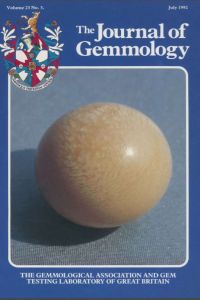
Gemstones of East Africa

Book
Keller, P.C. (1992) Gemstones of East Africa. Phoenix, Geoscience Press, [with photos by E.J. Gübelin], 160 pp.
Record No. 2204  |  Sinkankas/Born No.: NIS/NIB  |  RWHL
An illustrated survey of East African gemstones, emphasizing the deposits of Kenya and Tanzania and combining regional geology with accounts of discovery, exploration, mining, and gemological properties. Following an introduction to the geological setting, Keller discusses diamonds, ruby and sapphire, emerald and alexandrite, tanzanite, garnets, tourmaline, and green opal, with a concluding chapter on less prominent gem materials. Individual accounts place the deposits within their geological environments while recording their development and the people involved. Particular subjects include tanzanite from Merelani and prase opal from Haneti Hill, Tanzania. Photographs of rough and cut stones, inclusions, mining operations, and historical scenes complement locality maps, including some previously unpublished examples. Contributors include E.J. Gübelin, Harold and Erica Van Pelt, and J.I. Koivula. Appendices list 177 noteworthy gem localities with geographical coordinates and document East African gemstones in the collections of the Los Angeles County Natural History Museum and the Smithsonian Institution. References accompanying each chapter provide access to the region’s geological and gemological literature. The volume offers a substantial record of East African gem deposits and industry as understood at the beginning of the 1990s.

The inclusions in diamond (some microprobe analyses carried out on mineral inclusions in diamond)
Conference Paper
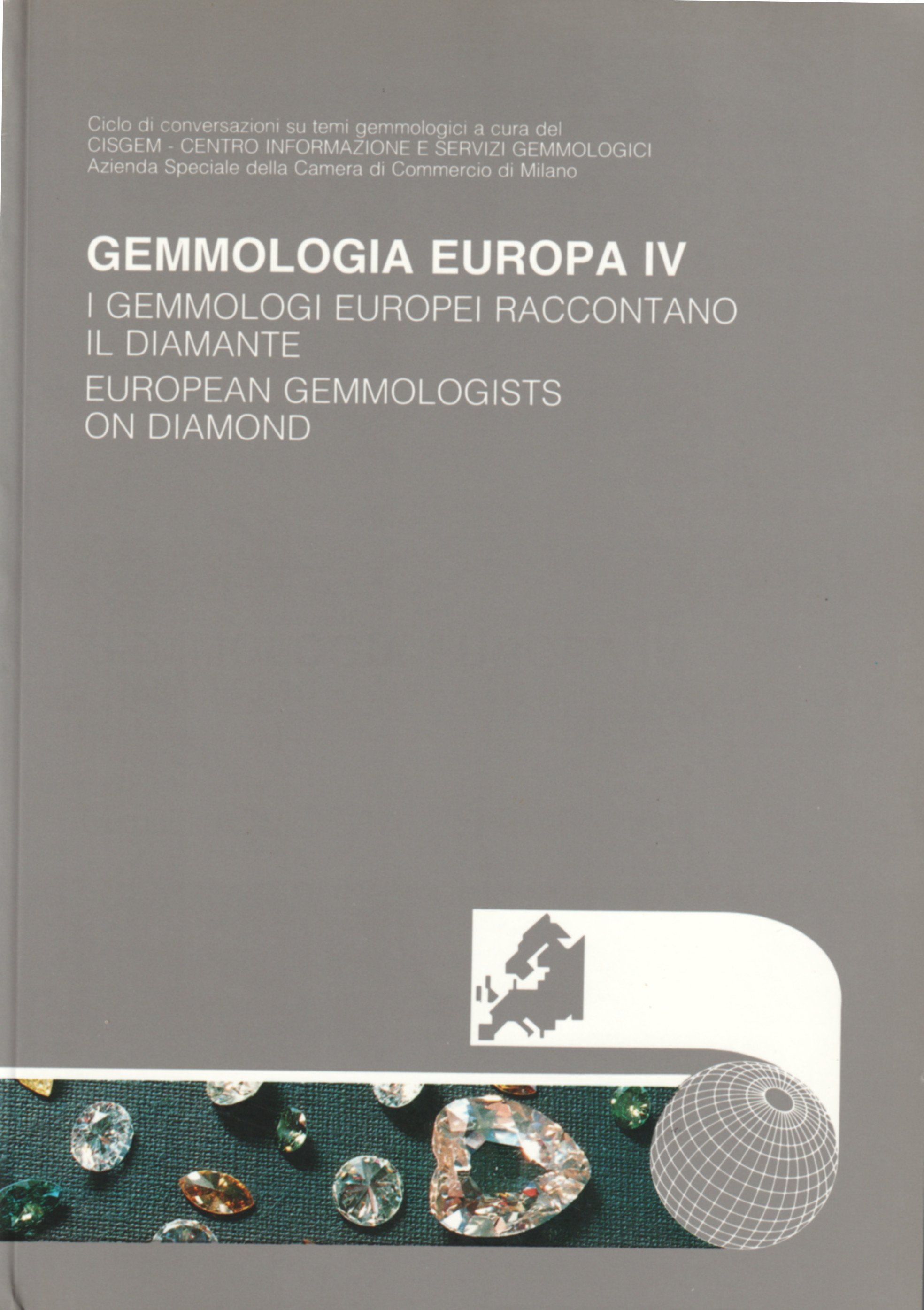
Gübelin, E.J. (1992) The inclusions in diamond (some microprobe analyses carried out on mineral inclusions in diamond). Gemmologia Europa: European Gemmologists on Diamond, Milan: CISGEM, pp. 160–193.
Record No. 2195  |  Sinkankas/Born No.: NIS/NIB  |  RWHL

Surface features on natural rubies and sapphires derived from volcanic provinces
Journal Article
Coenraads, R.R. (1992) Surface features on natural rubies and sapphires derived from volcanic provinces. Journal of Gemmology, Vol. 23, No. 3, July, pp. 151–160.
Record No. 592  |  ISBN/ISSN: 221252  |  Sinkankas/Born No.: NIS/NIB  |  RWHL
R.R. Coenraads examines the surface morphology of natural rubies and sapphires from volcanic-associated placer deposits in eastern Australia and Thailand, distinguishing features inherited from crystal growth and magmatic transport from damage acquired in alluvial environments. Samples from the New England gemfields and the Bo Phloi and Chanthaburi–Trat districts were studied with binocular microscopy, followed by scanning electron microscopy of selected cleaned and gold-coated specimens. The observed features fall into three broad categories: negative crystal impressions, resorption and etching structures, and fractures or impact damage associated with subsequent transport. Deep, sharply bounded geometric sockets are interpreted as impressions left by neighbouring minerals in a coarse crystalline aggregate containing corundum, anorthoclase, zircon, and spinel. Coenraads proposes that corundum-bearing assemblages formed from evolved, silica-poor magmas and were subsequently disaggregated and partly dissolved by alkaline basaltic carrier magmas during ascent. Most rounded surfaces are attributed to this magmatic resorption rather than prolonged stream wear. Their sculpturing reflects corundum’s trigonal symmetry and varies with surface orientation relative to the c-axis. Features include triangular prismatic hillocks, pyramids, inverted pyramidal pits, and shallow triangular or hexagonal depressions containing central remnants. Surfaces approximately parallel to the c-axis may display inclined stacks resembling elongated triangular bricks, while intermediate orientations favour triangular pyramidal depressions. Continued dissolution enlarges and merges these structures into irregular channels, porous textures, and deeply sculptured surfaces. Fine corrosion pits and microscopic steps indicate superimposed etching and successive layer removal. Curved or subparallel chatter marks are interpreted as products of mechanical stress; crystallographically controlled etching within them suggests that they formed before or during magmatic ascent and were subsequently modified by dissolution. Later mechanical damage includes conchoidal fractures radiating from impact points, chipped edges, and broken hillocks exposing clean fracture surfaces. Breakage along previously healed or partly healed fractures can reveal fingerprint-like networks of fine tubes, connecting external surface observations with familiar internal inclusions. Despite these examples of damage, many delicate surface projections remain intact. Their preservation, considered alongside spatial differences in corundum characteristics within individual placers, indicates limited downstream reworking and mixing. Coenraads concludes that the sources are likely to lie close to the placer deposits. The study demonstrates how successive generations of surface features can preserve evidence of crystal association, reaction with carrier magma, stress, and fluvial history, allowing rounded gem corundum to be interpreted through processes more specific than abrasion alone.

Vietnamese ruby: A discriminatory problem for gemmologists
Journal Article
Brown, G. (1992) Vietnamese ruby: A discriminatory problem for gemmologists. Australian Gemmologist, Vol. 18, No. 2, pp. 43–46.
Record No. 534  |  Sinkankas/Born No.: NIS/NIB  |  RWHL
Grahame Brown examines the difficulties of distinguishing Vietnamese ruby from Myanmar ruby and identifying heat-treated Verneuil synthetics introduced into parcels represented as natural Vietnamese corundum. Discoveries at Luc Yen in 1987 and Quy Chau in 1990 supplied rubies and pink sapphires whose attractive colours closely resembled valuable Myanmar material. By late 1990, these stones were appearing in Australia through Vietnamese residents and dealers purchasing from Thai wholesalers. Brown reports that some parcels of rough and faceted ruby, as well as blue sapphire, contained convincing synthetic substitutes. Routine gemmological measurements provide little assistance because refractive indices, birefringence, specific gravity, pleochroism, fluorescence, and absorption spectra overlap among the materials concerned. Microscopic examination is therefore essential, although many inclusions previously considered characteristic of Myanmar ruby also occur in Vietnamese stones. Shared features include swirling growth structures, boehmite-decorated twin planes, rutile clouds, partly healed fractures, negative crystals, carbonates, apatite, mica, zircon, and pyrrhotite. Drawing on published research, Brown discusses potentially useful combinations of Vietnamese features, including blue growth-related zoning, rod-like pyrrhotite and carbonate inclusions, orange prismatic rutile, bluish clouds of fine rutile, and orange inclusions attributed to nordstrandite. These observations support cautious provenance assessment rather than simple separation by colour or one inclusion. The second problem arises because prolonged heating can diffuse the curved colour banding normally used to recognize flame-fusion corundum. Brown recommends examining every stone in immersion at 10–25× magnification, using diffuse transmitted light together with lateral fibre-optic illumination and rotating the specimen through different orientations. Residual diffuse banding, rounded or elongated gas bubbles, and partly fused whitish alumina near the original boule attachment can reveal synthetic origin. Other apparently reassuring features require caution: heating may generate natural-looking fractures in synthetic stones, and Verneuil corundum can display polysynthetic twinning. Conversely, elongated cavities in demonstrably natural Vietnamese ruby may resemble stretched synthetic gas bubbles. Photomicrographs document these overlapping appearances. Brown concludes that detecting synthetic additions and distinguishing Vietnamese from Myanmar origin require separate judgments, both founded on careful interpretation of multiple microscopic features. Chemical discrimination between natural sources in specimens lacking informative inclusions remained unproven at the time of the report.

Gem News: Update from Sri Lanka [describes fine red star spinel]
describes fine red star spinel
Journal Article
Koivula, J.I. and Kammerling, R. (1991) Gem News: Update from Sri Lanka [describes fine red star spinel]. Gems & Gemology, Vol. 27, No. 4, Winter, pp. 260–261.
Record No. 5992  |  ISBN/ISSN: 0016626X  |  Sinkankas/Born No.: NIS/NIB  |  RWHL
Recent developments in Sri Lankan gemstone production are summarised from information supplied by dealer Gordon Bleck, with particular attention to unusual materials and newly reported occurrences. Mining was reportedly being hindered by terrorist activity, especially in remote jungle areas around Okampitiya, while Ratnapura remained relatively safe. Rubies from a newly reported locality near Hambantota were described as unusually good in quality and deeper in colour than material generally associated with Sri Lanka, although individual stones rarely reached one carat. Deep pink fancy sapphires had also been found in the Matara district on the southern coast, but production was limited and fashioned stones seldom exceeded two carats. A notable departure from previously encountered Sri Lankan star spinel was the discovery in the Ratnapura district during 1991 of saturated red material with a high degree of transparency. Earlier examples familiar to the editors had generally been almost opaque, very dark, and weakly saturated purple. A photographed 1.12-carat red star spinel illustrates the distinctive combination of colour, transparency, and asterism. Other reported finds included clean, light yellow danburite from the Nirialla River, approximately ten kilometres from Ratnapura near Palawela and Nirialla. A large river-bed specimen yielded an 11.52-carat pear-shaped gem, while smaller fragments came from the river bank; this newer production was less included than earlier material. Two translucent yellowish green andradite crystals were among the year’s rarities, the larger measuring about two centimetres across and showing combined dodecahedral and trapezohedral forms. Increased quantities of colour-change spinel, sapphire, and garnet were also reported. Facetable kornerupine had become more available, including a 17.01-carat brownish green stone from central Sri Lanka whose unusually light tone was noteworthy for its size, whereas cat’s-eye kornerupine had become scarce. An unusually large, 5.00-carat blue sillimanite from Ambalapitiya completed the selection. The report documents the diversity of the country’s gem output through specific examples, emphasising differences in colour, transparency, size, inclusion abundance, and availability.

Gem News: More experimentation with blue diffusion-treated sapphires

Journal Article
Koivula, J.I. and Kammerling, R.C. (1991) Gem News: More experimentation with blue diffusion-treated sapphires. Gems & Gemology, Vol. 27, No. 3, Fall, pp. 187—188.
Record No. 5395  |  ISBN/ISSN: 0016626X  |  Sinkankas/Born No.: NIS/NIB  |  RWHL
The Summer 1990 issue of Gems & Gemology carried a comprehensive article on diffusion-treated sapphires. Among the materials examined were stones marketed by the firm Gem Source of Las Vegas, Nevada, and Bangkok, Thailand. At that time, Jeffery Bergman of Gem Source stated that he used Sri Lankan sapphires as starting material. Recently, Mr. Bergman shared information relating to experimental diffusion treatment of sapphires from another locality: Montana. He also donated eight of these stones, ranging from 0.53 to 1.18 ct, to GIA for study. According to Mr. Bergman, approximately 50% of the Montana sapphires they have diffusion treated to produce a blue color have also developed unwanted yellowish orange zones. Examination of the eight sample stones with magnification readily revealed the yellowish orange zones described by Mr. Bergman; also noted in some of the stones were disk-like areas of dark blue surrounding dark crystalline inclusions (figure 12). We believe that the yellowish orange areas are related to zoned growth and reflect a higher iron impurity content, while the disk-like dark blue areas are caused by internal diffusion—a cannibalization of both iron and titanium from possibly iron-rich rutile and/or ilmenite inclusions. Both of these unanticipated color areas no doubt result from the high temperatures used in the diffusion-treatment process.

Exploring the Literature of Gemstone Inclusions

The literature of gemstone inclusions covers identification, origin determination, treatments, synthesis, mineral inclusions, fluid inclusions and other internal features of natural and synthetic gems.

For a curated selection of important sources, read Inclusions in Gemstones — Hyperion Literature Sources.

About Four Treasures

Four Treasures is Lotus Gemology's freely accessible gemological reference database. Use the full database to search by author, title or keyword and explore literature on gemology, mineralogy, jewelry and related fields. Where available, hyperlinks on titles may lead directly to the full publication.

Search the Complete Four Treasures Database