Gemstone Inclusions Bibliography

Gemstone Inclusions Bibliography

Explore books, articles and historical sources on inclusions in gemstones in Four Treasures, the Lotus Gemology reference database. This bibliography brings together matching records from the collection, with publication details, abstracts and cover images where available.

Gemstone Inclusion References

The list below matches the terms inclusion or inclusions in the database's searchable fields. Some references discuss inclusions as part of a broader subject.
1,121–1,140 of 1,344 matching references

Indian Gemmology

Book
Tank, R.R. (1971) Indian Gemmology. Jaipur, Dulichand Tank, 171 pp.
Record No. 1679  |  Sinkankas/Born No.: 6484; NIB  |  RWHL
Sinkankas: Gemstones as viewed by an Indian author steeped in traditional lore presents a perspective deeply rooted in India’s enduring cultural relationship with gems, much of which remains seriously regarded today. As noted in a review in Gems & Gemology (Vol. 14, No. 2, 1972, pp. 61–63), the work is a unique combination of Indian culture and gemology." The lengthy and valuable introduction offers insights into Indian gem lore, tracing its origins to ancient texts as well as to more recent sources, many of which are cited by the author, Tank, along with the names of their authors. Topics discussed include the critical importance of imperfections in gems, distinctions between synthetics and naturals, and traditional Indian classifications, listing 84 gemstones in total. At the heart of the book is a focus on the nine traditional gems—emerald, diamond, pearl, coral, zircon, blue sapphire, sapphire, ruby, and cat’s-eye—shown on the color plate preceding the text. These are described using both traditional beliefs and modern scientific knowledge, with an emphasis on the qualities a gem must possess to be considered protective or influential. Tank also explores various gem varieties, their sources, and recommendations for when and where they should be worn for their protective powers. For instance, in the case of pearls, shape is crucial, and over 20 forms are illustrated with their Indian names. The book also includes synonyms for gems in different Indian languages and covers additional stones such as garnet, feldspar, quartz, opal, topaz, tourmaline, and beryl. It concludes with short notes on lapidary treatments and birthstones. Monochrome plates primarily depict cutting styles and one plate on inclusions. Unfortunately, and typically of much modern bookbinding in India, the physical binding is very poor—the spine is unrounded and the inner hinges tend to break upon opening. As noted in Rev/Gemm (Vol. 13, No. 6, 1973, p. 239), the book is not a scientific treatise."

Geology of the Garba Tula area

Journal Article
Matheson, F.J. (1971) Geology of the Garba Tula area. Geological Survey of Kenya, Report, No. 88, 30 pp..
Record No. 1233  |  Sinkankas/Born No.: NIS/NIB  |  RWHL
Matheson describes the geology, structure, landscape development, and economic potential of approximately 1,300 square miles around Garba Tula in central Kenya, including the eastern Merti Plateau. The report accompanies a geological map at 1:125,000 and draws heavily on river exposures and aerial photographs because outcrops are discontinuous across the largely subdued terrain. Western exposures consist principally of folded and metamorphosed Basement System rocks belonging to the Mozambique belt, whereas younger sediments dominate the east. The basement succession includes crystalline limestones, calc-silicate gneisses, hornblende and biotite gneisses, garnet-bearing gneisses, quartz–feldspar gneisses, quartzites, migmatites, granitoid gneisses, pegmatites, and metamorphosed intrusive rocks. A western assemblage rich in migmatites and granitoid gneisses is distinguished from a more calcareous eastern sequence. Mineral assemblages are assigned to the staurolite–almandine subfacies of the almandine-amphibolite facies. Granitization is interpreted largely in terms of potassium metasomatism, with some granitoid gneisses possibly derived from locally generated granitic magma. Foliation generally parallels lithological boundaries and inferred original bedding, and folds predominantly trend north-northwest. A broad syncline with a calcareous core is proposed, although poor exposure prevents conclusive reconstruction; faulting is considered comparatively minor. Younger rocks include sandstones tentatively assigned to the Jurassic through regional correlation, followed by extensive grits and conglomerates attributed to the Upper Pliocene. These younger sediments rest on an end-Tertiary erosion surface and form the Merti Plateau, where they are capped by olivine basalt and locally basanite. Basaltic dykes cut the basement rocks. Pleistocene lake deposits, river terraces, alluvium, soils, and secondary limestone record later drainage development and renewed erosion. The economic assessment identifies limestone, garnet, graphite, magnetite, olivine, and kaolin, but finds their prospects restricted by quality, concentration, accessibility, or transport costs. Garnet is widespread in biotite–garnet gneisses but occurs as small crystals containing numerous quartz inclusions. Olivine is common in the plateau lavas and locally concentrates in watercourses, although much is altered. Graphite occurs in small quantities in hard quartzite, and no economically important magnetite concentrations were observed. Water supply receives particular attention because most inhabitants and livestock depend on wells in sandy riverbeds despite the Uaso Ngiro crossing the area. The report discusses natural barriers that retain groundwater, recommends more permanent wells and additional subsurface storage, and identifies an abandoned productive borehole as a possible means of improving supplies in the east.

Über einige Edelsteine aus Tansania und ihre Vorkommen

On some gemstones from Tanzania and their occurrences
Journal Article
Bank, H. (1971) Über einige Edelsteine aus Tansania und ihre Vorkommen. [On some gemstones from Tanzania and their occurrences] Hessisches-Landesamt für Bodenforschung, Abhandlungen, Vol. 60, pp. 203–215.
Record No. 420  |  Sinkankas/Born No.: NIS/NIB  |  Language: in German  |  RWHL
Bank surveys the principal gemstones then known from Tanzania and relates them to their geological occurrences and mineralogical properties. Following an outline of Tanzanian geology, he treats diamond, garnet, corundum, zoisite, prase opal, diopside, and chromium-bearing tourmaline. Garnets include pyrope–almandine “rhodolite,” hessonite, yellow-green and colorless grossular, and rare emerald-green Cr-bearing grossular from the Mirarani Hills. Corundum is described from the Longido zoisite-amphibolite, where large ruby porphyroblasts show pronounced zoning, parting, rutile needles, and other inclusions; additional Tanzanian deposits yield ruby, sapphire, padparadscha, and fancy-colored corundum. Particular attention is given to transparent blue zoisite from the Mirarani Hills, discovered in 1967, including its pleochroism, optical properties, trace elements, heat-induced color modification, color change, and occasional chatoyancy; its occurrence is described in pegmatitic-hydrothermal veins or fracture fillings with quartz, feldspar, grossular, and diopside. The paper also records nickel-colored green prase opal from Hanety Hill, yellowish-green gem diopside, and emerald-green Cr-tourmaline from the Lelatema Hills, providing refractive indices, densities, lattice constants, trace-element data, and other mineralogical properties for many of the materials.

On the association of potassium feldspar and corundum found in the Hida metamorphic belt
Journal Article
Suzuki, M. and Kojima, G. (1970) On the association of potassium feldspar and corundum found in the Hida metamorphic belt. Journal of the Japanese Association of Min. Petrol. Econ. Geol., Vol. 63, pp. 266–274.
Record No. 5001  |  Sinkankas/Born No.: NIS/NIB  |  RWHL
Suzuki and Kojima describe an association of potassium feldspar and corundum in feldspathic gneiss from the southwestern Hida metamorphic belt, Japan, and assess its significance as evidence for granulite facies metamorphism. The occurrence lies in the Hane valley within the Odori River area of Gifu Prefecture, where the corundum-bearing rock forms a spindle-shaped body approximately 20 × 5 m enclosed in hornblende–clinopyroxene gneiss. Its foliation agrees with that of the surrounding gneiss, and no nearby igneous intrusion is present to explain the assemblage through local contact metamorphism. The inferred original metamorphic assemblage comprises corundum, potassium feldspar, plagioclase, biotite, rutile, graphite, apatite, zircon, and ore minerals. Chlorite, epidote, prehnite, and titanite are attributed to a later metamorphic episode. Corundum occurs as pink, spindle-shaped porphyroblasts, described as ruby, reaching 4 cm in length, with their long axes lying in the foliation plane; some contain rutile inclusions. Muscovite replaces corundum along its margins and forms reaction rims between corundum and potassium feldspar, indicating that these two minerals were originally in direct contact. Rutile is locally replaced by titanite along fractures. The rock is distinctly laminated, and its original bulk composition is suggested to have corresponded chemically to a trachytic rock. The authors interpret the potassium feldspar–corundum association through the quartz-absent dehydration reaction in which muscovite breaks down to potassium feldspar, corundum, and water. They compare published experimental equilibrium curves with thermochemical estimates and favour the curve yielding decomposition temperatures of approximately 640 °C at 1 kbar and 710 °C at 3 kbar, assuming water pressure equals solid pressure. These pressures are related to approximate depths of 3–11 km. The assemblage therefore indicates conditions on the higher-temperature side of the muscovite dehydration equilibrium. Comparisons with temperature estimates for recognized granulite terrains support the possibility that parts of the Hida belt reached granulite facies conditions, beyond the epidote-amphibolite and amphibolite facies commonly assigned to the belt. Nearby gneisses containing coexisting orthopyroxene and clinopyroxene, together with wollastonite-bearing clinopyroxene gneiss of the Inishi type, provide additional supporting evidence. The conclusion remains qualified by uncertainties concerning water mobility and the chemical potential of water in metamorphic pore fluids.

Modern synthetic gemstones

Journal Article
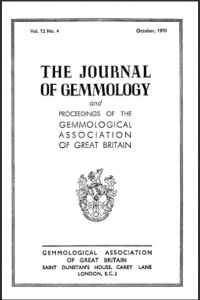
Webster, R. (1970) Modern synthetic gemstones. Journal of Gemmology, Vol. 12, No. 4, pp. 101–148.
Record No. 1830  |  ISBN/ISSN: 221252  |  Sinkankas/Born No.: NIS/NIB  |  RWHL
Webster surveys synthetic crystalline materials developed since 1946 that have entered the gemstone trade or offer potential for ornamental use, bringing together scattered literature and results from his own examinations. Arranged alphabetically by chemical or species name, the review includes synthetic equivalents of natural minerals and manufactured compounds without known natural counterparts. Established pre-war Verneuil corundum and spinel receive only limited attention, while crystal-growth methods are outlined rather than discussed in detail. Identification is approached through physical and optical constants, internal features, absorption spectra, fluorescence and phosphorescence, X-ray transparency, electrical conductivity and, where relevant, magnetism. Particular attention is given to synthetic emeralds from Chatham, Gilson, Zerfass and Linde, together with Lechleitner’s synthetic-emerald-coated beryl and layered constructions. Earlier synthetic emeralds commonly differed from natural stones in refractive indices, birefringence and density and showed characteristic veil-like inclusions and strong luminescence. More recent products increasingly overlap natural emeralds in their measurable properties; the addition of iron can suppress luminescence, making careful examination of inclusions especially important. Flux-grown and hydrothermal rubies likewise present greater identification difficulties than conventional flame-fusion material, with seed remnants, feathers, distinctive inclusion patterns and radiation responses providing possible evidence of synthesis. The diamond section records the progression from commercially useful industrial crystals to General Electric’s May 1970 announcement of gem-quality synthetic diamonds of approximately one carat or more, while noting that production costs still exceeded those of comparable mined stones. Extensive coverage is also given to garnet-structured compounds, particularly yttrium aluminium garnet, and to diamond simulants including strontium titanate, rutile and lithium niobate. Their usefulness and detection are considered in relation to dispersion, birefringence, density, hardness, colour and durability. Other entries discuss coloured synthetic quartz, fluorite, scheelite, periclase, silicon carbide, zincite, zircon and several less familiar or experimental materials. Developments in spinel include red flame-fusion stones, flux-grown crystal groups used uncut in jewellery, sintered material imitating lapis lazuli and material displaying a moonstone effect. Throughout, trace-element additions are shown to influence colour, spectra and luminescence, so that specimens of the same nominal material may behave differently. Photomicrographs, spectral diagrams, a comparative radiograph, tables of constants and a selected bibliography support the descriptions. The compilation distinguishes established commercial products from experimental or merely prospective gemstones and provides a contemporary reference for the increasingly varied identification problems posed by synthetic crystals.

The Townshend Collection of precious stones in the Victoria and Albert Museum: Notes on gemstone prices of the middle nineteenth century
Journal Article
O’Donoghue, M. (1970) The Townshend Collection of precious stones in the Victoria and Albert Museum: Notes on gemstone prices of the middle nineteenth century. Journal of Gemmology, Vol. 12, No. 1, Jan., pp. 1–5.
Record No. 1371  |  ISBN/ISSN: 221252  |  Sinkankas/Born No.: NIS/NIB  |  RWHL
O’Donoghue documents prices paid by the Reverend Chauncy Hare Townshend for gemstones acquired from the celebrated collection of Henry Philip Hope, using manuscript annotations in a museum copy of B. Hertz’s 1839 catalogue of that collection. These annotations provide a rare record of prices paid for good-quality gemstones during the middle nineteenth century. Townshend subsequently bequeathed his collection of precious stones, together with pictures, drawings and watercolours, to the institution then known as the South Kensington Museum, later the Victoria and Albert Museum. Although the Townshend Collection contains 154 items, the article is restricted to stones purchased from the Hope sales. The entries link descriptions and purchase prices with references to Hertz’s catalogue and museum accession numbers, recording dimensions and, where available, historical weights. Because the collection was sealed in a security case, the author could reproduce only some of the weights quoted by Hertz. The gemstones are mounted in gold rings, some constructed to swivel so that their backs can be examined. The catalogue covers diamonds, sapphire and other corundum, topaz, tourmaline, garnet, peridot, emerald, aquamarine, opal, quartz varieties and turquoise. Recorded prices include £250 for a lemon-yellow diamond, £85 for a green diamond and £30 for a small diamond described by Hertz as approaching red spinel in colour. A deep claret-coloured topaz cost £180, compared with £25 for a yellow topaz showing reddish ends. Aquamarines range from £15 to £300, while the listed opals range from £4 to £70. Descriptions preserve distinctive features such as chatoyancy, iridescence associated with fractures, colour variation, dendritic inclusions and engraved decoration. Examples include an emerald engraved with Persian characters, a garnet engraved with a faun and turquoise carved with a female head in relief. The article also corrects several earlier identifications: stones catalogued by Hertz as zircon are identified as tourmaline, hessonite and aquamarine, while two specimens listed as ruby spinel are assigned to corundum. By connecting surviving museum objects with their earlier catalogue descriptions and documented purchase prices, the paper supplies primary historical evidence for the study of nineteenth-century gemstone collecting and valuation.

Practical Gem Knowledge for the Amateur
Book
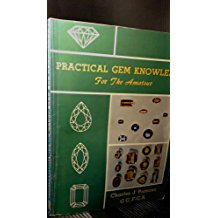
Parsons, C.J. (1969) Practical Gem Knowledge for the Amateur. San Diego, Lapidary Journal, Inc., 140 pp.
Record No. 1399  |  Sinkankas/Born No.: 5001; NIB  |  RWHL
Sinkankas: Typically written in simple, clear language and compiling articles originally published in Lapidary Journal, Oct. 1964–July 1968, with revisions. First 15 chapters on nomenclature, properties, crystallography, optical phenomena, color, inclusions, synthetics & imitations, testing procedures and instruments used, after which appear the remaining chapters on descriptions of gemstones, with organic materials treated in the last two chapters. The strong interest of the author in inclusions is apparent with much text devoted to same and hundreds of inclusion photographs; these form a most valuable part of the work. Rev. G & G, 13, 3, 1969, 103. Reprinted several times commencing in 1970.

On the nature of mineral inclusions in gemstones, parts I–II
Journal Article
Gübelin, E.J. (1969) On the nature of mineral inclusions in gemstones, parts I–II. Gems & Gemology, Vol. 13, No. 2, Summer, pp. 42–56, color plates A–D; No. 3, Fall, pp. 74–88, color plates E–H.
Record No. 890  |  ISBN/ISSN: 0016626X  |  Sinkankas/Born No.: NIS/NIB  |  RWHL
Gübelin examines the nature and gemological significance of mineral inclusions in gemstones, emphasizing that inclusions are integral records of the conditions under which their host crystals formed. The two-part article discusses the identification, morphology, and genetic relationships of included minerals and explains how their crystal form, orientation, alteration, and association with other internal features can provide evidence concerning the origin and geological history of a gemstone. Numerous photomicrographs, including color plates, illustrate characteristic mineral inclusions in important gem species. Particular attention is given to the value of inclusions in distinguishing natural gemstones and in determining geographic or geological origin where sufficiently diagnostic inclusion assemblages occur. The study demonstrates the importance of systematic inclusion microscopy both as a practical gemological tool and as a means of investigating gemstone genesis.

Kashan flux grown rubies

Journal Article
Anonymous (1969) Kashan flux grown rubies. Gems & Gemology, Vol. 13, No. 1, Spring, pp. 30–34.
Record No. 310  |  ISBN/ISSN: 0016626X  |  Sinkankas/Born No.: NIS/NIB  |  RWHL
Describes the Kashan synthetic rubies produced by the flux-growth process and examines the features by which they may be distinguished from natural ruby. The material shows the color and general appearance of fine natural ruby, making recognition potentially difficult without careful examination. Particular attention is given to characteristic internal features associated with flux growth, including residual flux and distinctive growth structures, and to their value in separating the synthetic stones from natural corundum. The article emphasizes the gemological importance of recognizing these diagnostic inclusions as flux-grown synthetic rubies became commercially available. One of the first references to Kashan synthetic rubies

Comparative characteristics of jadeite and associated rocks from Polar Ural and Prebalkhash region
Journal Article
Dobretsov, N.L. and Ponomareva, L.G. (1968) Comparative characteristics of jadeite and associated rocks from Polar Ural and Prebalkhash region. International Geology Review, Vol. 10, No. 2,, 2/1/68 pp. 221–242.
Record No. 5835  |  ISBN/ISSN: 206814  |  DOI: https://dx.doi.org/10.1080/00206816809474872  |  Sinkankas/Born No.: NIS/NIB  |  RWHL
New additional data on petrography and mineralogy of jadeite and associated rocks from the Polar Urals and Prebalkhash region are given. Some questions of the jadeite rock genesis in hyperbasites are also considered. In the Pay-Yer massif, Polar Urals, the jadeite rocks are associated with a gabbro–pyroxenite complex, garnet-bearing gabbro–amphibolite, metamorphic schists, and glaucophane rocks. Jadeitite and albitite form a chain of lens-shaped bodies in hyperbasites and represent metasomatic metagabbro rocks, altered under conditions of high pressure and high soda potential. Secondary processes of diaphthoresis are strongly revealed. In the Kantegir hyperbasite massif, northern Prebalkhash region, jadeitites form drop-like bodies together with numerous inclusions of unaltered granitoids and other metasomatic rocks. Jadeitite and hornblende are the earliest (high-temperature) metasomatic rocks. Chemical, optical, and X-ray data of jadeitite and accessory and other minerals of jadeite rocks are given. The authors conclude that jadeite rocks of the Polar Urals formed at a temperature close to 700 °C and at a general pressure not less than 14,000 bars; the Prebalkhash jadeite, at a temperature close to 600 °C and pressure not less than 12,000 bars. High pressure is caused by stress produced in deep fault zones. The Na₂O potential and partial pressure of H₂O are of great importance, a question discussed in the light of the most recent data. The prevailing type of formation process (mechanism) of jadeite rocks in hyperbasites is bimetasomatos, which is not always accompanied by desilication. Composition and genesis of original rocks is not of decisive significance. Appropriate model and genetic features of the mentioned deposits are considered in this paper.

La Esmeralda: Las Gemas Y Otras Materias Preciosas
The Emerald: Gems And Other Precious Materials
Book
Santos Munsuri, A. (1968) La Esmeralda: Las Gemas Y Otras Materias Preciosas. [The Emerald: Gems And Other Precious Materials] Madrid, Instituto Gemológico Español, 123 pp.
Record No. 4281  |  Sinkankas/Born No.: 5723; NIB  |  Language: in Spanish  |  RWHL
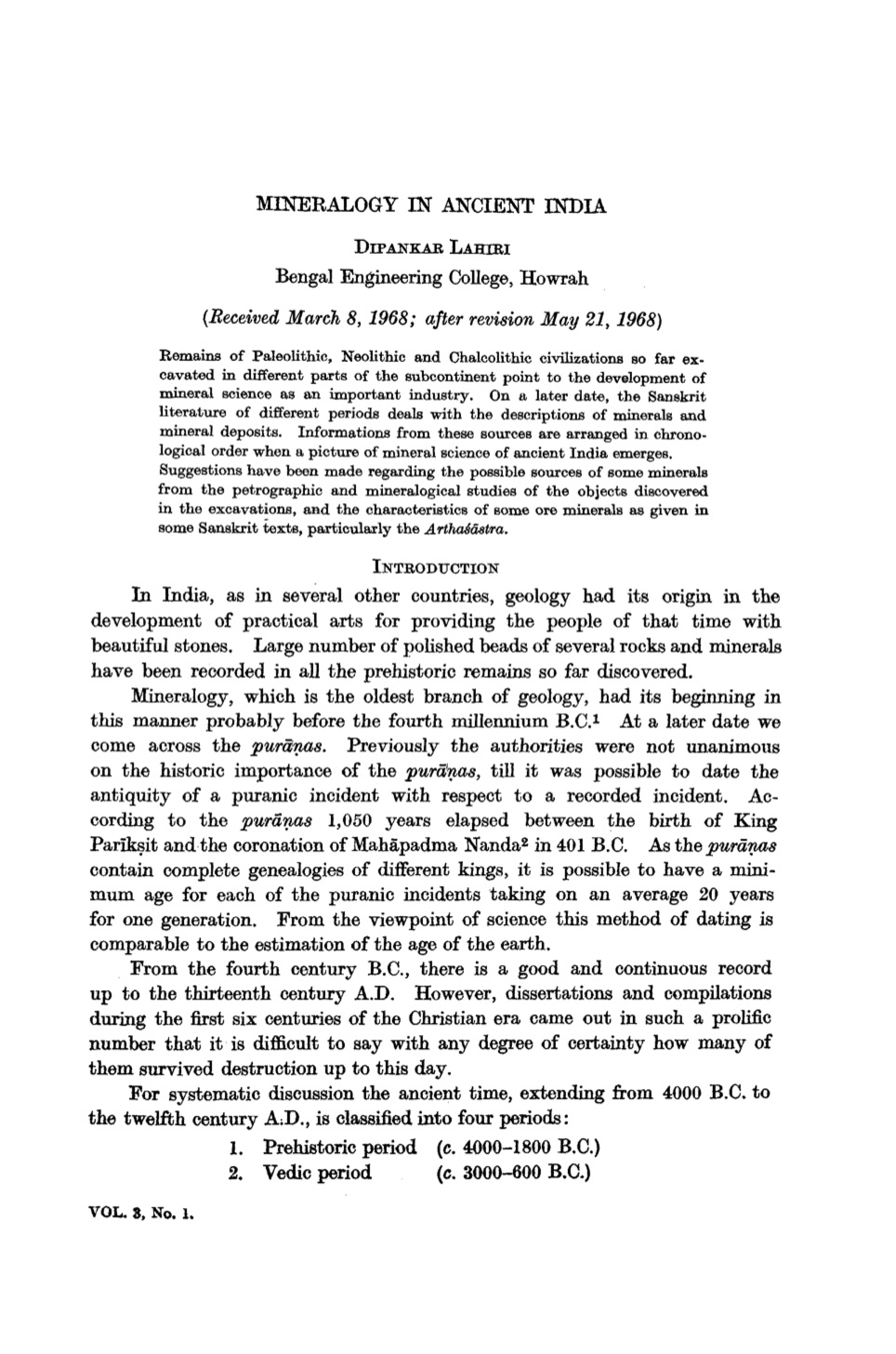
Sinkankas: Very handsome, imaginatively designed book, with the unusual feature of the title being spread over three pages. Apparently this work was meant to be the first of a series of monographs on gemstone families but up to date (1988) no others have appeared. The first part treats emerald history, in the East, as known to Pliny, origin of the name, curious lore surrounding, famous emeralds, and the color and causes. The second part describes world emerald deposits with most space naturally devoted to the Colombian mines, type crystals, and a discussion of trapiche crystals. The third part provides property data, considerable detail on inclusions in emerald, doublets & imitations, and the methods of gemological investigation . Next appear four tables of constants of natural & synthetic emeralds, comparisons of emerald to other similarly-colored stones or imitations, and fluorescence of emeralds from various deposits. The bibliography, unfortunately, is replete with errors in contrast to the text which is relatively free of defects. The mostly high quality illustrations show natural specimens, minerals that could be mistaken for emerald, cut stones, a Russian postage stamp depicting Siberian emerald, jewelry set with emeralds, absorption spectra, and many photographs of inclusions but these last lack the quality of the other illustrations. Rev R K Mitchell, J Gemm, 11, 7, 1969, 272–3, notes errors in biblio & elsewhere.

Mineralogy in ancient India

Journal Article
Lahiri, D. (1968) Mineralogy in ancient India. Indian Journal of History of Science, Vol. 3, No. 1, pp. 1–8.
Record No. 3034  |  Sinkankas/Born No.: NIS/NIB  |  RWHL
Lahiri surveys the development of mineralogical knowledge in India from prehistoric stoneworking to medieval Sanskrit compilations, combining archaeological evidence with descriptions of minerals, ores, gemstones, and mining in literary sources. The account is organized into prehistoric, Vedic, Buddhist, and later periods, extending from approximately 4000 BCE into the thirteenth century CE. Early evidence includes flint and quartzite implements, hematite pigments, polished stone beads, copper tools, and ornaments of lapis lazuli, agate, and carnelian. For pre-Harappan and Indus Valley cultures, the composition of metal objects and the mineralogy of beads are considered possible guides to raw material sources and trade connections. Proposed sources of copper, tin, gold, and silver are discussed, alongside the use of bitumen for waterproofing and garnet and corundum powders for polishing. Vedic references establish familiarity with several metals and jewels but provide little detailed information about mineral deposits or extraction methods. The traditional accounts of gold obtained by ants are reviewed through an explanation involving Himalayan gold miners. Particular attention is given to the Arthaśāstra, whose descriptions of ore colour, weight, texture, smell, and associations Lahiri interprets in terms of recognizable minerals and geological settings. These interpretations include placer gold, silver associated with sulfide ores, copper carbonates and sulfides, and possible sources of iron and tin. The text also records recognition of differences between tarnished surfaces and freshly broken interiors. Gem assessment encompasses crystal form, colour, clarity, lustre, relative weight, and defects such as inclusions, bubbles, and granularity. Later writings by Vātsyāyana and Varāhamihira, together with classical geographical accounts, provide further information on gemstones and their supposed sources; Lahiri suggests that several traditional diamond localities may reflect confusion with carnelian. The Garuḍa Purāṇa is discussed for its treatment of relative weight, scratch hardness, lustre, dispersion, fusibility, and crystallinity, while Bhoja is credited with describing diamond phosphorescence. The thirteenth-century Rasaratnasamuccaya brings together classifications and descriptions of minerals and gems, including mica varieties, sulfides, sulfur, ochre, alum, and arsenic minerals. Throughout, the author notes difficulties caused by inconsistent nomenclature, the treatment of different occurrences of one mineral as separate substances, and confusion between minerals and artificially prepared compounds. The article concludes that archaeological remains, abandoned workings, and scattered textual references indicate a long development of indigenous mining, beneficiation, and mineral processing, although many technical details have been lost or remain dispersed in Sanskrit and Prakrit literature.

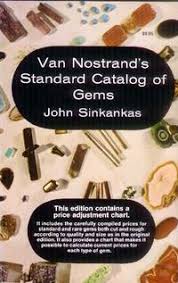
Van Nostrand’s Standard Catalog of Gems
Book
Sinkankas, J. (1968) Van Nostrand’s Standard Catalog of Gems. Princeton, NJ, Van Nostrand, 286 pp.
Record No. 1605  |  Sinkankas/Born No.: 6100; NIB  |  RWHL
Sinkankas provides a comprehensive reference catalogue of gemstones intended for gemologists, jewelers, collectors, and mineral enthusiasts. The entries are arranged systematically and describe natural gem materials in terms of their mineralogical and gemological properties, including chemical composition, crystal system, hardness, specific gravity, refractive indices, optical character, color, cleavage, inclusions, and other diagnostic features. Discussions also cover important localities, occurrence, varieties, nomenclature, cutting and use, and methods of identification, with attention to materials that may be confused with one another. Synthetic stones, imitations, and less familiar ornamental materials are also considered where relevant. Designed for practical consultation rather than continuous reading, the volume brings together a large body of mineralogical and gemological data in a compact reference work for identifying and studying gem materials.

On the cause of asterism in star corundum
Journal Article
Nassau, K. (1968) On the cause of asterism in star corundum. American Mineralogist, Vol. 53, January–February, pp. 300–305.
Record No. 1330  |  Sinkankas/Born No.: NIS/NIB  |  RWHL
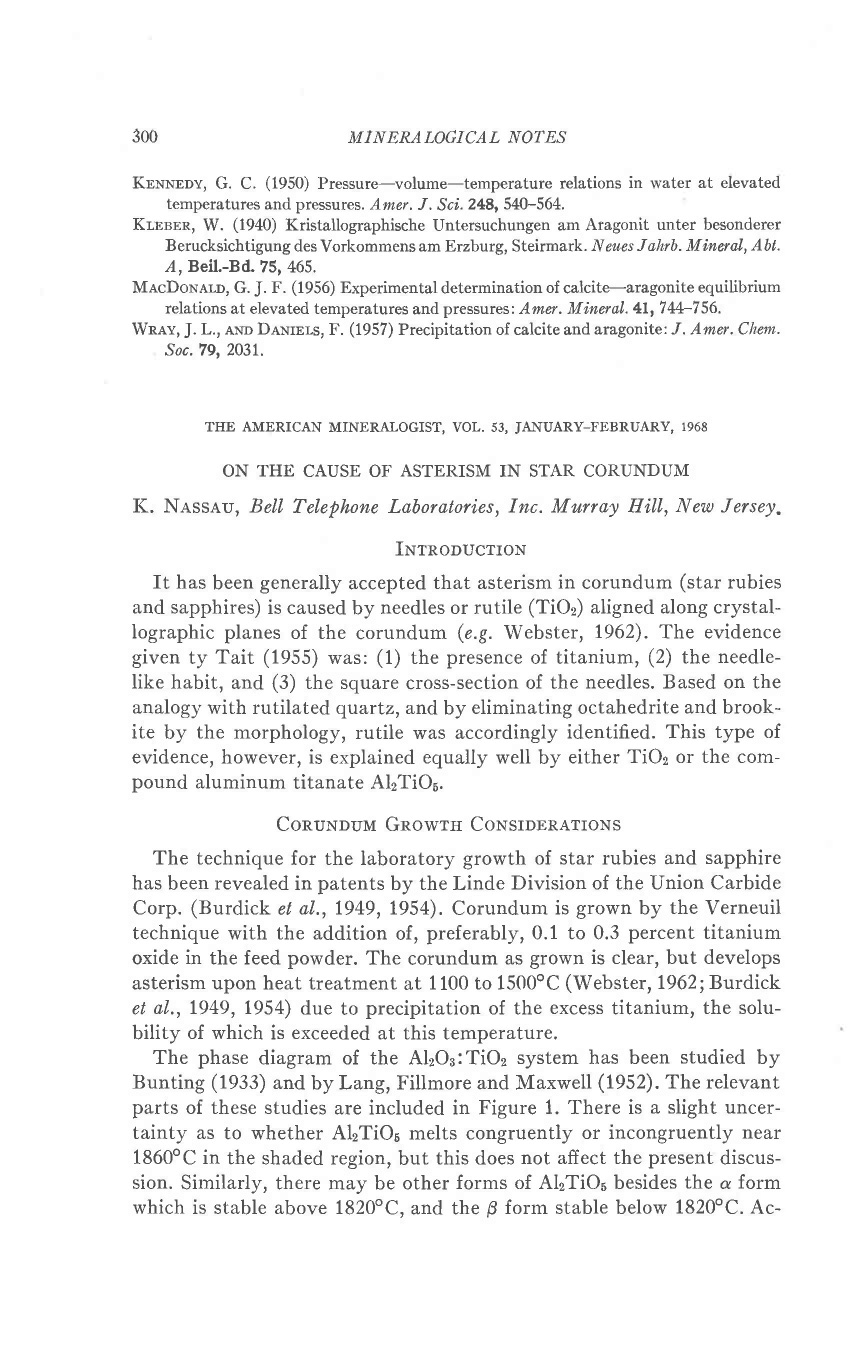
It has been generally accepted that asterism in corundum (star rubies and sapphires) is caused by needles of rutile (TiO₂) aligned along crystallographic planes of the corundum (e.g. Webster, 1962). The evidence given by Tait (1955) was: (1) the presence of titanium, (2) the needle-like habit, and (3) the square cross-section of the needles. Based on the analogy with rutilated quartz, and by eliminating octahedrite and brookite by the morphology, rutile was accordingly identified. This type of evidence, however, is explained equally well by either TiO₂ or the compound aluminum titanate Al₂TiO₆.

An Olmec serpentine figure at Dumbarton Oaks
Journal Article
Coe, M.D. (1967) An Olmec serpentine figure at Dumbarton Oaks. American Antiquity, Vol. 32, No. 1, pp. 11–113.
Record No. 28556  |  DOI: https://doi.org/10.2307/278788  |  Sinkankas/Born No.: NIS/NIB  |  RWHL
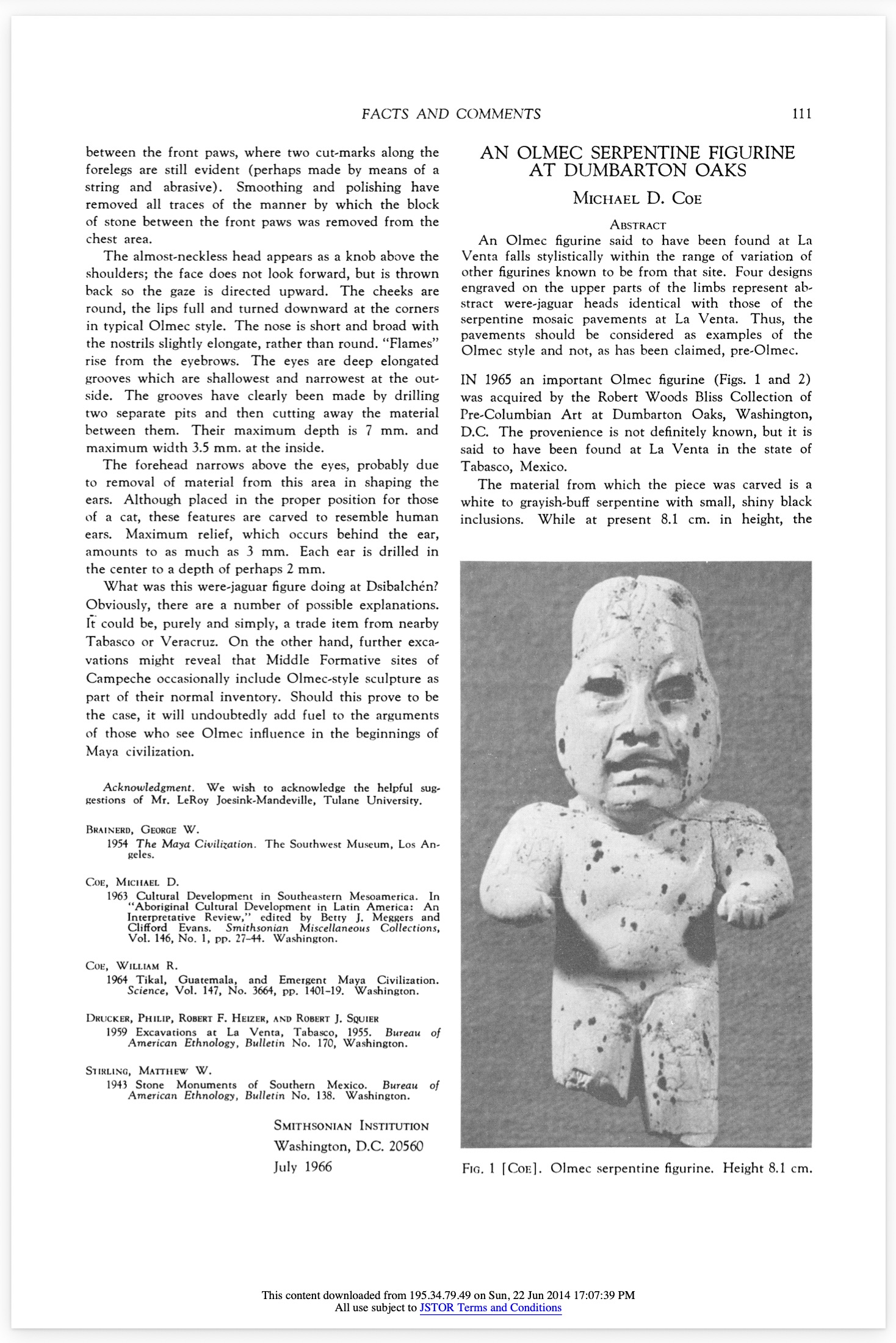
An Olmec figurine said to have been found at La Venta falls stylistically within the range of variation of other figurines known to be from that site. Four designs engraved on the upper parts of the limbs represent abstract were-jaguar heads identical with those of the serpentine mosaic pavements at La Venta. Thus, the pavements should be considered examples of the Olmec style and not, as has been claimed, pre-Olmec. In 1965 an important Olmec figurine (Figs. 1 and 2) was acquired by the Robert Woods Bliss Collection of Pre-Columbian Art at Dumbarton Oaks, Washington, D.C. The provenience is not definitely known, but it is said to have been found at La Venta in the state of Tabasco, Mexico. The material from which the piece was carved is a white to greyish-buff serpentine with small, shiny black inclusions. While presently 8.1 cm in height, the figurine had been broken in ancient times, so that one foot is missing, as well as the lower part of the other leg. There has been no restoration, although a recent break across the left shoulder and the chin has been repaired. The material, workmanship, and patination all testify to its authenticity.

Studies on Jadeites and Albitites from Guatemala
Thesis
da Silva, Z.C.G. (1967) Studies on Jadeites and Albitites from Guatemala., Houston: Rice University
Record No. 28499  |  Sinkankas/Born No.: NIS/NIB  |  RWHL
In the central part of the San Augustin Acasaguastlan Quadrangle north of the Metagua River Valley, Guatemala, jadeite-rich rocks occur as inclusions in serpentine. The associated minerals are albite and in minor amounts, muscovite, actinolite and zoisite. The country rock is generally highly sheared serpentine, although massive serpentine is also present in lesser amounts. Most of the jadalte in the area is white or slightly greenish, having only small amounts of diopside, acmite and hedenbergite molecules. The green variety has a higher content of these pyroxene molecules and the variation in optical properties of the different specimens of jadeite analyzed is related to the impurities present. Jadeite seems to have formed before serpentinization of the ultrabasic body and later reacted with silica-bearing aqueous solutions forming secondary albite. Albitites are quite abundant in the area, occurring as large included bodies in the serpentine. From field relationship, chemical and mineral composition, they seem to have originated from a pegmatite which underwent desilication.

Eclogites and jadeite from the Motagua Fault Zone, Guatemala
Journal Article
McBirney, A., Aoki, K.-i. and Bass, M.N. (1967) Eclogites and jadeite from the Motagua Fault Zone, Guatemala. American Mineralogist, Vol. 52, No. 5–6, May–June, pp. 908–918.
Record No. 7824  |  ISBN/ISSN: 0003004X  |  Sinkankas/Born No.: NIS/NIB  |  RWHL
Jadeite occurs as inclusions in serpentinite in the Motagua fault zone. A boulder of remarkable size and purity was found near Manzanal, Guatemala, and chemical, optical, and X-ray studies have been made of a separated sample of the jadeite. Elsewhere in the Motagua fault zone, omphacite-garnet eclogites and glaucophane-lawsonite-omphacite-garnet rocks have been found in similar environments. Only at the Manzanal locality, however, have sodic pyroxenes been found in rocks which are nearly monomineralic.

Solid inclusions in corundum and almandine garnet from Ceylon, identified by x-ray powder photographs
Journal Article
Zwaan, P.C. (1967) Solid inclusions in corundum and almandine garnet from Ceylon, identified by x-ray powder photographs. Journal of Gemmology, Vol. 10, No. 7, July, pp. 224–234.
Record No. 1924  |  ISBN/ISSN: 221252  |  Sinkankas/Born No.: NIS/NIB  |  RWHL
Solid mineral inclusions in six corundum specimens and four almandine garnets collected by the author from gem gravels in the Ratnapura district of Ceylon (Sri Lanka) were investigated using optical examination and X-ray powder diffraction. Their collection establishes their geographical provenance, although the deposits are secondary. The pebbles were partly faceted to permit refractometer measurements, microscopic examination and access to inclusions intersecting the surface. Inclusions were photographed before material was removed, and specific gravities were determined hydrostatically. Powder diffraction photographs were obtained using iron radiation and a camera 114.6 mm in diameter, enabling identification from very small quantities of material where transparency, crystal size or orientation prevented reliable optical determination. In corundum, diffraction patterns identified magnesium spinel, pyrrhotite, apatite, phlogopite, rutile and corundum itself. Spinel occurred as irregular reddish-brown material and as dark octahedral crystals; a thin surface coating gave some transparent crystals a misleading metallic appearance. Pyrrhotite formed strongly magnetic, bronze-yellow grains, while phlogopite occurred as strongly dichroic brown plates. Apatite commonly formed colourless hexagonal prisms, and abundant apatite was suggested as the cause of unusually low specific gravities in two corundums. Rutile detected in material removed from one specimen was probably associated with its silk. The identification of corundum inclusions within corundum required repeated preparation: possible contamination by the host and an abrasive was resolved by isolating an entire inclusion, whose diffraction pattern confirmed corundum. A brownish-red powdery inclusion remained unidentified, although its diffraction data showed similarities to halloysite and serpentine-group minerals. In almandine garnet, apatite, rutile and muscovite were identified. Apatite displayed markedly variable appearances, including rounded, apparently isometric grains, elongated hexagonal prisms and a large inclusion resembling calcite with rhombohedral cleavage. These examples demonstrate the limitations of identification from morphology alone. Including additional specimens outside the detailed descriptions, apatite had been found in three corundums, nine garnets and one spinel; all gave identical powder patterns assigned to chlorine-bearing hydroxylapatites. Additional observations included calcite in two rubies and sphalerite in two garnets. Apatite and spinel are considered relatively common inclusions, but whether the reported mineral associations are diagnostic of Ceylon provenance remains unresolved and requires further investigation.

Determination of solid inclusions in gemstones
Journal Article
Schubnel, H.-J. (1967) Determination of solid inclusions in gemstones. Journal of Gemmology, Vol. 10, No. 6, April, pp. 189–193.
Record No. 1563  |  ISBN/ISSN: 221252  |  Sinkankas/Born No.: NIS/NIB  |  RWHL
Schubnel examines the identification of solid inclusions in gemstones through laboratory techniques that supplement microscopic observation, emphasising their value in establishing natural origin and, in some cases, suggesting a probable geographical source. Reporting results obtained during the preceding two years, he explains that inclusions around one tenth of a millimetre or smaller need no longer present insurmountable identification problems when suitable mineralogical equipment is available. The choice of method must nevertheless be adapted to the individual stone, and the general inability to subject cut gemstones to destructive testing imposes practical restrictions. Direct determination is confined to inclusions that reach the surface; in rough crystals, polishing a face may be necessary to expose the inclusion. Three complementary approaches receive particular attention. Chemical analysis with the Castaing electron microprobe uses characteristic X-ray emission to establish the composition of very small inclusions. Microscopy in polarised reflected light provides optical observations and measurements, particularly for opaque minerals. X-ray powder diffraction can identify crystalline material removed from inclusions in rough stones, while measurements with a Leitz microhardness instrument leave square impressions only a few micrometres across. Illustrated identifications include pyrrhotite and chlorapatite in a mauve sapphire, a spinel containing 3% zinc in a cut ruby, and calcite in ruby. A more detailed example, presented in French, English and German as a suggested format for communication among inclusion specialists, describes calcite inclusions in a faceted ruby of presumed Burmese origin. Examination in transmitted light with the ruby immersed in methylene iodide reveals a large inclusion whose faces resemble a nail head and whose cleavage planes are clearly visible. Because this inclusion reaches the surface, its identification could be investigated using the Castaing microprobe, reflected-light microscopy and microhardness testing. The article anticipates increasing difficulty in distinguishing natural from synthetic gemstones and proposes systematic investigation of inclusions, particularly through microprobe analysis, as a means of improving the confidence with which gemmologists and mineralogists recognise and distinguish inclusion types.

Hydrothermal ruby: Infrared spectra and x-ray topography

Journal Article
Belt, R.F. (1967) Hydrothermal ruby: Infrared spectra and x-ray topography. Journal of Applied Physics, Vol. 38, No. 6, pp. 2688–2689.
Record No. 453  |  Sinkankas/Born No.: NIS/NIB  |  RWHL
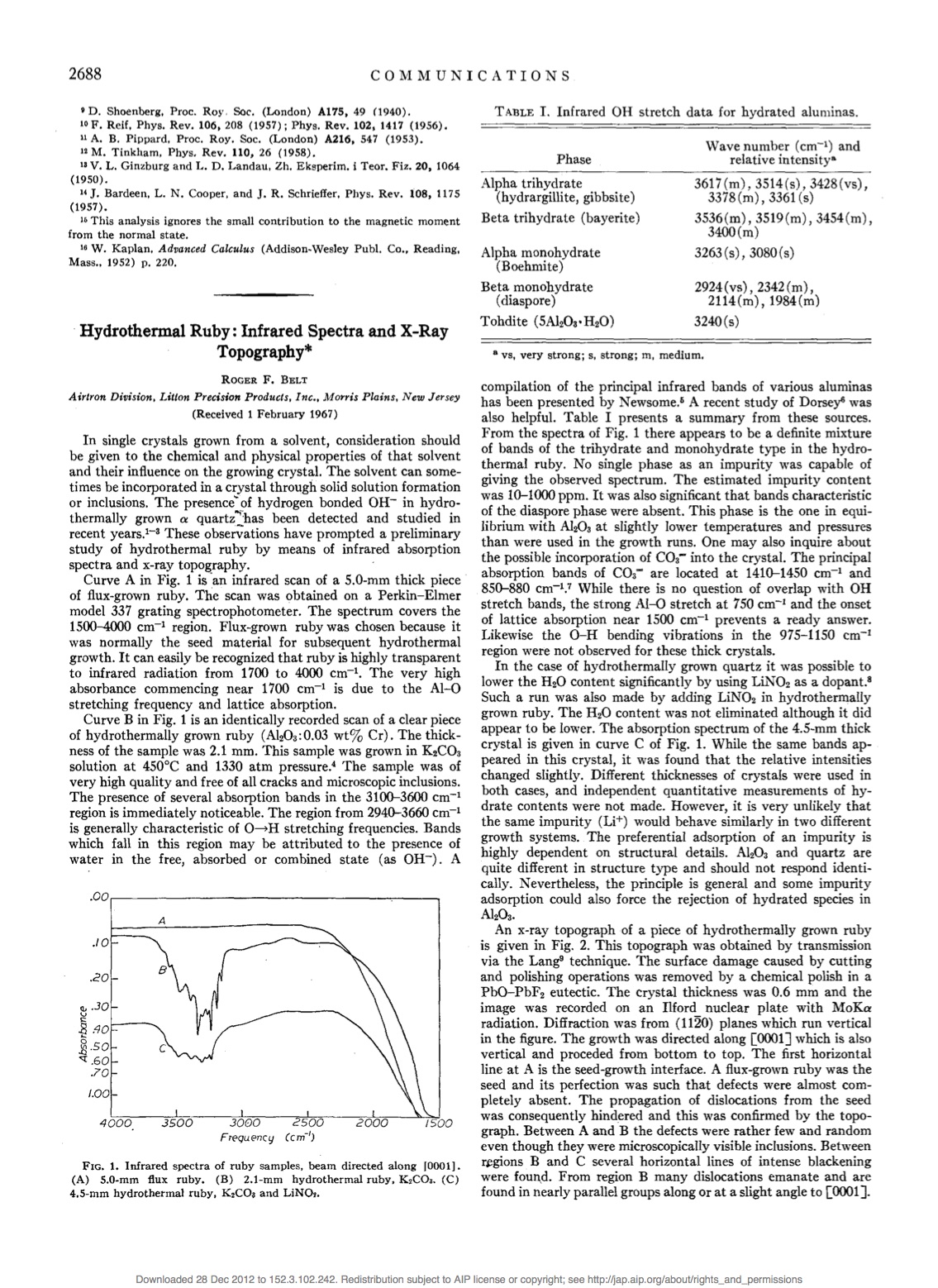
Belt presents a preliminary investigation of solvent-derived impurities and structural defects in hydrothermally grown ruby using infrared absorption spectroscopy and X-ray transmission topography. Comparison with flux-grown ruby, normally used as seed material, reveals additional absorption bands between approximately 3100 and 3600 cm⁻¹ in hydrothermal material grown from potassium carbonate solution at 450 °C and 1330 atm. These bands occur in the O–H stretching region and are interpreted as evidence of hydrated impurities, even in a visually clear specimen free of microscopic inclusions and cracks. Comparison with published spectra of hydrated aluminas suggests contributions resembling both trihydrate and monohydrate species; no single impurity phase explains the entire spectrum. The estimated impurity concentration is 10–1000 ppm, and characteristic diaspore bands are absent. Strong host-crystal absorption prevents a straightforward assessment of carbonate incorporation and obscures the O–H bending region. Adding lithium nitrite to the growth solution appears to reduce, but does not eliminate, hydrated impurities. This observation remains qualitative because specimens differed in thickness and independent hydrate measurements were not made. Lang topography of a thin crystal section shows a nearly defect-free flux-grown seed followed by hydrothermal growth containing alternating relatively clear regions and horizontal defect bands. Groups of dislocations originate at these bands and extend approximately along the growth direction. Belt tentatively attributes the bands to brief temperature excursions rather than chromium fluctuations, although daily temperature records show no substantial deviations. Spatially resolved infrared measurements on an adjacent slice reveal changes in hydrated-impurity absorption associated with the growth sequence. The seed shows no hydrate absorption, early growth contains both trihydrate-like and monohydrate-like bands, and the most defective region exhibits strong bands near 3180 and 3230 cm⁻¹ with markedly weaker higher-frequency absorption. Later growth retains predominantly monohydrate-like features. These results indicate that substantial changes in the type or quantity of hydrated impurity can accompany grown-in defects. Belt proposes that hydrated inclusions, defect bands, and dislocation accumulations may help explain the susceptibility of hydrothermal ruby to fracture by providing sites for stress concentration and flaw development. He further suggests that hydrated impurities could influence internal friction, hardness, and other impurity-dependent properties, identifying relationships requiring further investigation rather than establishing a quantitative mechanical model.

Exploring the Literature of Gemstone Inclusions

The literature of gemstone inclusions covers identification, origin determination, treatments, synthesis, mineral inclusions, fluid inclusions and other internal features of natural and synthetic gems.

For a curated selection of important sources, read Inclusions in Gemstones — Hyperion Literature Sources.

About Four Treasures

Four Treasures is Lotus Gemology's freely accessible gemological reference database. Use the full database to search by author, title or keyword and explore literature on gemology, mineralogy, jewelry and related fields. Where available, hyperlinks on titles may lead directly to the full publication.

Search the Complete Four Treasures Database