Gemstone Inclusions Bibliography

Gemstone Inclusions Bibliography

Explore books, articles and historical sources on inclusions in gemstones in Four Treasures, the Lotus Gemology reference database. This bibliography brings together matching records from the collection, with publication details, abstracts and cover images where available.

Gemstone Inclusion References

The list below matches the terms inclusion or inclusions in the database's searchable fields. Some references discuss inclusions as part of a broader subject.
1,081–1,100 of 1,344 matching references

Ruby in diamond

Journal Article
Meyer, H.O.A. and Gübelin, E.J. (1981) Ruby in diamond. Gems & Gemology, Vol. 17, No. 3, Fall, pp. 153–156.
Record No. 4915  |  ISBN/ISSN: 0016626X  |  Sinkankas/Born No.: NIS/NIB  |  RWHL
The first substantiated identification of corundum (var. ruby) occurring as an inclusion in natural diamond is presented. The ruby is assigned to the eclogitic suite of inclusions in diamond, and the implications of its occurrence are discussed in relation to the genesis of “eclogitic” diamonds. It is concluded that diamond crystallizes from a melt over a long period of time with possible fluctuations in ambient temperature and geochemical environment.

Taprobanite: A new mineral of the taaffeite group
Journal Article
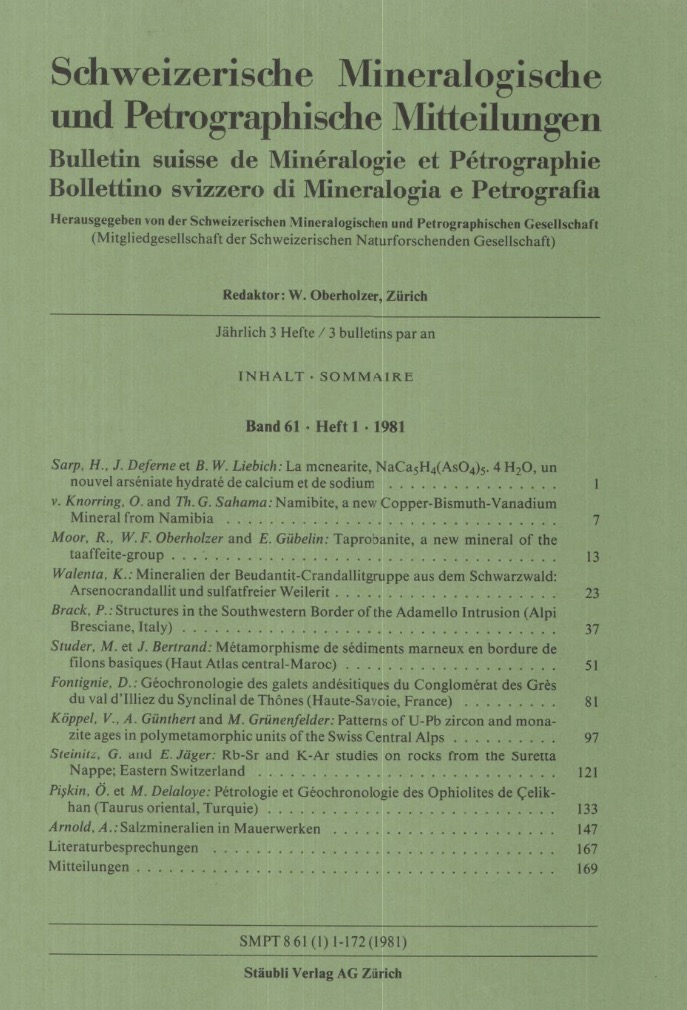
Gübelin, E.J. (1981) Taprobanite: A new mineral of the taaffeite group. Schweizerische Mineralogische und Petrographische Mitteilungen, No. 61, pp. 13–21.
Record No. 2157  |  Sinkankas/Born No.: NIS/NIB  |  Language: in German  |  RWHL
Gübelin describes “taprobanite,” a rare red gemstone from Sri Lanka initially thought to be taaffeite because of its similar appearance and gemological properties. Detailed examination showed it to represent a distinct member of the taaffeite mineral group, characterized by differences in chemical composition, crystallographic properties, and optical behavior. The study discusses its identification, physical and optical constants, absorption characteristics, inclusions, and relationship to taaffeite, emphasizing the difficulty of recognizing such rare stones by conventional gemological testing alone. The name derives from Taprobane, the ancient name for Sri Lanka.

Recent observations on an apparently new internal paragenesis of beryls
Journal Article
Gübelin, E.J. (1981) Recent observations on an apparently new internal paragenesis of beryls. Journal of Gemmology, Vol. 17, No. 8, October, pp. 545–554.
Record No. 2151  |  ISBN/ISSN: 221252  |  Sinkankas/Born No.: NIS/NIB  |  RWHL
Mineral inclusions in colourless, greenish and bluish beryls from Brazil, Afghanistan, Kenya and Switzerland reveal recurring assemblages that illuminate the pegmatitic environments in which their hosts formed. Microscopic observations, electron-microprobe analyses of inclusions exposed at polished surfaces, and selected X-ray examinations establish several combinations of mica, manganese-bearing minerals and niobium–tantalum oxides. A Brazilian goshenite contains a large brown phlogopite crystal associated with silvery muscovite flakes and metallic black columbite, termed niobite in the paper. A second Brazilian specimen contains a comparable association together with a dark green, barrel-shaped manganese-bearing apatite crystal. In pale blue aquamarine from Nuristan, Afghanistan, brownish isometric inclusions were identified repeatedly by microprobe analysis as spessartine. An accompanying large colourless crystal, initially resembling apatite because of its apparent hexagonal form and parallel cleavage planes, was identified optically as pseudohexagonal muscovite. The most diverse assemblage occurs in greenish-blue aquamarine from Kenya and includes conspicuous albite clusters, orange spessartine, phlogopite, and columbite–tantalite minerals. Microprobe results distinguish niobium-rich tabular inclusions from tantalum-rich acicular crystals. Small green inclusions were exposed by cutting down the host’s basal surface, and extracted fragments examined with a Gandolfi X-ray camera were identified as dravite tourmaline intimately associated with gahnite. The author presents this tourmaline–gahnite association as previously unrecorded within beryl. A Swiss aquamarine contains an orange crystal with characteristic garnet morphology, interpreted as spessartine; this identification was accepted without destructive exposure or chemical analysis to preserve the specimen. An additional aquamarine, not illustrated, contains lithium-rich mica associated with columbite. The repeated occurrence of related inclusions in beryls from widely separated localities indicates similarities in their mineral-forming environments. Columbite is considered especially informative because of its association with manganese-rich granitic pegmatites containing abundant albite and lithium minerals. Such conditions also account for accompanying spessartine and manganese-bearing apatite. Large pseudohexagonal mica crystals with prominent basal cleavage provide a particularly recognizable internal feature. The study demonstrates the value of combining inclusion morphology and optical behaviour with chemical and crystallographic evidence, both to distinguish visually similar guest minerals and to interpret the growth environment of their beryl hosts.

Gem minerals from Sri Lanka

Journal Article
Zwaan, P.C. (1981) Gem minerals from Sri Lanka. Journal of The Gemmological Society of Japan [宝石学会誌], Vol. 8, No. 1–4, pp. 41–42.
Record No. 1927  |  DOI: https://doi.org/10.14915/gsjapan.8.1-4_41  |  Sinkankas/Born No.: NIS/NIB  |  RWHL
Sri Lanka is famous for having one of the greatest varieties of gemstones, all of which occur in placer deposits. Interestingly, the original host rocks have not yet been discovered. The geology consists largely of Precambrian formations, which can be divided into three major groups: the Highland Group, Southwest Group, and Vijayan Group. The principal gemstone-producing areas are the Ratnapura region in Sabaragamuwa Province, the vicinity of Elahera in Central Province, and the Tissamaharama region in Southern Province. This article describes the mining methods used in these major localities, the types of gemstone minerals found, and the inclusions observed within them.

Geuda sapphires: Their colouring elements and their reaction to heat
Journal Article
Gunaratne, H.S. (1981) Geuda sapphires: Their colouring elements and their reaction to heat. Journal of Gemmology, Vol. 17, No. 5, Jan., pp. 292–300.
Record No. 863  |  ISBN/ISSN: 221252  |  Sinkankas/Born No.: NIS/NIB  |  RWHL
Examines the commercial heat treatment of Sri Lankan geuda corundum and considers the origin of its colour response and possible criteria for recognising treated stones. Gunaratne places this development within the established practices of heating ruby to reduce purplish tones and heating dark or unevenly coloured sapphire to improve appearance. Geuda is described as a milky, opalescent condition associated with abundant inclusions, particularly rutile, which had formerly reduced the commercial value of the rough. Its successful conversion into blue sapphire transformed demand, initially through extensive treatment in Thailand and subsequently through growing activity in Sri Lanka. Rough selection is presented as crucial: favoured material combines a faint powder-blue tint, milky sheen and honey-like transmitted appearance, locally termed diesel geuda. Fractures, fluid inclusions and other potentially damaging features influence suitability, while different grades require different treatment conditions. Gas-, diesel- and electrically heated furnaces are described as producing comparable transformations, with heating duration adjusted to the material and temperatures achieved. The author proposes that differences in the origin and crystallisation history of rutile help explain variable treatment responses, linking intense heating to redistribution of titanium-related colouring constituents within the host. These explanations are offered as theoretical interpretations requiring further investigation rather than results of controlled chemical experiments. Examination of successfully treated stones reveals diffuse or blotchy colour zoning, reduced sharpness of growth lines, occasional woolly white patches and healed fractures. Zircon inclusions and fissure stains were absent from the examined material, although their absence could reflect selection of the original rough. Most specimens were inert under short-wave ultraviolet radiation; only four deep-blue polished stones in a selected group of one hundred rough and polished samples showed a powder-blue glow. Some stones exhibited dirty brown to brownish-red luminescence under long-wave ultraviolet radiation. Optical and physical constants and handheld absorption spectra remained comparable with untreated sapphire, limiting their diagnostic usefulness. The paper calls for nondestructive identification methods, systematic comparison of stones before and after heating, and investigation of the critical temperatures governing colour development. Its conclusions are explicitly limited by reliance on commercially treated, successful products and insufficient examination of untreated starting material or failed treatment outcomes.

Ultramafic inclusions and host alkali olivine basalts of the sourthern coastal plain of the Red Sea, Saudi Arabia
Report
Ghent, E., Coleman, R.G. and Hadley, D.G. (1980) Ultramafic inclusions and host alkali olivine basalts of the sourthern coastal plain of the Red Sea, Saudi Arabia. US Geological Survey, 37 pp.
Record No. 27294  |  Sinkankas/Born No.: NIS/NIB  |  RWHL
A variety of mafic and ultramafic inclusions occur within the pyroclastic components of the Al Birk basalt, erupted on the southern Red Sea coastal plain of Saudi Arabia from Pleistocene time to the present. Depleted harzburgites are the only inclusions contained within the basalts that were erupted through Miocene oceanic crust (15 km thick) in the vicinity of Jizan, whereas to the north in the vicinity of Al Birk, alkali basalts that were erupted through a thicker Precambrian crust (48 km thick) contain mixtures of harzburgites, cumulate gabbro, and websterite inclusions accompanied by large (> 2 cm) megacrysts of glassy alumina-rich clinopyroxene, plagioclase, and spinel. Microprobe analyses of individual minerals from the harzburgites, websterites, and cumulate gabbros reveal variations in composition that can be related to a complex mantle history during the evolution of the alkali basalts. Clinopyroxene and plagioclase megacrysts may represent early phases that crystallized from the alkali olivine basalt magma at depths less than 35 km. Layered websterites and gabbros with cumulate plagioclase and clinopyroxene may represent continuing crystallization of the alkali olivine basalt magma in the lower crust when basaltic magma was not rapidly ascending. It is significant that the megacrysts and cumulate inclusions apparently form only where the magmas have traversed the Precambrian crust, whereas the harzburgite-bearing basalts that penetrated a much thinner Miocene oceanic crust reveal no evidence of mantle fractionation. These alkali olivine basalts and their contained inclusions are related in time to present-day rifting in the Red Sea axial trough. The onshore, deep-seated, undersaturated magmas are separated from the shallow Red Sea rift subalkaline basalts by only 170 km. The contemporaneity of alkaline olivine and subalkaline basalts requires that they must relate directly to the separation of the Arabian plate from the African plate.

Sternsaphir und sternquarz

Star sapphire and star quartz
Journal Article
Weibel, M., Wessicken, R., Woensdregt, C.F. and Wüthrich, A. (1980) Sternsaphir und sternquarz. [Star sapphire and star quartz] Schweizerische mineralogische und petrographische Mitteilungen, Vol. 60, No. 2–3, pp. 133–136.
Record No. 3193  |  Sinkankas/Born No.: NIS/NIB  |  Language: in German  |  RWHL
Weibel, Wessicken, Woensdregt, and Wüthrich examine the optical mechanism responsible for chatoyancy and asterism, with particular attention to black star sapphire from southeastern Thailand and milky-white star quartz from Ratnapura, Sri Lanka. They explain that each ray of a star results from light scattering by a set of parallel fibrous structures within the crystal, with refraction at the curved cabochon surface also contributing to the observed effect. Contrary to the usual explanation involving rutile silk, electron microscopy revealed no inclusions in the Thai black star sapphire; its fracture surfaces instead show stepped structures with trigonal dislocations, and the authors suggest regular lattice dislocations or twinning as possible causes of the asterism. In the Ratnapura star quartz, electron diffraction identifies the scattering needles as sillimanite, averaging about 0.02 μm thick, rather than rutile; their imperfect orientation accounts for the diffuse and incomplete star.

Gemological Notes: Brief notes on Chatham flux sapphires
Journal Article
Koivula, J.I. (1980) Gemological Notes: Brief notes on Chatham flux sapphires. Gems & Gemology, Vol. 16, No. 12, Winter, pp. 410–411.
Record No. 1110  |  ISBN/ISSN: 0016626X  |  Sinkankas/Born No.: NIS/NIB  |  RWHL

Characteristics of synthetic hydrothermal emeralds from USA and USSR
米国およびソ連の水熱合成エメラルドの特徴
Journal Article
Takubo, H. (1979) Characteristics of synthetic hydrothermal emeralds from USA and USSR. [米国およびソ連の水熱合成エメラルドの特徴] Journal of The Gemmological Society of Japan [宝石学会誌], Vol. 6, No. 4, pp. 3–18.
Record No. 2391  |  Sinkankas/Born No.: NIS/NIB  |  Language: in Japanese with English abstract  |  RWHL
As-grown and faceted crystals of synthetic hydrothermal emeralds from the USA and USSR were compared in terms of morphology, internal features, and physical properties. The USSR emeralds are notably closer to natural emeralds in physical and optical properties, although both types differ from natural stones primarily in their internal features. USA emeralds (SG: 2.67–2.68, RI: ω 1.572–1.574, ε 1.568–1.569) display bright red fluorescence under 365 nm UV, show Chelsea filter reactions (red), and often contain optical strain, “earthworm” cracks, phenacite, and 2- or 3-phase inclusions—often originating from natural beryl seed plates. USSR emeralds (SG: 2.70–2.71, RI: ω 1.583–1.586, ε 1.577–1.579) are slightly softer (H 7–7.5), show weaker UV fluorescence and pleochroism closer to natural emeralds, and lack spikes or strong zonation. Their inclusions include more naturalistic features like “wheat-head” textures, 2- and 3-phase inclusions, and reddish-brown plates. Growth habits differ slightly, with the USSR stones typically showing multiple growth planes ({112̅1} and {112̅0}) and shorter estimated growth times. Overall, USSR hydrothermal emeralds reach ~90% similarity to natural emeralds, versus ~80% for USA stones and 40–60% for flux-grown emeralds.

Tell-tale inclusions in a phenakite from Brazil
Journal Article
Gübelin, E.J. (1979) Tell-tale inclusions in a phenakite from Brazil. Journal of Gemmology, Vol. 16, No. 6, April, pp. 357–362.
Record No. 2139  |  ISBN/ISSN: 221252  |  Sinkankas/Born No.: NIS/NIB  |  RWHL
Gübelin investigates mineral and fluid inclusions in phenakite from Brazil to reconstruct stages of crystal growth and assess the nature of the mineral-forming solution. Three phenakite crystals containing unusual acicular aikinite inclusions were supplied by Pete Dunn following an earlier report of the occurrence. The largest specimen contained two adjacent, parallel aikinite crystals, one projecting into a slender cavity and occupying approximately 98% of its volume. The remaining space held liquid, a gas bubble, and an unidentified anisotropic solid. Further examination revealed small green needles and numerous fluid inclusions along a partially healed fracture. Electron-microprobe analysis of the green needles detected lead, copper, bismuth, and sulphur, supporting their identification as altered aikinite. Their green, disintegrated condition is interpreted as evidence that they existed and underwent alteration before incorporation into the growing phenakite, making them protogenetic inclusions. Fresh aikinite needles and the associated primary fluid cavity represent inclusions formed during host growth, whereas the fracture-related fluid inclusions are classified as pseudosecondary because they were trapped before growth ended. Microthermometric examination involved cooling to −140 °C and subsequent controlled warming. In the primary inclusion, ice began melting at −2.5 °C, carbon dioxide hydrate dissociated near +8 °C, and minute solid grains disappeared between +20 and +50 °C. The anisotropic solid remained undissolved at +60 °C. Gübelin interprets the fluid as a dilute aqueous saline solution containing 4.2 wt% sodium-chloride equivalent and a detectable carbon dioxide component below 6 wt%. The pseudosecondary inclusions, measuring approximately 5–350 µm, contained liquid, gas, and several solid phases. Ice melting began at −2.1 °C and hydrate dissociation occurred near +9 °C, yielding an estimated salinity of 3.5 wt% sodium-chloride equivalent and a similarly low carbon dioxide content. Their comparable fluid compositions suggest limited chemical change between the two trapping episodes, possibly separated by only a short interval. The daughter solids indicate a more complex original solution, although their identities remained unresolved. Together, the three inclusion generations document successive events before and during phenakite growth and support a hydrothermal origin for the host crystal.

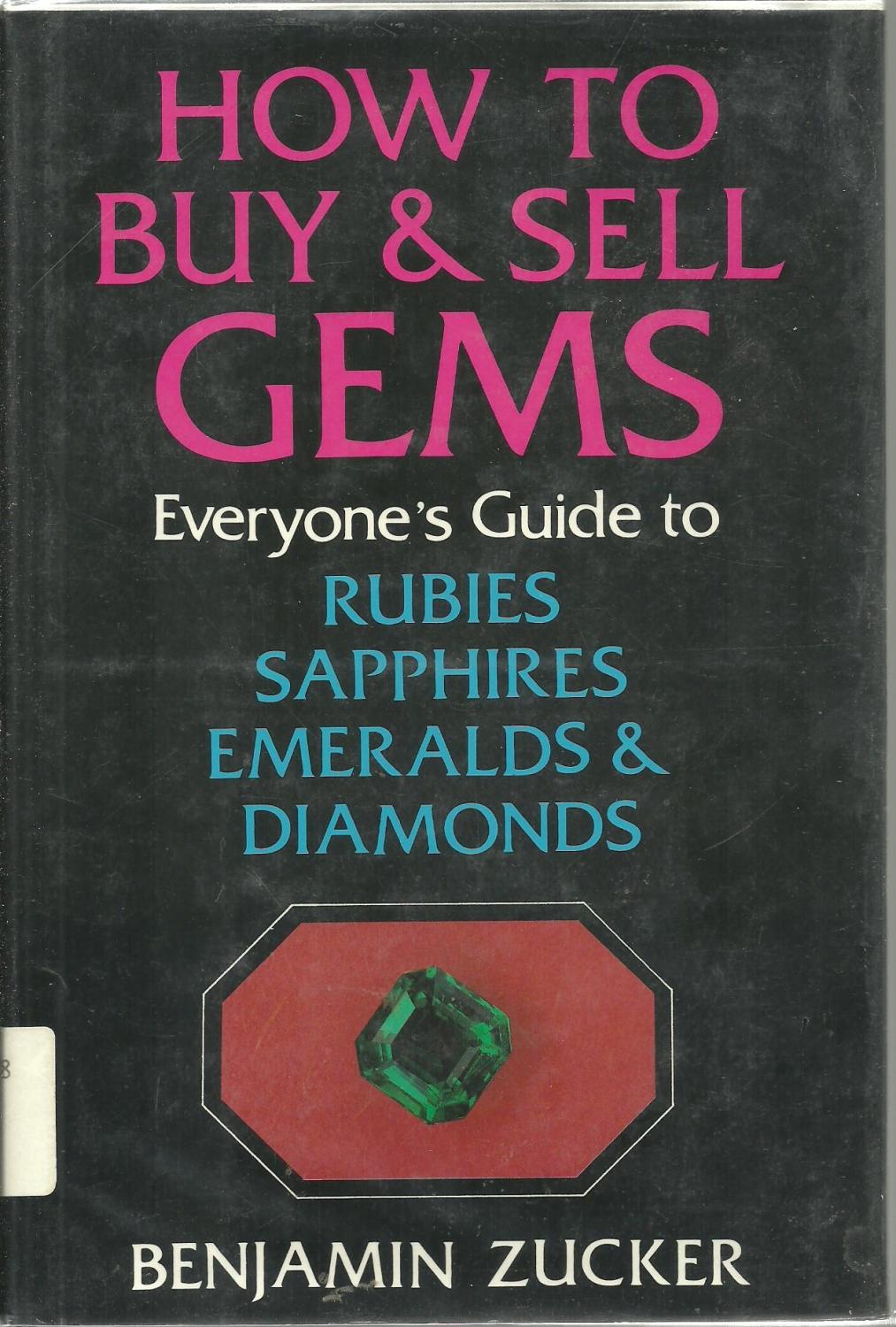
How to Buy and Sell Gems: Everyone’s Guide to Rubies, Sapphires, Emeralds and Diamonds
Book
Zucker, B. (1979) How to Buy and Sell Gems: Everyone’s Guide to Rubies, Sapphires, Emeralds and Diamonds. New York, Times Books, 117 pp.
Record No. 1921  |  Sinkankas/Born No.: NIS/NIB  |  RWHL
A practical guide to buying, selling, evaluating, and investing in precious gemstones, written by New York gem dealer Benjamin Zucker. Originally published in 1976 as How to Invest in Gems, this revised second edition reflects the dramatic increases in gemstone prices during the late 1970s and advocates fine rubies, sapphires, emeralds, and diamonds as long-term investments and hedges against inflation and currency depreciation. Individual chapters examine the geological occurrence, mining, cutting, identification, quality factors, geographical origins, and market values of the four principal gemstones, with particular attention to color, clarity, size, and inclusions. Ruby sources discussed include Burma, Sri Lanka, Thailand, Cambodia, Afghanistan, and Kenya; sapphire sources include Kashmir, Burma, Sri Lanka, Thailand, Australia, and Montana; and emerald sources include Colombia, Brazil, Rhodesia, Zambia, Afghanistan, and others. Zucker describes methods of distinguishing natural from synthetic gemstones using microscopy, refractive index measurements, ultraviolet fluorescence, and characteristic inclusions, drawing upon the research of Eduard Gübelin and other gemologists. A substantial section examines the history and operations of De Beers, including its control of diamond production and distribution, relationships with Soviet producers, and methods of stabilizing diamond prices. Other chapters address gem appraisals, auctions, retail and wholesale pricing, and the investment potential of tourmaline, garnet, aquamarine, and other gemstones. Suggested investment portfolios range from $10,000 to $1 million, with recommendations concerning gemstone varieties, sizes, and qualities. Appendices provide comparative gemstone prices from 1968 to 1979, descriptions of major museum collections, an overview of gemological institutions and grading systems, and historical accounts of jewelry craftsmanship, Fabergé, Marco Polo, and Louis XIV. Particularly interesting are the author's firsthand account of purchasing a 94 ct blue star sapphire subsequently exhibited at the American Museum of Natural History and his descriptions of the Iranian Crown Jewels. Illustrated with numerous color and black-and-white photographs of gemstones, inclusions, mining operations, jewelry, and museum treasures, the book offers a revealing contemporary perspective on the international gemstone trade and investment philosophy of the late 1970s, although its price information and some gemological interpretations are now dated.

Taiwan cat’s eye

Journal Article
Huang, C.K. and Yeh, C.L. (1978) Taiwan cat’s eye. Journal of The Gemmological Society of Japan [宝石学会誌], Vol. 5, No. 4, pp. 157–164.
Record No. 5890  |  Sinkankas/Born No.: NIS/NIB  |  RWHL
The Taiwan Cat's-Eye"is a tremolite cat's-eye. The gem material, cat's-eye tremolite occurs as veins at the contacts of graphite-sericite schist and serpentinite sills in association with nephrite, asbestus, talc and diopside-dominant skarn in the Fengtien area, south of Hualien. It is greenish yellow, pale yellow, honey yellow, green, rarely dark green, dark brown or black in color; translucent to opaque. H. 6-7, G. 3.045. Under the microscope, cat's-eye tremolite is colorless or pale green in color, consisting solely of fine, long sub-parallel fibers of tremolite in contrast to nephrite. Twisting or bending and wavy extinction are common. c∧Z' 0゜-10゜. α 1.613, β 1.626, γ 1.637; γ-α 0.24. The X-ray data are very similar to those of tremolite from St. Gotthard, Switzerland. Four chemical analyses reveal no marked differences in composition between the varieties of different colors, showing about 10% of the ferro-actinolite molecule. Some gemological features are also given. Diopside shows more crystal forms than previously reported, and the occurrence of grossularite is limited to diopside-grossularite veins near the contacts. Minor uvarovite and vesuvianite were first found in Taiwan. The former occuring as minute inclusions in diopside has n l. 778 and a_0 11.87A, corresponding to uvarovite with 10% Cr_2O_3. The latter of small prismatic crystals shows similarity in X-ray data to vesuvianite from Canzoccoli, Italy. The mineralization of the Fengtien nephrite-asbestus deposits may be divided into two stages : skarn formation and ore deposition, which might have taken place during serpentinitization by hydrothermal solutions rich in silica and lime. Cat's-eye tremolite was formed evidently later than nephrite."

The tears of Heliades

Journal Article
Gübelin, E.J. (1978) The tears of Heliades. Gems & Gemology, Vol. 16, No. 3, Fall, pp. 66–76.
Record No. 2130  |  ISBN/ISSN: 0016626X  |  Sinkankas/Born No.: NIS/NIB  |  RWHL

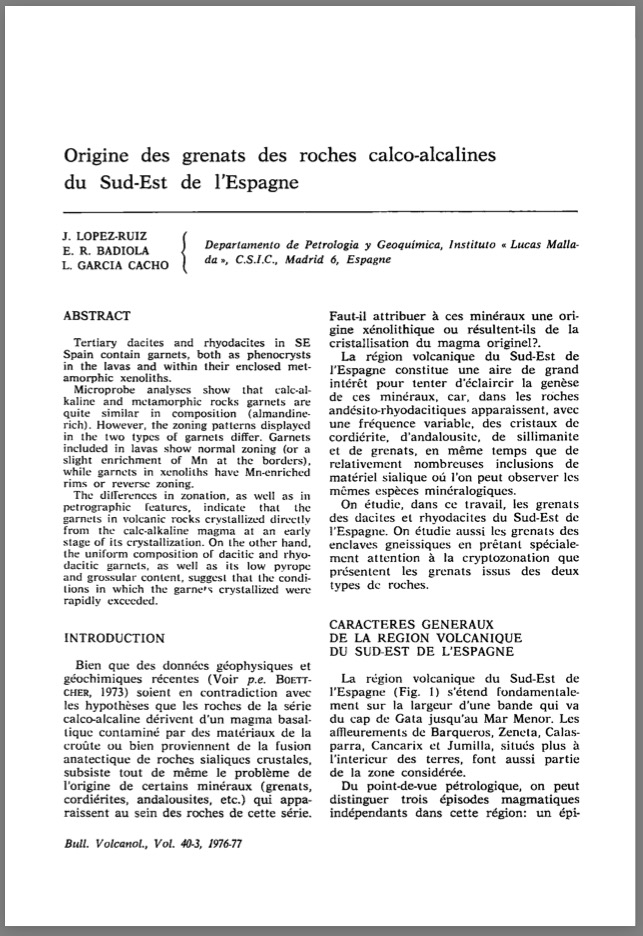
Origine des grenats des roches calco-alcalines du Sud-Est de l’Espagne
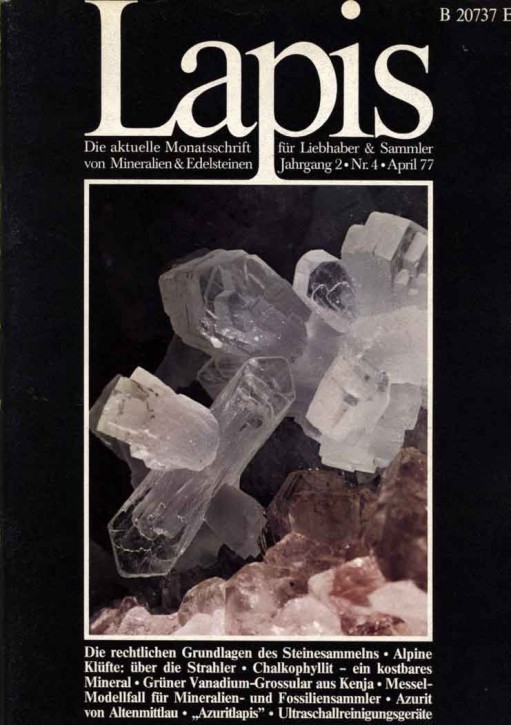
Origin of the garnets from the calc-alkaline rocks of southeastern Spain
Journal Article
Lopez-Ruiz, J., Badiola, E.R. and Garca, C.L. (1977) Origine des grenats des roches calco-alcalines du Sud-Est de l’Espagne. [Origin of the garnets from the calc-alkaline rocks of southeastern Spain] Bulletin Volcanologique, Vol. 40, No. 3, pp. 141–152.
Record No. 26803  |  Sinkankas/Born No.: NIS/NIB  |  Language: in French  |  RWHL
Tertiary dacites and rhyodacites in southeastern Spain contain garnets both as phenocrysts within the volcanic lavas and within enclosed metamorphic xenoliths. Microprobe analyses reveal that garnets from both the calc-alkaline lavas and the metamorphic inclusions are compositionally similar, being rich in almandine. However, their zoning patterns differ: garnets in the lavas exhibit normal zoning or slight manganese enrichment at the rims, while those in xenoliths show Mn-enriched edges or reverse zoning. These differences in zoning and petrographic features suggest that the volcanic garnets crystallized early from the calc-alkaline magma, whereas the more uniform composition and low pyrope and grossular content in the dacitic and rhyodacitic garnets imply that the crystallization conditions were only briefly maintained.

Einschlüsse im Fluorit

Inclusions in fluorite
Journal Article
Gübelin, E.J. (1977) Einschlüsse im Fluorit. [Inclusions in fluorite] Lapis, Vol. 2, No. 5, pp. 16–19.
Record No. 16951  |  Sinkankas/Born No.: NIS  |  Language: in German  |  RWHL
Illustrates characteristic inclusions in fluorite through colour photographs, including green chlorite crystals, secondary liquid inclusions, three-phase inclusions and well-formed pyrite crystals.

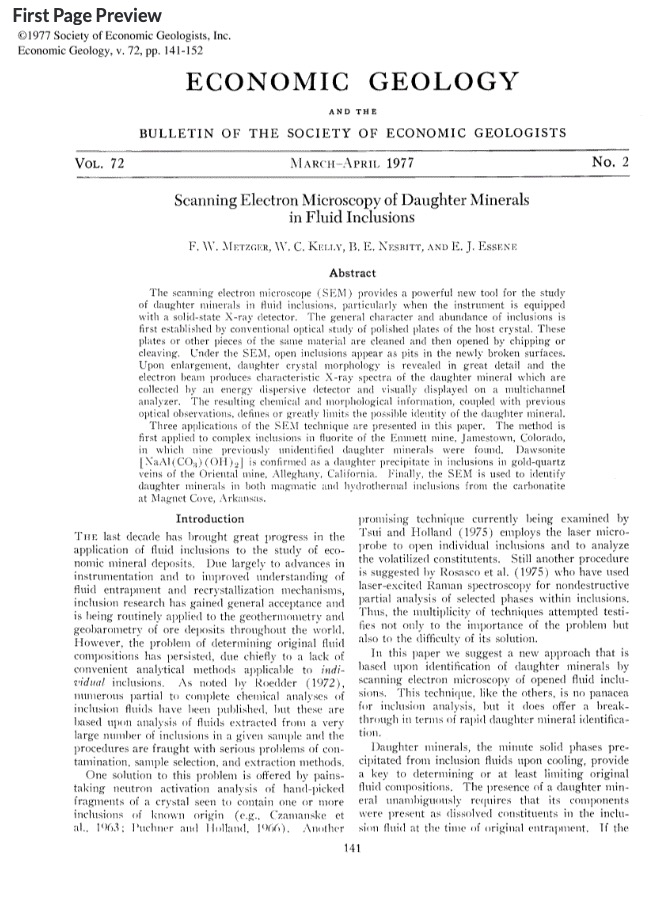
Scanning electron microscopy of daughter minerals in fluid inclusions
Journal Article
Metzger, F.W., Kelly, W.C., Nesbitt, B.E. and Essene, E.J. (1977) Scanning electron microscopy of daughter minerals in fluid inclusions. Economic Geology, Vol. 72, No. 2, March–April, pp. 141–152.
Record No. 7693  |  Sinkankas/Born No.: NIS/NIB  |  RWHL
The scanning electron microscope (SEM) provides a powerful new tool for the study of daughter minerals in fluid inclusions, particularly when the instrument is equipped with a solid-state X-ray detector. The general character and abundance of inclusions is first established by conventional optical study of polished plates of the host crystal. These plates or other pieces of the same material are cleaned and then opened by chipping or cleaving. Under the SEM, open inclusions appear as pits in the newly broken surfaces. Upon enlargement, daughter crystal morphology is revealed in great detail and the electron beam produces characteristic X-ray spectra of the daughter mineral which are collected by an energy dispersive detector and visually displayed on a multichannel analyzer. The resulting chemical and morphological information, coupled with previous optical observations, defines or greatly limits the possible identity of the daughter mineral. Three applications of the SEM technique are presented in this paper. The method is first applied to complex inclusions in fluorite of the Emmett mine, Jamestown, Colorado, in which nine previously unidentified daughter minerals were found. Dawsonite [NaAl(CO₃)(OH)₂] is confirmed as a daughter precipitate in inclusions in gold-quartz veins of the Oriental mine, Alleghany, California. Finally, the SEM is used to identify daughter minerals in both magmatic and hydrothermal inclusions from the carbonatite at Magnet Cove, Arkansas.

Further notes on mono- and bi-phase inclusions in amethyst and topaz
Journal Article
Gübelin, E.J. (1977) Further notes on mono- and bi-phase inclusions in amethyst and topaz. Journal of Gemmology, Vol. 15, No. 6, April, pp. 289–294.
Record No. 2125  |  ISBN/ISSN: 221252  |  Sinkankas/Born No.: NIS/NIB  |  RWHL
Reports microthermometric observations of fluid inclusions in an amethyst of unknown origin and a blue topaz from St Anne’s Mine, Miami, Zimbabwe, extending an earlier study of comparable inclusions in amethyst. Both specimens contain primary negative crystals and irregular inclusions interpreted as pseudosecondary, with liquid and vapour phases occurring in varying proportions. In the amethyst, primary cavities are aligned parallel to the host’s c-axis. After cooling to −150 °C, subsequent warming reveals a phase change described as sublimation at −108 °C in the primary inclusions, followed by ice melting at −1.6 °C; ice in the pseudosecondary inclusions melts at −0.2 °C. The latter homogenise between 153 and 170 °C. Comparison with the previously examined amethyst reveals broadly analogous behaviour, which Gübelin interprets as indicating a common source. He infers water-bearing primary inclusions at low internal pressure and weakly saline aqueous fluid in the pseudosecondary inclusions. Necking down limits the precision with which homogenisation temperatures can be related to formation conditions. A proposed model places amethyst crystallisation in cavities within volcanic rocks, from hydrothermal solutions at approximately 150–200 °C and 20–30 bar. Boiling and entrapment of vapour are invoked to explain some cavities, with an additional gas, possibly carbon dioxide, tentatively suggested. The topaz was cooled to −180 °C and warmed while changes in its inclusions were observed. Ice begins melting near −2 °C, some daughter crystals dissolve between 20 and 100 °C, and many remaining solids dissolve by 232 °C. Heating was stopped at that temperature to avoid cracking, so the proposed homogenisation temperature near 250 °C was estimated rather than measured. Repeated cooling and warming demonstrate spontaneous nucleation and growth on existing crystals. The author interprets the topaz as hydrothermal, consistent with field observations, but notes that the inferred temperature is unusually low compared with published values. Its inclusions appear highly saline, although the salts remain unidentified; their optical behaviour and limited depression of the ice-melting temperature lead him to suggest sulfates rather than chlorides. The interpretations are explicitly presented as working hypotheses requiring further investigation with more abundant material.

Analytical results of poly-mineralic sulfide inclusions in diamond
Journal Article
Gübelin, E.J. (1977) Analytical results of poly-mineralic sulfide inclusions in diamond. Gems & Gemology, Vol. 15, No. 11, p. 321–327.
Record No. 2124  |  ISBN/ISSN: 0016626X  |  Sinkankas/Born No.: NIS/NIB  |  RWHL

Flashback

Journal Article
Gübelin, E.J. (1977) Flashback. Gems & Gemology, Vol. 15, No. 10, Summer, p. 314.
Record No. 2123  |  ISBN/ISSN: 0016626X  |  Sinkankas/Born No.: NIS/NIB  |  RWHL

Glass made imitation jade and its inclusions

Journal Article
Fujisaki, Y. (1976) Glass made imitation jade and its inclusions. Journal of The Gemmological Society of Japan [宝石学会誌], Vol. 3, No. 3, pp. 99–105.
Record No. 6407  |  Sinkankas/Born No.: NIS/NIB  |  Language: in Japanese with English abstract  |  RWHL
Imitation jades currently circulating in jewellers market under the name of Syberian jade or Reformed jade were investigated by both non-destructive and destructive methods, with special attention to the inclusions. The imitation jades are made of sophisticatedly produced glass, and are dark green, translucent to opaque with glassy, somewhat greasy, luster, have Mohs' hardness of 5-5.5, sp. gr. 2.67 ± 0.02 at 20℃, refractive index 1.523 ± 0.005, and broad absorption spectrum at 4000-4600Å and 6300-7000Å. They contain characteristic inclusions of the following three types; 1) Needle-like inclusions which are identified to be hydroxyl apatite by optical and X-ray investigations, have hexagonal section, and are uniaxial negative, with no pleochroism, higher refractive index than the matrix. These are grouped into three by their length. 2) Dendrite inclusions with 90° braches are identified to be either vapour or liquid phase inclusions, and have lower refractive index than the matrix. 3) Four other types of inclusions, which are not identified. These imitation jades exhibit psudo-optical anisotropy due to apatite inclusions and are easily identified by their inclusions.

Exploring the Literature of Gemstone Inclusions

The literature of gemstone inclusions covers identification, origin determination, treatments, synthesis, mineral inclusions, fluid inclusions and other internal features of natural and synthetic gems.

For a curated selection of important sources, read Inclusions in Gemstones — Hyperion Literature Sources.

About Four Treasures

Four Treasures is Lotus Gemology's freely accessible gemological reference database. Use the full database to search by author, title or keyword and explore literature on gemology, mineralogy, jewelry and related fields. Where available, hyperlinks on titles may lead directly to the full publication.

Search the Complete Four Treasures Database