Gemology Books Bibliography

Gemology Books Bibliography

Explore books on gems, gemology, jewelry and mineralogy in Four Treasures, the Lotus Gemology reference database. This bibliography brings together matching book records from the collection, with publication details, abstracts and cover images where available.

Gemology Book References

The list below matches books concerning gemology and related subjects in the database's searchable fields. Some works cover several branches of gems, jewelry or mineralogy.
3,381–3,400 of 3,595 matching references

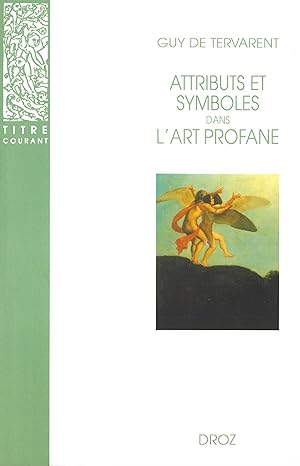
Attributs et Symboles dans l’Art Profane: Dictionnaire d'un Langage Perdu (1450–1600)
Attributes and Symbols in Secular Art: Dictionary of a Lost Language (1450–1600)
Book
Tervarent, G., de (1997) Attributs et Symboles dans l’Art Profane: Dictionnaire d'un Langage Perdu (1450–1600). [Attributes and Symbols in Secular Art: Dictionary of a Lost Language (1450–1600)] Geneva, DROZ, 536 pp.
Record No. 17090  |  ISBN/ISSN: 9782600000000  |  Sinkankas/Born No.: NIS/NIB  |  Language: in French  |  not seen
A classic tool for Renaissance studies, this dictionary explains the meaning and origins of the many attributes and symbols used by humanists, artists, and intellectuals of the 15th and 16th centuries. Now finally reissued in a completely revised edition that incorporates the 1964 supplement, this essential reference work helps modern readers recover a symbolic language that has largely been lost. It offers those interested in the art of the period a reliable way to rediscover its visual vocabulary, moving from the known to the unknown—since in any composition, no matter how obscure or complex, one element is often recognizable: a rose, a unicorn, or an anchor. For each symbol reflected in Renaissance art, the book also strives to trace its sources of inspiration. An index of “immaterial entities” and another of names make the dictionary especially easy to consult.

A gemmological description of spinels from Vietnam
Journal Article
Scarratt, K.V.G., Kammerling, R.C. and Koivula, J.I. (1997) A gemmological description of spinels from Vietnam. Journal of the Gemmological Association of Hong Kong, Vol. 17, pp. 31–37.
Record No. 7794  |  Sinkankas/Born No.: NIS/NIB  |  not seen

Neue Edelsteinvorkommen in Tansania: Die region Tunduru-Songea

New gemstone deposits in Tanzania: The Tunduru-Songea region
Journal Article
Henn, U. and Milisenda, C.C. (1997) Neue Edelsteinvorkommen in Tansania: Die region Tunduru-Songea. [New gemstone deposits in Tanzania: The Tunduru-Songea region] Gemmologie: Zeitschrift der Deutschen Gemmologischen Gesellschaft, Vol. 46, No. 1, pp. 29–43.
Record No. 7731  |  Sinkankas/Born No.: NIS/NIB  |  Language: In German  |  not seen
Henn and Milisenda describe the newly discovered alluvial gemstone deposits of the Tunduru–Songea region in southern Tanzania. Field observations and examination of rough and cut stones document a diverse assemblage including ruby, blue and fancy-coloured sapphires, spinel, garnet, chrysoberyl, zircon, tourmaline, and diamond. Particular interest attaches to colour-change stones, alexandrite and cat’s-eye chrysoberyl, and unusual mint-green, vanadium-bearing chrysoberyl. The deposits occur along tributaries of the Ruvuma River within the metamorphic terrain of the Mozambique Belt. Gemmological characteristics and corundum chemistry are compared with material from Sri Lanka and India. Similarities between the Tanzanian and Sri Lankan gem assemblages suggest a possible geological relationship, although their diverse mineral associations indicate contributions from multiple primary sources. The study establishes the region’s importance as a new supplier of coloured gemstones.
Geological Report, Independent geological, gemmological and mining experts' report for Asia Sapphire Limited covering exploration concession ages and mining areas in northwest Laos

Geological Report, Independent geological, gemmological and mining experts' report for Asia Sapphire Limited covering exploration concession ages and mining areas in northwest Laos

Report
Senior, B.R. and Coenraads, R.R. (1997) Geological Report, Independent geological, gemmological and mining experts' report for Asia Sapphire Limited covering exploration concession ages and mining areas in northwest Laos. Asia Sapphire Limited,
Record No. 5251  |  Sinkankas/Born No.: NIS/NIB  |  not seen
Independent Gemmological Report on the H. Sala Alluvial Deposit near Ban Houei Xai, Bokeo Province, Lao
Independent Gemmological Report on the H. Sala Alluvial Deposit near Ban Houei Xai, Bokeo Province, Lao

Report
Coenraads, R.R. (1997) Independent Gemmological Report on the H. Sala Alluvial Deposit near Ban Houei Xai, Bokeo Province, Lao. Asia Sapphires Limited, 18 pp.
Record No. 2861  |  Sinkankas/Born No.: NIS/NIB  |  not seen

Kashmir ruby: A preliminary report on the deposit at Nangimali, Azad Kashmir, Pakistan
Conference Paper
Kane, R.E. (1997) Kashmir ruby: A preliminary report on the deposit at Nangimali, Azad Kashmir, Pakistan. 26th International Gemmological Conference Abstract Volume, Sept. 27–Oct. 3, Idar-Oberstein, Germany pp. 28–30.
Record No. 2676  |  Sinkankas/Born No.: NIS/NIB  |  not seen

Short notes on some gemstone treatments
Journal Article
Hänni, H.A. (1997–1998) Short notes on some gemstone treatments. Journal of the Gemmological Association of Hong Kong, Vol. 20, pp. 44–52.
Record No. 2535  |  Sinkankas/Born No.: NIS/NIB  |  not seen

The identification of B + C jade

Journal Article
Wu, S.T. (1997) The identification of B + C jade. Journal of the Gemmological Association of Hong Kong, Vol. 20, pp. 27–29.
Record No. 2421  |  Sinkankas/Born No.: NIS/NIB  |  not seen

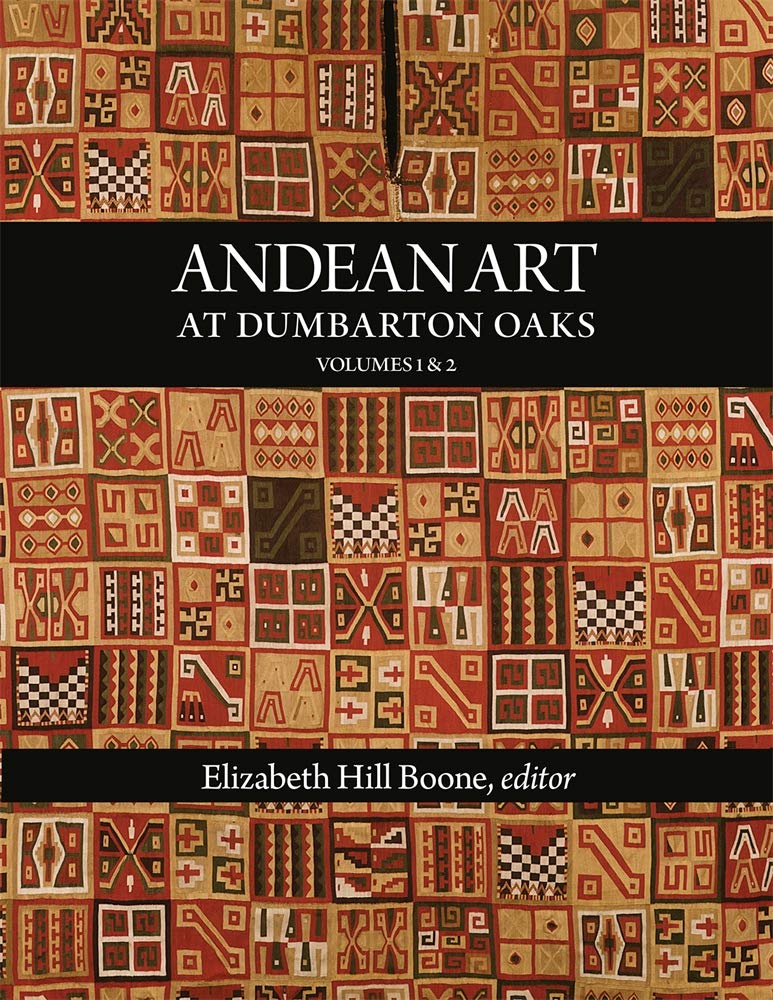
Andean Art at Dumbarton Oaks

Edited Book
Boone, E.H., editor (1996) Andean Art at Dumbarton Oaks.. Cambridge, MA, Harvard University Press, 2 Vols., 497 pp..
Record No. 28856  |  ISBN/ISSN: 9780880000000  |  Sinkankas/Born No.: NIS/NIB  |  not seen
Andean Art at Dumbarton Oaks presents the Andean portion of the Robert Woods Bliss Collection of Pre-Columbian Art. The volume superbly illustrates all 133 Andean objects in color plates and includes numerous complementary and comparative black-and-white illustrations and drawings. The body of Pre-Columbian art that Robert Woods Bliss carefully assembled over more than half a century, between 1912 and 1963, and which has been expanded slightly since his death, constitutes a remarkably significant collection. These works rank among the finest examples of the visual arts produced by Andean cultures. This Andean volume is the first in a planned series of four catalogues devoted to the entirety of the Bliss Pre-Columbian collection. The remaining volumes were intended to focus on objects from eastern Mesoamerica (Olmec and Maya), western Mesoamerica (Teotihuacan, Veracruz, Mixtec, and Aztec), and Lower Central America. Andean Art is composed of five thematic essays, shorter studies on the Andean cultures represented in the collection, and detailed discussions of the individual objects. These contributions were written by specialists in Pre-Columbian art and present the latest scholarly perspectives on Andean cultures and the works themselves. All thirteen authors bring broad expertise in Andean cultural history, archaeology, and art history to their essays, while focusing primarily on the objects in order to provide meaningful contexts and to demonstrate how these artworks, created and used with specific purposes, reveal distinctive qualities of Andean civilization. The volume gives readers a strong sense of how the creators and original owners of the objects in the Bliss collection used and valued these works on many levels. The authors also place individual pieces alongside comparable examples whenever possible. An especially notable feature of the book is the technical analysis of the metal objects contributed by metals specialist Heather Lechtman.

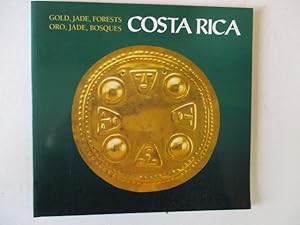
Gold, Jade, Forests: Costa Rica

Book
Calvo Mora, M., Bonilla Vargas, L. and Sanchez Perez, J. (1996) Gold, Jade, Forests: Costa Rica. Seattle, University of Washington Press, 108 pp.
Record No. 28586  |  ISBN/ISSN: 9780300000000  |  Sinkankas/Born No.: NIS/NIB  |  not seen
Gold, Jade, Forests: Costa Rica is a richly illustrated introduction to the archaeological and cultural heritage of Costa Rica before European contact. Focusing on the country’s remarkable traditions of jade carving and goldworking, the book explores how these precious materials served as symbols of power, status, religious belief, and social identity among ancient Costa Rican peoples. Through photographs of artefacts, archaeological sites, and natural landscapes, it traces the development of indigenous societies from the jade-working cultures of the first millennium AD to the later florescence of gold metallurgy, while also highlighting the tropical forests that shaped and sustained these civilizations. Published in conjunction with a major museum exhibition, the volume presents the artistic achievements and cultural history of pre-Columbian Costa Rica for a general audience. 
Raman spectroscopic analysis in the identification of bleached and polymer impregnated jadeite

Raman spectroscopic analysis in the identification of bleached and polymer impregnated jadeite

Journal Article
Yu, S., Lee, J. and Wu, S. (1996) Raman spectroscopic analysis in the identification of bleached and polymer impregnated jadeite. Journal of the Gemmological Association of Hong Kong, Vol. 19, pp. 21–26.
Record No. 28118  |  Sinkankas/Born No.: NIS/NIB  |  not seen
Le bestiaire et le Lapidaire du Rosarius (B.N.f.fr. 12483)
Le bestiaire et le Lapidaire du Rosarius (B.N.f.fr. 12483)

The Bestiary and the Lapidary of the Rosarius (B.N. f. fr. 12483)
Book
Sandqvist, S. (1996) Le bestiaire et le Lapidaire du Rosarius (B.N.f.fr. 12483). [The Bestiary and the Lapidary of the Rosarius (B.N. f. fr. 12483)] Lund, Lund University Press, 240 pp.
Record No. 27973  |  ISBN/ISSN: 9789180000000  |  Sinkankas/Born No.: NIS/NIB  |  Language: in French  |  not seen
Presents an edition of the bestiary and lapidary sections of the Rosarius, an anonymous fourteenth-century French devotional compilation preserved in manuscript BnF français 12483. The surviving material describes fourteen animals and four stones, interpreting their reputed characteristics as expressions of the virtues of the Virgin Mary. Natural history and inherited beliefs about animals and gemstones thus provide material for religious instruction and moral reflection. The lapidary is of particular interest for the history of gemstone symbolism, showing how the properties attributed to stones were incorporated into Marian devotion. Together, these texts document the close relationship between medieval knowledge of nature, allegorical interpretation, and devotional literature.

Finds of Sasanian gems in the Otrar oasis
Book Section
Smagulov, E.A. (1996) Finds of Sasanian gems in the Otrar oasis. In: Ancient Civilizations from Scythia to Siberia, Vol. 3 , pp. 253–259.
Record No. 27459  |  Sinkankas/Born No.: NIS/NIB  |  not seen
A woman’s burial in southern Kazakhstan included beads of carnelian, coral, glass, and amber, and bracelets of large amber beads, all described in some detail but not illustrated. Some perhaps came from Iran by trade or as booty.

The Roman East from the Chinese Perspective
Book Section
Graf, D.F. (1996) The Roman East from the Chinese Perspective. In: Palmyra and the Silk Road: International Colloquium, Palmyra, 7-11 April 1992, Damascus, Vol. 42 , pp. 199–216.
Record No. 27253  |  Sinkankas/Born No.: NIS/NIB  |  not seen

The Roman Empire in Chinese Sources

Book
Leslie, D.D. and Gardiner, K.H.J. (1996) The Roman Empire in Chinese Sources. Rome, Bardi Editore, 425 pp.
Record No. 27101  |  Sinkankas/Born No.: NIS/NIB  |  not seen

Le lapis-lazuli dans l'Orient antique / La fabrication des perles de lapis-lazuli
The manufacture of lapis lazuli beads
Book Section
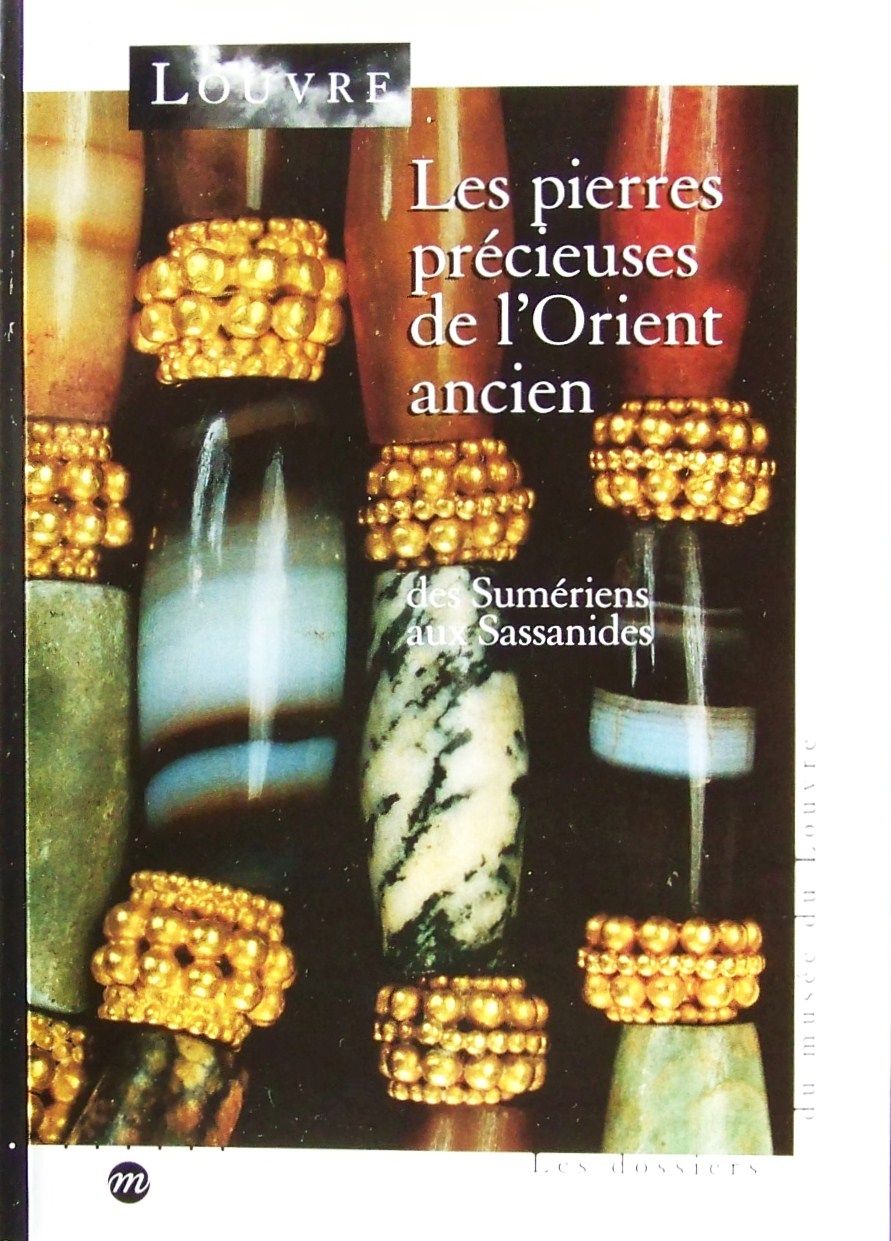
Casanova, M. (1995) Le lapis-lazuli dans l'Orient antique / La fabrication des perles de lapis-lazuli. [The manufacture of lapis lazuli beads] In: Les pierres précieuses de l'Orient ancien, des Sumériens aux Sassanides, Les dossiers du musee du Louvre, Paris: Louvre Museum, pp. 15–20, 45–46.
Record No. 27754  |  Sinkankas/Born No.: NIS/NIB  |  Language: in French  |  not seen
The ancient Near East, from the fourth millennium B.C. to the seventh century A.D., developed a luxury craft industry based on precious stones. This dossier from the Louvre Museum presents beautiful pieces—ornaments of princes or offerings to the gods—and explains the techniques.

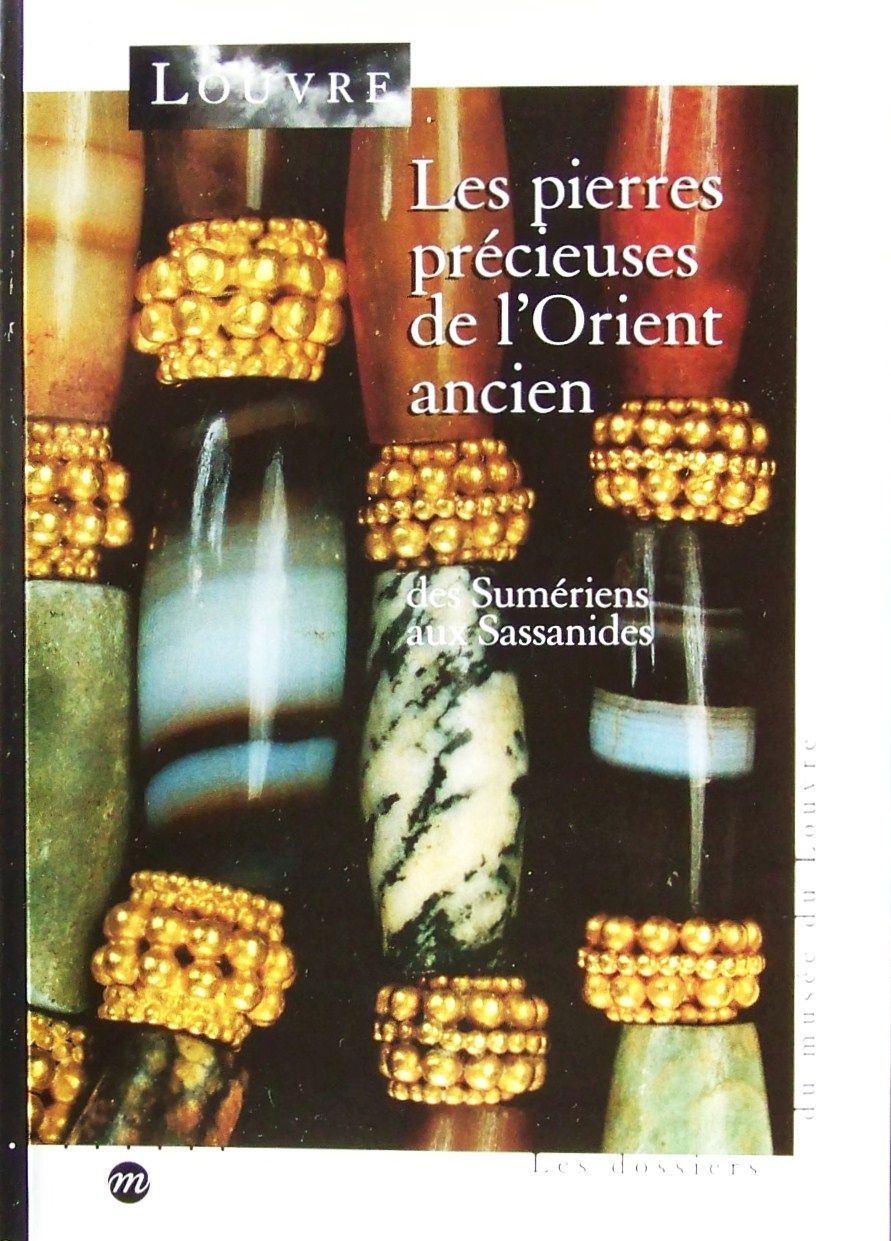
Les pierres précieuses de l'Orient ancien, des Sumériens aux Sassanides
Precious Stones of the Ancient Near East, from the Sumerians to the Sasanids
Edited Book
Tallon, F., editor (1995) Les pierres précieuses de l'Orient ancien, des Sumériens aux Sassanides. [Precious Stones of the Ancient Near East, from the Sumerians to the Sasanids]. Paris, Louvre Museum, 128 pp..
Record No. 27751  |  Sinkankas/Born No.: NIS/NIB  |  Language: in French  |  not seen
Surveys precious stones in the ancient Near East from the Sumerian to the Sasanian periods through essays and an illustrated catalogue accompanying a Louvre exhibition. Contributions examine mineral identification and geological sources, the production and circulation of lapis lazuli, carnelian, and agate, and techniques of bead manufacture. Other sections address jewellery, decorative inlays, and the evidence of ancient written sources. Archaeological objects connect the materials with their uses in personal adornment and luxury craftsmanship, including vessels carved from rock crystal. The volume brings together mineralogical, technological, archaeological, and textual approaches to the acquisition, working, and cultural significance of precious stones.

Über den Goldenen Schmuck der Spätantike
The golden jewelry of Late Antiquity
Book Section
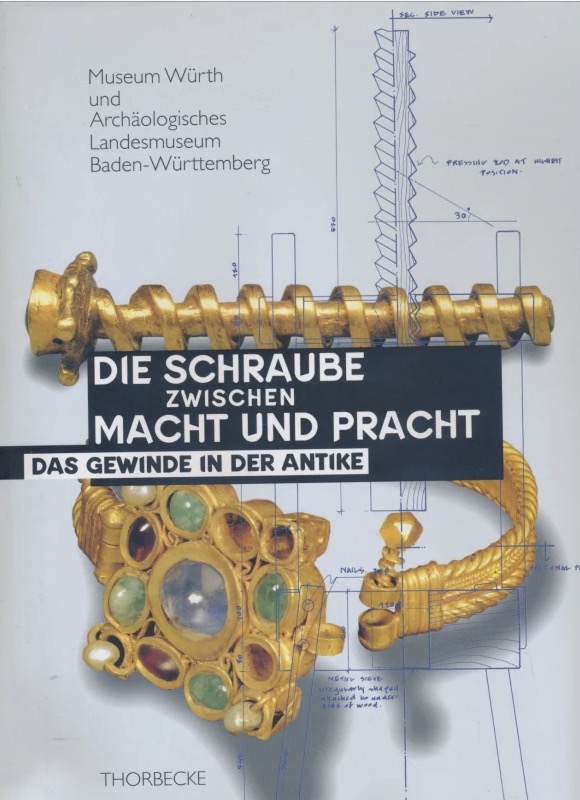
Deppart-Lippitz, B. (1995) Über den Goldenen Schmuck der Spätantike. [The golden jewelry of Late Antiquity] In: Die Schraube zwischen Macht und Pracht: Das Gewinde in der Antike [The Screw between power and Splendor: The Thread in Antiquity], Baden-Württemberg: Museum Würth und Archäologisches Landesmuseum, pp.  113–140.
Record No. 26957  |  ISBN/ISSN: 9783800000000  |  Sinkankas/Born No.: NIS/NIB  |  Language: in German with English absracts  |  not seen
On the occasion of the 50th anniversary of the Würth Group in 1995, a unique exhibition on the history of the screw and the thread in antiquity was presented for the first time through a joint effort by the Museum Würth in Künzelsau-Gaisbach and the Archaeological State Museum of Baden-Württemberg. The exhibition was supported by over twenty museums in Europe and the USA with precious Late Antique jewelry exhibits. Special thanks are due to co-initiator Dr. Rüdiger Krause, director of the Archaeological State Museum and president of the State Heritage Office of Baden-Württemberg, to Prof. Dr. Dieter Planck, and especially to Reinhold Würth and all the scholars involved in the research project, for making this exhibition possible, which has now been crowned with a scholarly publication on a topic previously neglected in general cultural history. The exhibition’s preparation and the development of the volume were preceded by intensive and thorough research on the topic of threads in antiquity. This involved not only ancient threading techniques based on archaeological remains or written sources attesting to such techniques, but also the political and social conditions of Late Antiquity, which were particularly defined by rank insignia and prestige objects (fibulae, arm rings, bracelets, pectorals, pectoral crosses, belts, etc.) using screw fastenings. The richly illustrated and high-quality volume, featuring numerous (including full-page) color and black-and-white images, drawings, and maps, is structured as follows: after the introductory foreword by Reinhold Würth (pp. 7–13) and the exhibition introduction by Dieter Planck (pp. 14–22), the main thematic section is divided into four specific areas: Rüdiger Krause writes on “The Thread in Antiquity” (pp. 23–54), Astrid Schürmann on “The Transmission of Ancient Authors” (pp. 55–76), Barbara Theune-Großkopf on “Onion-Head Fibulae and Their Wearers – Jewelry and Rank Insignia” (pp. 77–112), and Barbara Deppert-Lippitz on “The Golden Jewelry of Late Antiquity” (pp. 113–140). A special feature of the volume is the inclusion of English and French summaries preceding each article, along with trilingual captions (German, English, French) for all images.

Roman Intaglios

Book Section
Henig, M. (1995) Roman Intaglios. In: Excavations At York Minster, London: Royal Commission On the Historical Monuments of England, 2 Vols., Volume I, from Roman Fortress to Norman Cathedral (Part 1 the Site / Part 2 the Finds) Roman to Norman: the Roman Legionary Fortress At York.in Early Middle Ages AD 71–1070 , pp. 372–373.
Record No. 17223  |  ISBN/ISSN: 9780110000000  |  Sinkankas/Born No.: NIS/NIB  |  not seen
In the late 1960s, York Minster was in imminent danger of collapse. By means of extensive engineering the building was saved, and, in a campaign of archaeological excavation, the opportunity was taken to retrieve years of little-known history from beneath the floors. Underneath was found the headquarters of the Roman legionary fortress which was subjected to numerous modifications, both subtle and drastic, over a span of a 1000 years. This sequence of history closed in AD 1070 with the construction of the Norman Cathedral of Archbishop Thomas of Bayeux. The historical evidence contained in this text offers a detailed account of social, economic and ideological change in a place favoured by Roman, Anglian, Viking and Norman invaders. This publication describes the rescue excavations of part of the Roman legionary fortress (in particular, barracks, headquarters building, and streets), post-Roman use of the fortress, and an Anglo-Scandinavian cemetery. Part 1 is devoted to the excavation and its techniques. Contributions include `From the foundation of York to the end of the Roman period' by B Heywood (1-8), `The post-Roman period to 1066' by E James (9-15), `The excavation campaign' (16-22) and `The excavations' (23-176) by A D Phillips, `Note on the first-cohort barracks' by D P Davison (170-3), and `Roman to Norman at York Minster' by M O H Carver (177-205). Part 1 concludes with several tables, including phasing and dating.Part 2 on the finds begins with `Roman architectural and sculptured stonework' by T F C Blagg (223-45), followed by `Roman inscribed stones' by R P Wright & R S O Tomlin (246-7), `Roman wall-plaster from York Minster' by F J Weatherhead (248-64), `Analysis of mortar samples from the Roman phases of York Minster' by S E Warren & J Evans (265-8), `Roman tile fabric' by I M Betts (268-9), `Stamped and marked tiles' by E M King (270-1), `The samian pottery' by G Simpson (272-90), `Amphorae' by D F Williams (291-303), `Mortaria' by K Hartley (304-23), `Roman coarse pottery' by J R Perrin (324-45), `Roman glass' by J Price (346-71), `Roman intaglios' by M Henig (372-3), `Roman ironwork' by W H Manning (374-7), `Roman non-ferrous metalwork' by G Lloyd-Morgan (378-90), `Roman brooches' by S A Butcher (391-3), `Roman coins' by P J Casey (394-413), `Roman and early medieval bone and antler objects' by A G MacGregor (414-27), `An ivory weaving tablet' by P Walton (428-9), and `Objects of shale and jet' by M Henig (430-2).Under the section devoted to finds of the early medieval period, c 400-1100, contributions include `Pre-Conquest sculpture' by J Lang (433-68) with a note on the Anglo-Saxon pigment by P Wilthew (465), `Post-Roman pottery' by J Holdsworth (468-80), `Early medieval glass fragments' by V I Evison (481-3), `Iron objects' by I H Goodall (484-8; note on the spur by B Ellis on 487-8), `Iron-bound coffins and coffin-fittings from the pre-Norman cemetery' by B Kjolbye-Biddle (489-521), `Non-ferrous metal objects' by A R Goodall (522-6), `Post-Roman coins' by E J E Pirie (527-30), `Ferrous slag' by J G McDonnell (531-2), `Animal bone from post-Roman contexts' by D J Rackham (533-58, including `The bird bones' by E P Allison on 556-7), and `Palaeopathological report on selected skeletons from the pre-Norman cemetery' by F Lee (559-73). The report concludes with an `Assemblage summary' by M O H Carver & B Heywood (574-617), and an `Index to material held in archive' by A Sinclair (618-20).

Saphire von Indaia, Minas Gerais, Brasilien

Sapphires from Indaia, Minas Gerais, Brazil
Journal Article
Henn, U., Bank, H. and Bank, F.H. (1995) Saphire von Indaia, Minas Gerais, Brasilien. [Sapphires from Indaia, Minas Gerais, Brazil] Zeitschrift der Deutschen Gemmologischen Gesellschaft, Vol. 43, No. 3/4, pp. 111–116.
Record No. 4812  |  Sinkankas/Born No.: NIS/NIB  |  Language: In German  |  not seen
Describes transparent blue sapphires from a newly reported corundum occurrence near Indaiá, Minas Gerais, Brazil. Gemological testing yielded refractive indices of nε = 1.760–1.763 and nω = 1.768–1.771, birefringence of 0.008, and specific gravity of 3.99–4.02. Absorption spectra showed features associated with Fe²⁺/Ti⁴⁺ and Fe³⁺, while chemical analysis detected iron and titanium. Microscopic examination revealed mica and rutile inclusions, healed fractures, and pronounced growth and colour zoning.

Building a Gemological Library

Gemological books range from general identification manuals and textbooks to specialized works on individual gems, mineralogy, jewelry, treatments, synthesis, history and gem-producing regions.

For a curated selection of particularly useful books, read The Gemologist's Core Library — Classic Books on Gemology, Jewelry and Mineralogy.

About Four Treasures

Four Treasures is Lotus Gemology's freely accessible gemological reference database. Use the full database to search by author, title or keyword and explore literature on gemology, mineralogy, jewelry and related fields. Where available, hyperlinks on titles may lead directly to the full publication.

Search the Complete Four Treasures Database