Gemology Books Bibliography

Gemology Books Bibliography

Explore books on gems, gemology, jewelry and mineralogy in Four Treasures, the Lotus Gemology reference database. This bibliography brings together matching book records from the collection, with publication details, abstracts and cover images where available.

Gemology Book References

The list below matches books concerning gemology and related subjects in the database's searchable fields. Some works cover several branches of gems, jewelry or mineralogy.
2,861–2,880 of 3,616 matching references

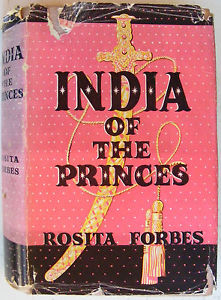
India of the Princes

Book
Forbes, R. (1939) India of the Princes. London, The Book Club, 319 pp.
Record No. 16  |  Sinkankas/Born No.: NIS/NIB  |  RWHL
Rosita Forbes’s India of the Princes is a richly illustrated account of the princely states of British India during the final decade before independence, combining personal travel experiences, interviews with rulers and courtiers, historical narratives, and observations of the extraordinary wealth and ceremonial traditions of the Indian aristocracy. A widely traveled British journalist and author, Forbes enjoyed unusual access to royal palaces, private treasuries, and members of ruling families, providing firsthand descriptions of a world that would largely disappear following Indian independence in 1947. The book opens with a discussion of the political position of the princely states, their treaty relationships with the British Crown, and the difficulties surrounding proposed Indian federation and the growing nationalist movement led by Mahatma Gandhi. Subsequent chapters describe Patiala, Kapurthala, Dholpur, Udaipur, Jodhpur, Jaipur, Bikaner, Hyderabad, Mysore, Baroda, Gwalior, Kashmir, Bhopal, and other principalities. Forbes examines their dynastic histories, religious traditions, architecture, military institutions, political administration, and the personalities of their rulers. Of particular gemological importance are her detailed accounts of royal jewelry collections, especially in the chapters on Jodhpur and Jaipur (pp. 123–132). At Jodhpur she accompanies an English jeweler named Allen, who specializes in resetting the jewels of Indian royal families, into the palace armory, where she examines extraordinary collections of gold objects, diamond-studded footwear, jeweled weapons, emerald-encrusted sword hilts, and ornaments accumulated over generations. She describes a blue diamond valued at £12,000 worn by the Maharani of Jodhpur, together with an elaborate cap composed entirely of diamond solitaires. Forbes also records a remarkable necklace belonging to the Maharajah of Jaipur, consisting of three rows of exceptionally large spinels, traditionally associated with the Mughal emperors Babur and Akbar. Other treasures include emeralds weighing as much as 490 carats, immense pearls, jeweled ceremonial objects, and precious stones adorning religious images. Her account of Patiala includes the celebrated diamond necklace made by Cartier for Maharajah Bhupinder Singh, containing large pink, yellow, greenish, and pale brown diamonds, together with enormous emeralds and other royal treasures. She describes the Maharajah of Gwalior’s seemingly inexhaustible collection of pearls, the Baroda pearl carpet decorated with turquoise, rubies, emeralds, and diamonds, and the spectacular emerald-and-diamond turban ornaments of the Maharajah of Kapurthala. Particularly striking is her account of a young southern Indian Maharani whose ceremonial jewelry was so heavy that attendants were required to support her. Forbes also recounts the legendary hidden treasury of Jaipur, describing a golden bird covered with rubies that she personally examined. Throughout the book, gemstones are presented not merely as personal adornments but as expressions of dynastic prestige, religious devotion, political authority, and accumulated royal wealth. Although Forbes’s estimates of gemstone values, descriptions of historical provenance, and accounts of legendary treasures cannot always be independently substantiated, her observations provide valuable contemporary testimony concerning the possession, display, and use of exceptional gems in princely India. The volume is an important historical source for the study of Indian royal jewelry, the gemstone trade, and the material culture of the princely courts immediately before their dissolution.

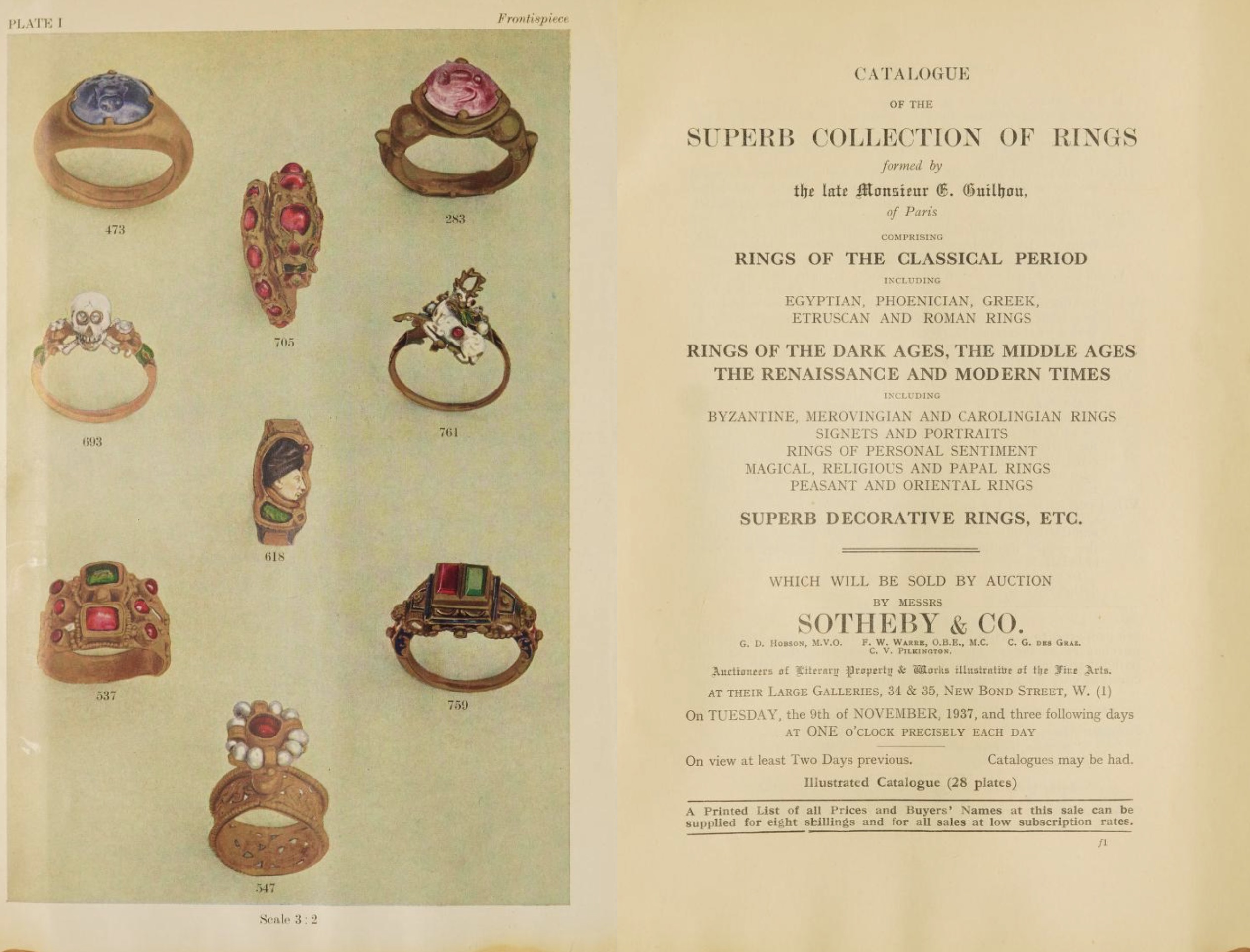
Catalogue of the Superb Collection of Rings formed by the late Monsieur G. Guilhou
Book
Sotheby's (1937) Catalogue of the Superb Collection of Rings formed by the late Monsieur G. Guilhou. London, Sotheby & Co., 178 pp., 28 plates
Record No. 28826  |  Sinkankas/Born No.: NIS/NIB  |  RWHL
Rings of the classical period; rings of the Dark Ages, the Middle Ages, the Renaissance and modern times; superb decorative rings.

Unusual inclusions in synthetic ruby

Journal Article
Anonymous (1937) Unusual inclusions in synthetic ruby. Gems & Gemology, Vol. 2, No. 5, Spring, pp. 91–92.
Record No. 277  |  ISBN/ISSN: 0016626X  |  Sinkankas/Born No.: NIS/NIB  |  RWHL
This brief laboratory report describes unusual inclusions in synthetic rubies submitted to the Gemological Institute of America during the opening months of 1937 and warns that their appearance can lead to mistaken identification as natural stones. Several specimens contained highly irregular inclusions resembling crystalline features ordinarily associated with natural gems. The article presents ten photomicrographs documenting different features within a single synthetic ruby, thereby showing how apparently natural inclusions can coexist with evidence of synthetic origin in the same specimen. The first two views emphasize the crystallized appearance of the inclusions, without showing any of the bubbles typically associated with synthetic material. In the next five views, the features described as crystalloids occur together with bubbles; the seventh illustration particularly emphasizes prominent bubbles. The final three photographs were obtained with the stone immersed in methylene iodide, which made its curved striae readily visible. Without immersion in a highly refractive liquid, these striae were insufficiently conspicuous to reveal the stone’s synthetic identity. The principal diagnostic difficulty is therefore that a hurried examination may disclose only the inclusions resembling those of a natural ruby, while overlooking the bubbles and curved striae needed to establish synthetic origin. The report notes that, in every specimen of this type examined by the institute up to that time, the bubbles were very large and prominent once located. Their presence nevertheless required deliberate examination rather than reliance on the first features observed. The sequence of illustrations supports the author’s warning that inclusions with an apparently crystalline form should not, by themselves, be accepted as proof that a ruby is natural. Greater care is urged before issuing such an identification, particularly where the initial microscopic impression appears convincing but other internal characteristics remain unexamined. The report confines its observations to synthetic rubies received for testing and does not establish that comparable inclusions occur in synthetic stones of other colors. It nevertheless raises that possibility as a reason for broader vigilance. Its central contribution is to document the deceptive coexistence of natural-looking inclusions, bubbles, and inconspicuous curved striae, and to demonstrate the importance of immersion when ordinary examination fails to reveal diagnostic internal structure.

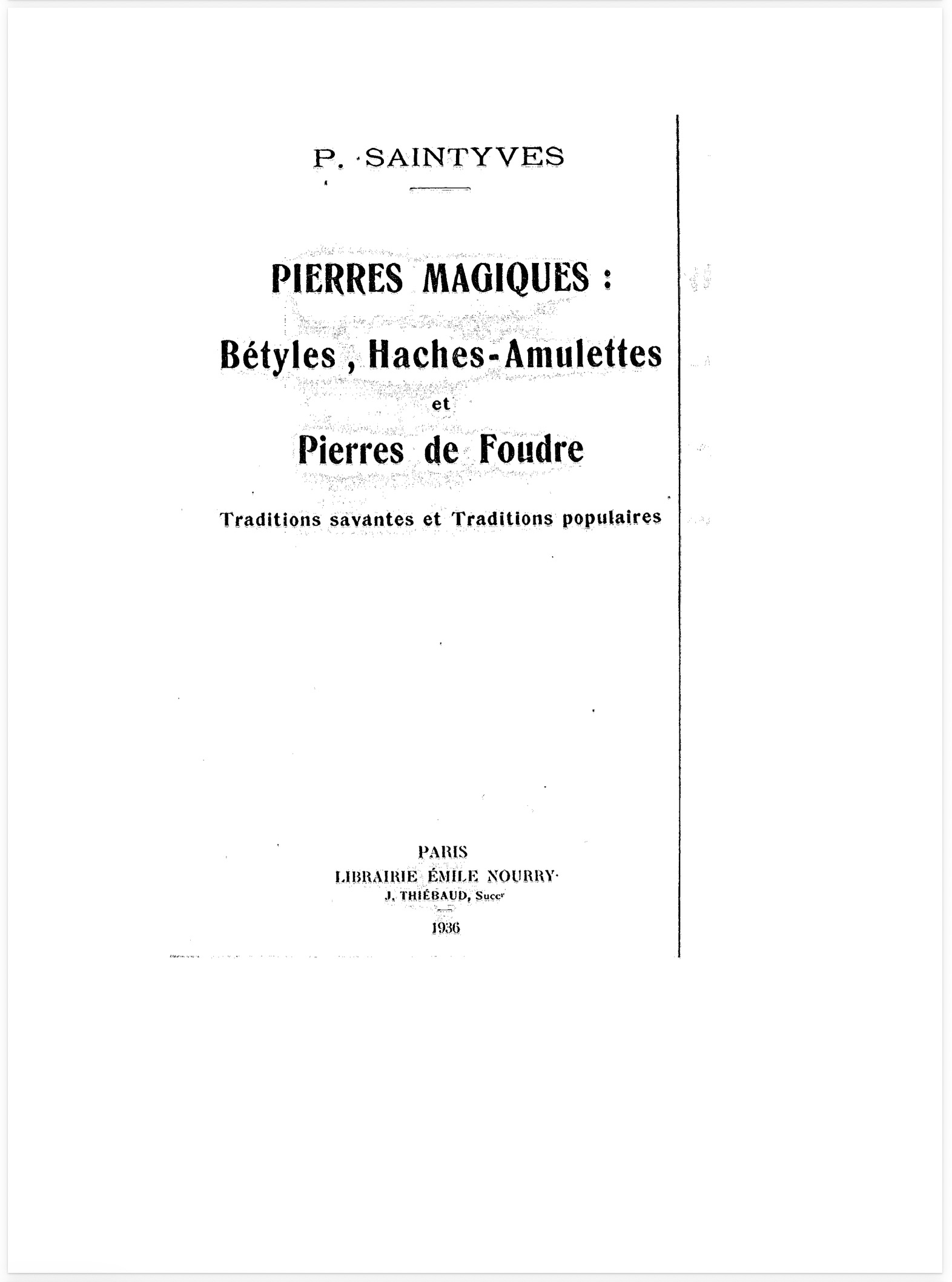
Pierres magiques: Bétyles, haches-amulettes et pierres de foudre : traditions savantes et traditions populaires
Magic Stones: Betyls, Amulet Axes, and Thunderstones: Learned Traditions and Popular Traditions
Book
Saintyves, P. (1936) Pierres magiques: Bétyles, haches-amulettes et pierres de foudre : traditions savantes et traditions populaires. [Magic Stones: Betyls, Amulet Axes, and Thunderstones: Learned Traditions and Popular Traditions] Paris, J. Thiébaud, 296 pp.
Record No. 28738  |  Sinkankas/Born No.: 5692 (not seen); NIB  |  Language: in French  |  RWHL
Belief in thunderstones left no trace among the writers of Classical Antiquity before Epicurus (341–280 BC); indeed, one might even say not before the beginning of the Christian era, and this is an important point. Homer, who is said to have lived around 850 BC, frequently sang of the wrath of Zeus and delighted in portraying him hurling thunderbolts; yet, despite so many favourable opportunities, he never made the slightest allusion to the material projectile itself, of which the Greeks would speak only much later. Anaximander of Miletus (610–547 BC), Heraclitus (c. 500 BC), and Aristotle (384–322 BC), all of whom discussed lightning at greater or lesser length, do not say a single word about the ceraunia, or thunderstone. All the scholars of Greece and ancient Italy, up to the dawn of the Christian era, knew that peoples living on the fringes of the civilised world still used stone tools and weapons. Moreover, they also knew that certain peoples who already employed bronze or iron continued to use stone for religious purposes. “The embalmers of Ancient Egypt opened corpses by making an incision with an Ethiopian stone (Herodotus II, 86), and tombs have yielded flint knives ([1]) that can hardly have differed from those used for this purpose. Zipporah, the wife of Moses, used a stone knife (ṣûr or ṣōr) to circumcise her son (Exodus 4:25). At Gilgal, Yahweh commanded Joshua to make stone knives in order to circumcise the Israelites (Joshua 5:2–3). According to an addition found in the Septuagint, these knives were later gathered and placed in his tomb (Joshua 21:40 and 24:30). It was with a sharp stone that the priests of Baal cut themselves in order to gain the favour of their god, and that the priests of Cybele inflicted dreadful mutilations upon themselves. Stone daggers formed part of the sacred equipment of temples; on all solemn occasions they were used to strike the sacrificial victim, as when the alliance between Alba and Rome was concluded. The same customs are said to have prevailed among the Carthaginians. Hannibal struck the sacrificial lamb upon the altar with a flint knife after his famous oath to Hasdrubal and before the Battle of the Ticinus, having struck the lamb with a flint stone, holding the flint in his right hand, and calling upon Jupiter and the other gods as witnesses while dashing the victim’s head against the stone.” Among the divine stones, many were thunderstones; this was undoubtedly the case in the temple of Jupiter Feretrius, where a flint stone—the god himself, Iuppiter lapis, a representation of the thunderbolt—sanctioned oaths by its presence. “Thus religion, conservative of ancient customs, continued to make use, in the full Iron Age, of the misunderstood relics of a distant and forgotten past, preserving the unconscious tradition of the ancestors of the Stone Age. When this tradition had become almost completely obscured, people began to ask where these stone tools and weapons came from. The theories concerning the nature and origin of lightning proposed by scholars during the four centuries preceding the Christian era may have suggested the answer. Epicurus (341–280 BC) already expressed an opinion that points the way toward this belief.”

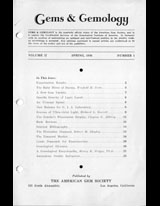
Father Struck it Rich: The Story of the Owner of the Hope Diamond
Book
Mclean, E.W. (1936) Father Struck it Rich: The Story of the Owner of the Hope Diamond. Boston, Little, Brown & Co., 316 pp.
Record No. 1941  |  Sinkankas/Born No.: 4326/NIB  |  RWHL
Evalyn Walsh McLean’s Father Struck It Rich, written in collaboration with journalist Boyden Sparkes, is an autobiographical account of the life of the celebrated American heiress and owner of the Hope diamond, tracing her family’s rise from modest circumstances in the Colorado mining camps to extraordinary wealth and prominence in Washington society. The narrative begins with her father, Thomas F. Walsh, an Irish immigrant who arrived in America in 1869 and spent decades prospecting and developing mining properties in the American West. His discovery of an exceptionally rich gold deposit at the Camp Bird mine near Ouray, Colorado, in 1896 transformed the family’s fortunes. McLean provides detailed recollections of her father’s prospecting methods, his recognition of gold-bearing quartz overlooked by earlier miners, and the development of the mine into a major producer. The Camp Bird was eventually sold to British investors in 1902 for a total consideration of $5.2 million. The resulting wealth enabled the Walsh family to establish themselves among the social elite of Washington, New York, Newport, and Europe. Evalyn recounts her privileged but unconventional upbringing, her acquaintance with royalty and political leaders, and her marriage to Edward Beale McLean, heir to the Washington Post newspaper fortune. Of particular gemological and historical importance are her firsthand accounts of acquiring two of the world’s most celebrated diamonds. During her honeymoon in Paris, she purchased the 92-carat pear-shaped Star of the East diamond from Cartier as part of an elaborate necklace incorporating a large emerald and pearl. Later, Pierre Cartier introduced her to the famous blue Hope diamond, recounting its supposed history from Jean-Baptiste Tavernier and Louis XIV through its disappearance during the French Revolution and subsequent ownership by the Hope family. McLean describes the diamond’s unusual blue color, comparing it with various shades of blue and with sapphire, and records the legends of misfortune associated with its ownership. Initially reluctant to purchase the stone because she disliked its setting, she became captivated after Cartier had it remounted in a diamond necklace. The agreed price was $154,000, and the transaction was subsequently complicated by financial arrangements and litigation. Although McLean professes skepticism about the diamond’s alleged curse, she admits to a lingering superstition, refusing to allow friends or children to touch it while regarding herself as somehow immune to its supposed influence. Her account provides an unusually intimate perspective on the marketing, valuation, ownership, and social significance of exceptional gemstones during the early twentieth century. Beyond jewelry, the autobiography chronicles the tragedies that accompanied the family’s wealth, including the death of her brother in an automobile accident, the death of her young son, her husband’s alcoholism and financial difficulties, and the erosion of the family fortune during the Great Depression. McLean also describes her charitable activities, relationships with prominent political figures, and attempts to balance extravagance with personal responsibility. Illustrated with family portraits, photographs of the Camp Bird mine, and images of her celebrated jewels, the book is an important primary source for the history of the Hope diamond and the Star of the East, as well as for the social history of American mining fortunes and the luxury jewelry trade. Its central theme is the contrast between wealth earned through determination and labor and wealth inherited without the discipline that its acquisition requires.

The ruby mines of Burma

Journal Article
Scott, W.H. (1936) The ruby mines of Burma. Gems & Gemology, Vol. 2, No. 1, Spring, pp. 3–6; No. 2, Summer, pp. 31–34.
Record No. 1570  |  ISBN/ISSN: 0016626X  |  Sinkankas/Born No.: NIS/NIB  |  RWHL
This two-part account, condensed by David H. Howell from Winfield H. Scott’s American consular report completed in May 1935, surveys the history, geology, mining practices, trade, and economic prospects of Burma’s ruby industry, principally in the Mogok Stone Tract. The historical discussion distinguishes legendary accounts of early gem recovery from later records of royal control, taxation, compulsory labor, and restrictions on the movement and sale of stones. It traces the transition to British administration and the concession operated by Burma Ruby Mines, Ltd., describing changing arrangements for rents, royalties, and licenses, together with persistent problems of theft and smuggling. Mogok is identified as the principal mining and trading center within a tract covering approximately 600 square miles, with additional gem-producing localities noted elsewhere in Burma. The geological account describes gneisses, granulites, intrusive rocks, and associated crystalline limestones containing ruby, sapphire, and spinel, accompanied by numerous other minerals. The range of gem production includes star rubies and sapphires, tourmaline, zircon, garnet, aquamarine, chrysoberyl, and other ornamental materials. Traditional mining methods comprise narrow shafts and underground drifts, open hillside workings supplied with water through channels and bamboo pipes, deep excavations into hillsides and natural cavities, and recovery from dammed streams. Gem-bearing gravel, termed “byone,” is washed to remove lighter material, with gems retained in traps and subsequently collected by hand. Mechanized operations introduced large excavations, suction pipes, sluices, screening and washing plants, a drainage tunnel, and hydroelectric power. The account attributes the company’s decline to competition from synthetic gems, falling prices, the First World War, and the economic depression; voluntary liquidation began in December 1925, and its leases were surrendered in June 1931. Subsequent sections describe sealed transport of recovered stones, daylight sorting, grading by size and quality, and confidential bargaining through concealed finger signals. Burmese trade terms are listed for different grades, sizes, and optical varieties. Cutting and polishing practices include wooden laps charged with corundum, metal cutting discs, and polishing powders mixed with water and olive oil. Mining eligibility, ordinary and extraordinary licenses, illicit trading, and export certification are also discussed. The final assessment emphasizes the rarity of valuable large rubies, citing the 42-carat rough Peace Ruby, reportedly sold for £27,500. Although potentially productive ground remained beneath religious buildings and flooded workings, the report concludes that low average gravel values, taxation, labor costs, and substantial overheads left narrow profit margins even under favorable conditions.

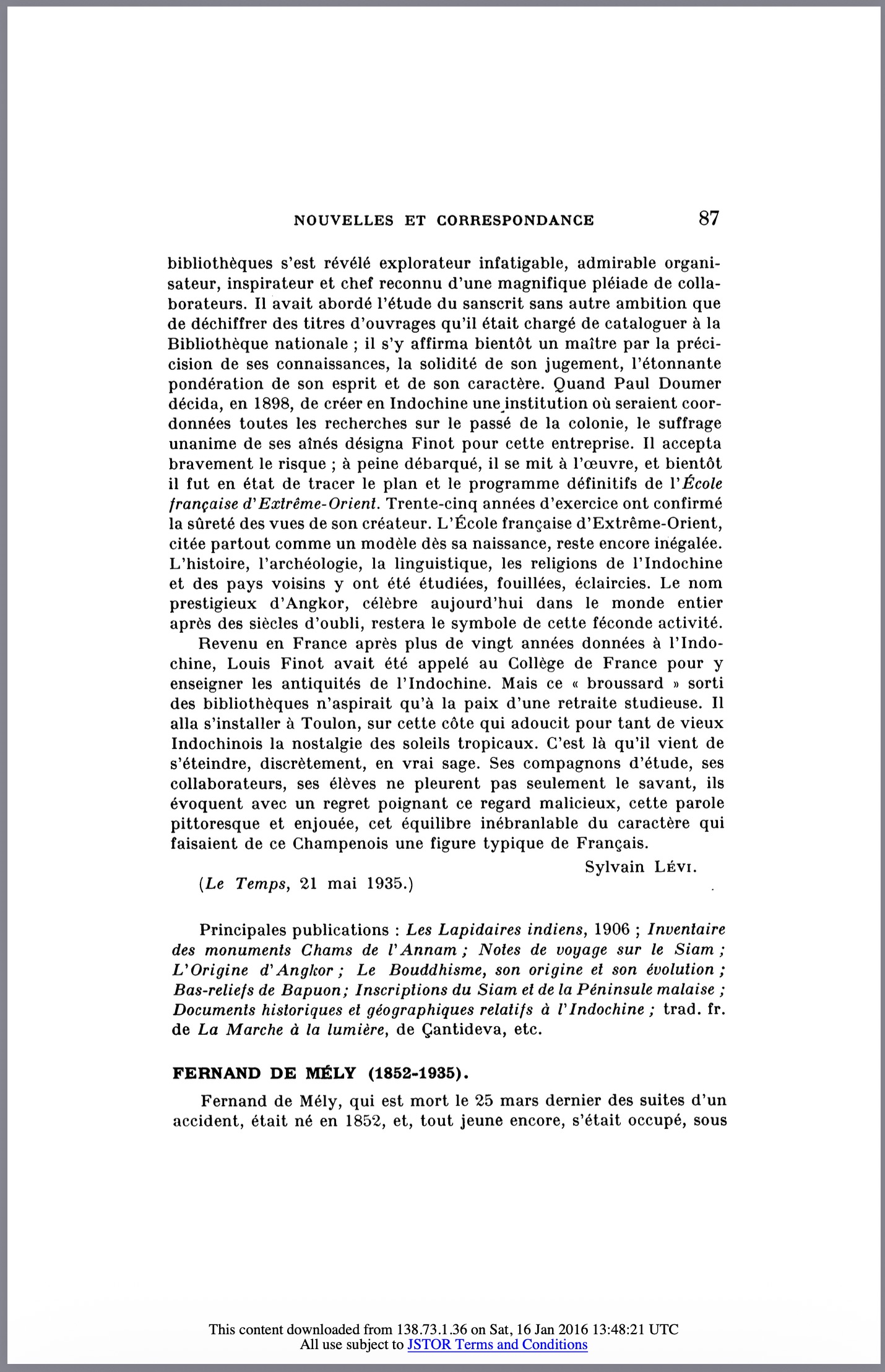
Fernand de Mély (1852-1935)

Journal Article
M, A. (1935) Fernand de Mély (1852-1935). Revue Archéologique, Vol. 6, July–December, pp. 87–89.
Record No. 29431  |  ISBN/ISSN: 00350737, 21043868  |  Sinkankas/Born No.: NIS/NIB  |  RWHL
Fernand de Mély, who died on March 25 last as the result of an accident, was born in 1852 and, while still very young, had occupied himself, under the direction of Anatole de Montaiglon, with the philology, history, and art of the Middle Ages. His communications to the Société nationale des Antiquaires de France, of which he had been elected a resident member on February 4, 1903, the articles he contributed to the Bulletin de l’Académie des Inscriptions and the Monuments Piot, to the Revue de l’art chrétien, the Bulletin monumental, the Revue de l’Art, and the Gazette des Beaux-Arts, show the breadth of the subjects in which he was interested. A great number of these studies are devoted to the treasures of our churches and museums, precious stones and objects of goldsmiths’ work, ivories, tapestries, paintings, sculptures, miniatures; technical, iconographic, and liturgical studies. His tireless activity continually broadened the field of his research, and the liveliness of his mind led him to publish, sometimes even before he had fully exhausted their significance, the hypotheses suggested to him by ancient texts or by the examination of objects. Gradually, his research turned toward miniaturists and the early masters; he endeavored to recover their names and published, in 1913, Volume I, devoted to miniaturists, of a work in which he intended to bring together all his discoveries: Les Primitifs et leurs signatures. As early as 1910, he had published here an important article in which he presented a kind of summary of the book he was then engaged in writing. Ten years later, the Revue archéologique published a second article that supplements the first and provides an overview of his research on our ancient monuments and the artists who worked on them: Nos vieilles cathédrales et leurs maîtres d’œuvre. He had also published in our journal, in 1890, a curious memoir on Les reliques du lait de la Vierge et la galactite. The Académie française had recognized the merit of his persistent labor by awarding him the Prix Jules Janin, and the Académie des Inscriptions the Prix Saintour. Fernand de Mély rests in the small cemetery of Le Mesnil-Germain (Calvados), very near the property to which he so loved to retire for peace and work, and part of which he had given to the City of Paris as early as 1932, with a view to establishing a preventorium for young women fatigued by administrative work.

Septuaginta: Id est Vetus Testamentum Graece iuxta LXX Interpretes
The Septuagint: That is, the Old Testament in Greek according to the seventy translators
Book
Rahlfs, A. and Hanhart, R. (1935) Septuaginta: Id est Vetus Testamentum Graece iuxta LXX Interpretes. [The Septuagint: That is, the Old Testament in Greek according to the seventy translators] Stuttgart, Privilegierte württembergische Bibelanstalt, 2 Vols., Vol. 1: Leges et historiae; Vol. 2: Libri poetici et prophetic , 1184, 941 pp.
Record No. 26370  |  ISBN/ISSN: 3438051206  |  Sinkankas/Born No.: NIS/NIB  |  Language: in Greek and German  |  RWHL
The Septuagint, or Vetus Testamentum Graece iuxta LXX Interpretes, is the ancient Greek translation of the Hebrew Scriptures, traditionally attributed to seventy (or seventy-two) Jewish scholars in the 3rd to 2nd centuries BCE. This edition presents the Old Testament text in its Greek form, preserving the linguistic and textual heritage that significantly influenced early Jewish and Christian traditions. It is a foundational text for biblical studies, particularly for understanding the development of the Hebrew Bible, its reception in the Hellenistic world, and its use in early Christianity, where it often served as the primary scriptural source.

Orientalische Steinbücher und Persische Fayencetechnik
Oriental stone books and Persian faience technique
Journal Article
Ritter, H., Sarre, F., Ruska, J. and Winderlich, R. (1935) Orientalische Steinbücher und Persische Fayencetechnik. [Oriental stone books and Persian faience technique] Instalbuler Mitteilungen, Vol. 3, pp. 1–70, 4 plates.
Record No. 8127  |  Sinkankas/Born No.: NIS  |  Language: in German  |  RWHL
This substantial collection brings together studies by Hellmut Ritter, Friedrich Sarre, Julius Ruska, and Rudolf Winderlich concerning Oriental lapidaries and Persian ceramic technology. The sections devoted to stone books examine Arabic and Persian mineralogical and lapidary literature, including the transmission of Greek traditions into Islamic scholarship, the identification and nomenclature of stones, and descriptions of their properties, uses, and supposed medicinal or magical virtues. Ruska’s contribution is particularly concerned with the history and textual transmission of mineralogical knowledge and the relationship between Arabic sources and earlier Greek writings. The technological portion examines Persian faience and related ceramic techniques, discussing materials, glazes, pigments, firing, and methods used to produce colored and lustred surfaces. Textual evidence is compared with surviving objects and practical experimentation in an attempt to understand historical manufacturing processes. The volume is important for the history of gemology and mineralogy because it makes Oriental source material accessible and places medieval Islamic knowledge of stones within the broader history of science and technology, while the four plates illustrate relevant manuscripts, objects, or technical material.

Beautiful Burma

Book
Enriquez, C.M. (1935) Beautiful Burma. Rangoon, Myanmahita Magazine, 148 pp.
Record No. 2598  |  Sinkankas/Born No.: NIS/NIB  |  RWHL
An illustrated travel account of Burma combining descriptions of its landscapes, peoples, history, religious traditions and principal towns with journeys through the Shan, Kachin, Karen and Chin hills. Of particular gemological interest are chapters VI, “The Ruby Mines” (pp. 50–57), and VII, “Mogok” (pp. 58–64). Enriquez describes the journey from Thabeikkyin to Mogok, the town’s setting and markets, and gem trading through concealed finger-pressure bargaining. He outlines the occurrence of rubies in marble and their concentration in gem-bearing gravels (byon), emphasizing the continuation of local mining after the Burma Ruby Mines Company ceased operations. Mining descriptions distinguish twin shafts, inn pits, myaw trenches and hazardous lu workings in underground fissures and caverns, together with women’s customary rights to recover stones from discarded gravels and streams (kaneze). Historical passages discuss royal control of the mines, Kyatpyin, the region’s connections with the Shan States, and traditions concerning the Ngamauk, Kala Byan and Peace rubies. The account also records mining taboos and the diverse communities supporting the gem industry. A useful period description of Mogok’s mining practices and social setting, combining contemporary observations with historical traditions and speculation.

Some medieval gems and relative values
Journal Article
Byrne, E.H. (1935) Some medieval gems and relative values. Speculum, Vol. 10, No. 2, April, pp. 177–187.
Record No. 547  |  Sinkankas/Born No.: NIS/NIB  |  RWHL
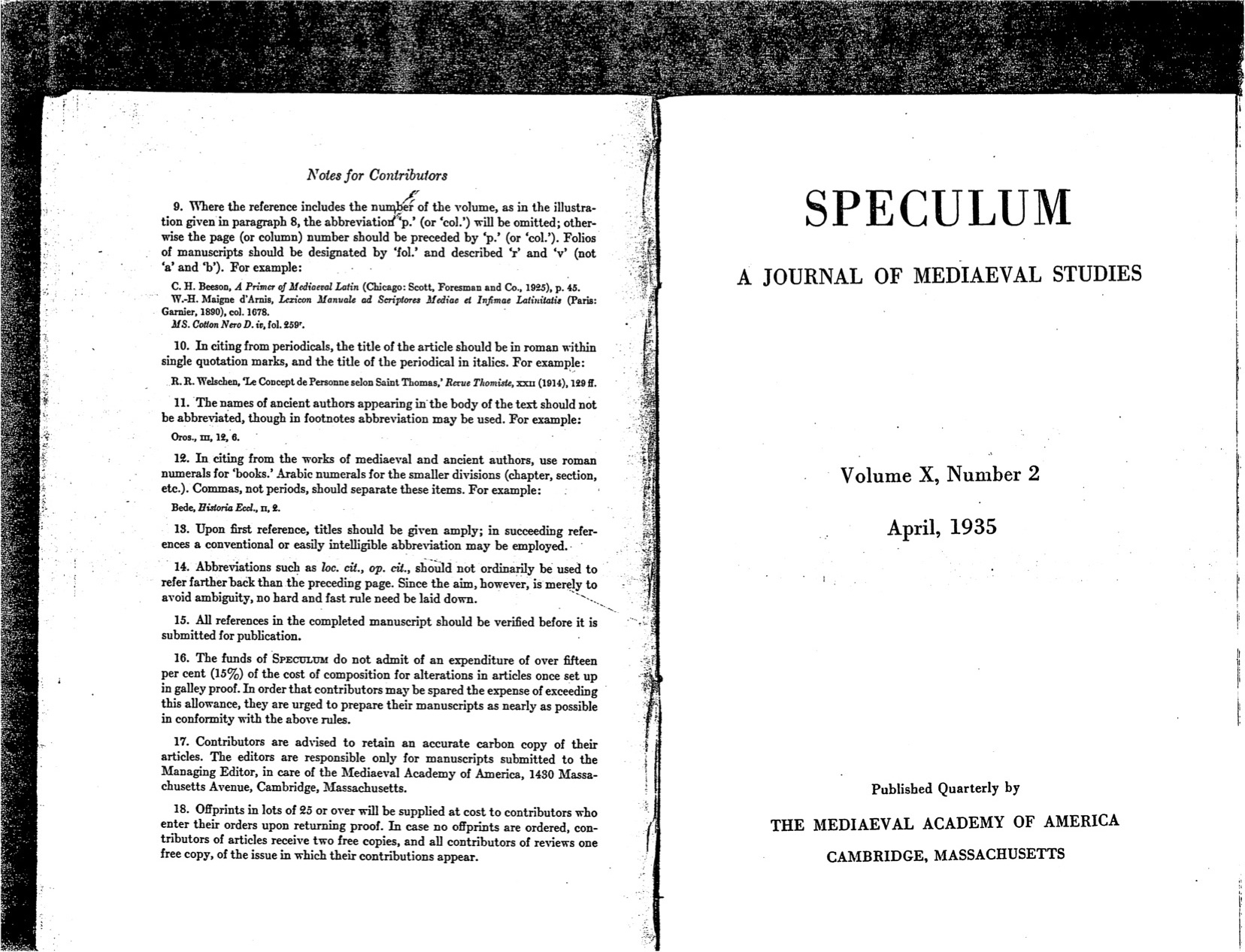
Byrne investigates the variety, circulation and relative economic value of medieval gemstones through thirteenth-century Genoese notarial records, supplementing and qualifying conclusions drawn from royal inventories. He begins by explaining why commercial documents rarely permit precise valuations: stones are commonly recorded without weights, dimensions or reliable descriptions of quality, while prices often cover mixed consignments, settings and other goods together. Nevertheless, the records demonstrate an active Mediterranean trade in loose gems and jewellery, with pearls particularly prominent and a range of precious and ornamental materials appearing in exports, sales, pledges and personal possessions. The article’s principal evidence is a detailed Genoese contract of 1253 involving Joseph de Braudistano, acting for King Conrad of Sicily, and a substantial collection of jewels valued at £2,522 Genoese. Byrne questions whether this represented an outright purchase or, more probably, a financing arrangement secured upon royal treasure during the Hohenstaufen dynasty’s financial difficulties. The document lists 987 objects, including 100 rings, 94 mounted ornaments, 783 loose stones and ten devotional or household articles. Its contents include Oriental and European sapphires, rubies, topazes, emeralds, diamonds, pearls and numerous engraved stones, with cameos and intaglios accounting for 681 items. Byrne emphasises the distinction between valuable Oriental sapphires and the less costly stones from Le Puy, and notes that the collection’s contents broadly support established views of medieval gemstone preferences and rarity. The exceptional number of engraved gems suggests either extensive survival and circulation of antique material or an important contribution from Byzantine or medieval workmanship; their exact origins remain uncertain. To make the collection’s aggregate value intelligible without relying on misleading conversions into modern currency, Byrne compares it with contemporary salaries, wages, commodities, livestock, enslaved people and property. The sum represented approximately the annual earnings of 150 skilled craftsmen and could have purchased a major provisioned ship, large quantities of silk, cotton, wool or grain, or substantial urban and rural property. These comparisons establish the collection’s considerable purchasing power while preserving uncertainty about individual gem values. Byrne concludes that the jewels were probably dispersed as Hohenstaufen fortunes collapsed, with some of the engraved stones potentially surviving, unidentified, in later collections.

Greek Geography

Book
Warmington, E.H. (1934) Greek Geography. London, J.M. Dent, 269 pp.
Record No. 26377  |  Sinkankas/Born No.: NIS/NIB  |  RWHL
The book highlights the growth of Greek geographic knowledge and thought to Graeco-Roman geography. Examples of Physical and Political Geography, Cosmology, Mathematical Geography and Cartography.

Epiphanius De Gemmis: The Old Georgian Version and the Fragments of the Armenian Version
Book
Epiphanius (1934) Epiphanius De Gemmis: The Old Georgian Version and the Fragments of the Armenian Version. London, Christophers, 335 pp.
Record No. 4768  |  Sinkankas/Born No.: 1915  |  RWHL
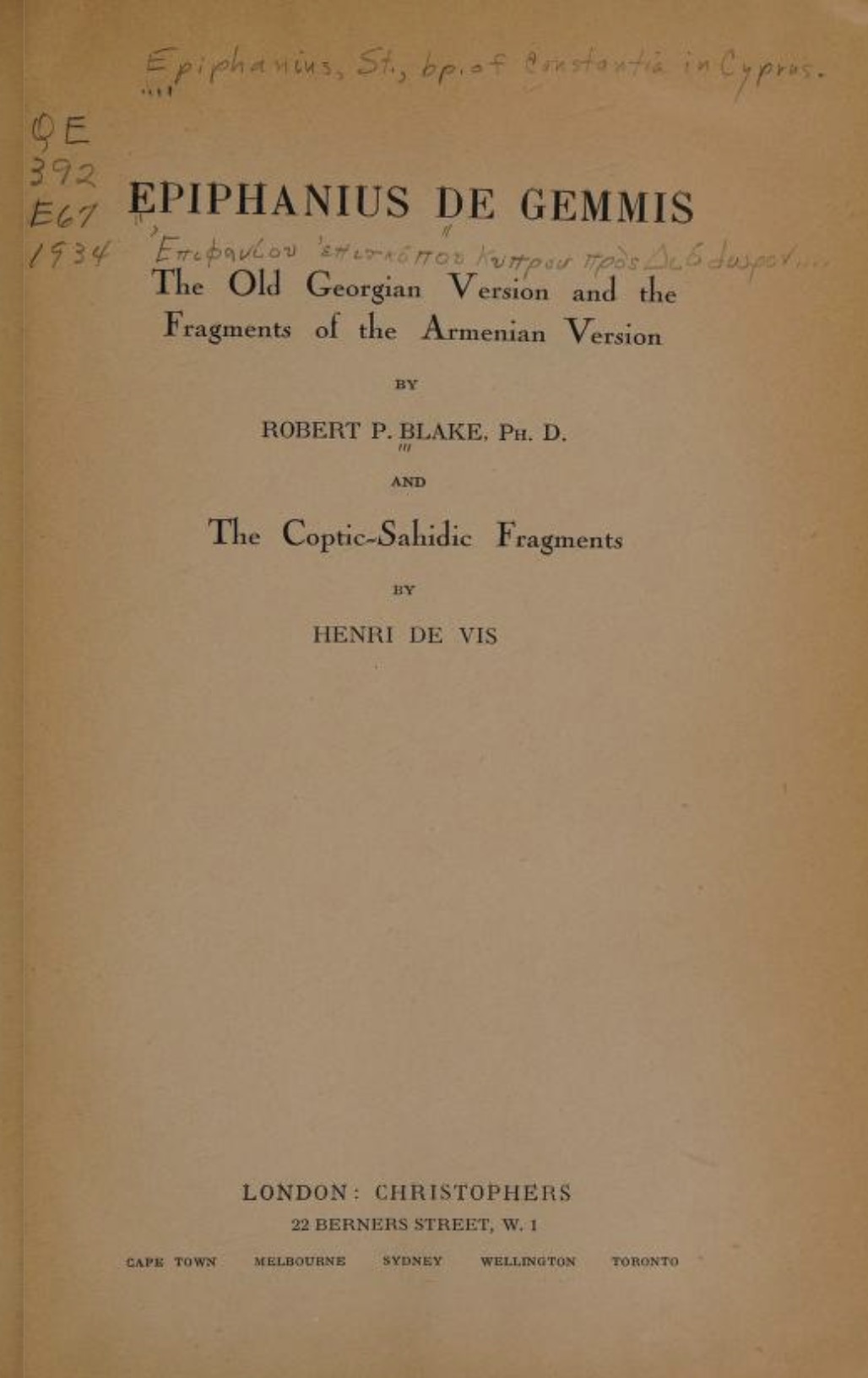
A major scholarly edition of the fourth-century Christian bishop Epiphanius of Salamis’s treatise De Duodecim Gemmis (On the Twelve Precious Stones), traditionally addressed to Diodorus, Bishop of Tyre, and devoted to the twelve gemstones adorning the breastplate of Aaron, the Hebrew high priest. Robert P. Blake publishes the nearly complete Old Georgian text, preserved in the tenth-century Shatberd manuscript, together with an English translation, Armenian fragments and epitomes, and an extensive philological and historical introduction. Henri de Vis contributes the surviving Coptic-Sahidic fragments, accompanied by translations and textual commentary. The work describes the twelve biblical stones—sardion, topaz, emerald, carbuncle, sapphire, jasper, ligure, agate, amethyst, chrysolite, beryl, and onyx—discussing their colors, physical appearances, geographical sources, varieties, and supposed medicinal and supernatural properties. Among the accounts are descriptions of emeralds from Egypt and India, stones associated with Babylon, Cyprus, and other regions of the ancient world, and traditional beliefs concerning the curative and protective powers of gemstones. The mineralogical descriptions are interwoven with biblical exegesis, allegorical interpretations, and associations between the twelve stones, the twelve tribes of Israel, and their respective patriarchs. Blake demonstrates that the Georgian translation was derived from an Armenian version, probably itself based upon a lost Syriac translation of the Greek original, and suggests that the Georgian rendering dates from the first half of the ninth century. The extensive introduction examines the textual relationships among the Greek, Latin, Georgian, Armenian, and Coptic traditions, the manuscript history, linguistic evidence, and the sources employed by Epiphanius. Particular attention is given to ancient lapidary literature, including Theophrastus, Pliny, Dioscorides, Hermetic writings, and the traditions concerning the magical and therapeutic properties of stones. The edition is especially important because the previously available Latin version preserved less than half of the original treatise, omitting the extensive allegorical interpretations retained in the Georgian tradition. The text provides valuable evidence for ancient gemstone nomenclature, the geographical distribution of gems as understood in late antiquity, early Christian mineralogical beliefs, and the transmission of Greek scientific and religious literature through the languages of the Christian Near East. It is an essential primary source for the history of gemology, ancient lapidaries, and the symbolic significance of gemstones in early Christianity.

Jade

Journal Article
Anonymous (1934) Jade. Gems & Gemology, Vol. 1, No. 3, May–June, pp. 80–82.
Record No. 3636  |  ISBN/ISSN: 0016626X  |  Sinkankas/Born No.: NIS/NIB  |  RWHL
This article surveys jade’s physical characteristics, sources, cultural associations, manufacture, valuation, and ornamental uses, while promoting it as a suitable Mother’s Day gift. It distinguishes nephrite from fei cui, describing nephrite as a compact aggregate of minute fibrous amphibole crystals whose exceptional toughness exceeds that of the more granular fei cui. Fei cui is presented as harder, heavier, and more refractive than nephrite, while dark green to black material termed chloromelanite is associated with increased iron content. The principal source of fei cui is identified as the Mogaung district of Upper Burma, whereas nephrite is reported from the Karakash Valley in Turkestan, China, Siberia, New Zealand, and other localities. Guangzhou and Beijing are described as important trading and carving centers, although the author cautions that the finest pieces seldom appear openly in tourist shops and that inexperienced visitors may pay excessive prices. Historical discussion connects the names jade and nephrite with beliefs concerning their ability to remedy kidney or loin disorders, and recounts the esteem accorded jade by the Aztecs, Māori, and other peoples who fashioned it into tools and weapons. Particular attention is given to Chinese traditions, including jade’s association with charity, modesty, courage, justice, wisdom, constancy, happiness, and longevity. The article also describes its use in musical instruments and burial customs, together with collectors’ appreciation of rust-colored archaeological pieces, whose appearance was sometimes imitated artificially. Traditional manufacture involves sawing with wire and an abrasive, usually powdered corundum, followed by hand carving and polishing. Carved motifs are assigned symbolic meanings, including the bat for happiness and the butterfly for immortality. The color discussion encompasses numerous greens, white, yellow, brown, lavender, and bluish lavender. The author contrasts Chinese appreciation of “mutton-fat” white material with American preference for emerald-green fei cui, and questions reports of genuinely blood-red jade. Dark inclusions and uneven coloration are said to diminish value, although skilled carvers incorporate contrasting areas into their designs. Fine, flawless, uniformly colored material fashioned as a simple cabochon is considered more valuable than pierced carving. Uses include earrings, brooches, rings, snuff bottles, vases, bowls, belt buckles, and dress clasps. The concluding passages encourage collecting and repeated gifts of jade, emphasizing its durability, varied appearance, cultural significance, and availability across a broad range of prices.

Edelsteine und Schmucksteine

Gemstones and ornamental stones
Book
Eppler, A. (1934) Edelsteine und Schmucksteine. [Gemstones and ornamental stones] Leipzig, Wilhelm Diebener, see pp. 319–343
Record No. 714  |  Sinkankas/Born No.: 1918; NIB  |  Language: in German  |  RWHL
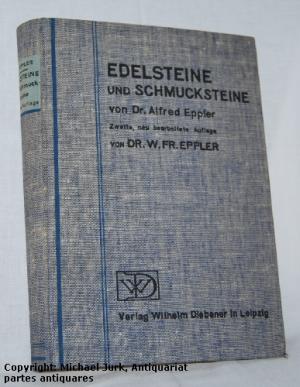
Eppler provides a practical and scientific survey of gemstones and ornamental stones, discussing their identification, physical and optical properties, occurrence, cutting, treatment, imitation, and commercial use. The section on pp. 319–343 deals particularly with artificial and synthetic gemstones, reviewing attempts to reproduce natural gem minerals and the methods by which manufactured products can be distinguished from their natural counterparts. Considerable attention is given to synthetic corundum, especially ruby and sapphire produced by the Verneuil process, including the manufacture of boules, coloration, characteristic structures, and diagnostic features. Synthetic spinel and other artificial gem materials are also treated, together with glass imitations, assembled stones, and other substitutes encountered in the gem trade. Eppler emphasizes practical identification through optical and physical examination and discusses the characteristic features by which synthetic and imitation stones may be separated from natural gems. The work reflects the increasing importance during the early twentieth century of synthetic gem materials and the corresponding development of systematic gemological methods for their detection.

Jade ornaments from Piedras Negras

Journal Article
Mason, J.A. (1933) Jade ornaments from Piedras Negras. University Museum Bulletin, Vol. 4, No. 2, pp. 51, 53, 55–56.
Record No. 28613  |  Sinkankas/Born No.: NIS/NIB  |  RWHL
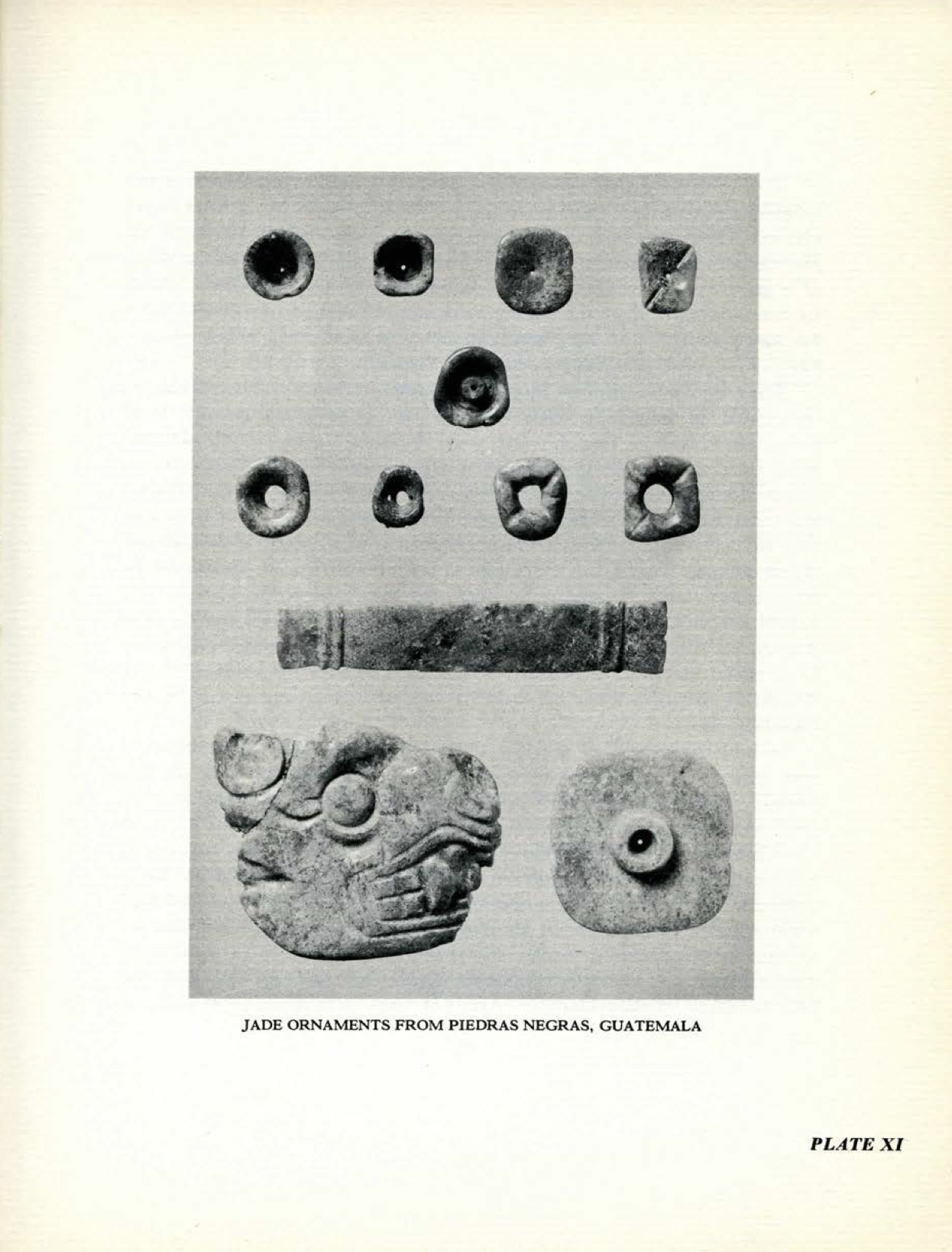
Prized by the ancient peoples of Mexico and Central America, jade was regarded as even more precious than gold (see “Native American Jades,” Museum Journal, March 1927). Although the source of Mexican jade had never been determined, there was no question that it was native, since it was considered mineralogically distinct from Asiatic jade, and jade ornaments were demanded in tribute by the Aztecs from certain regions of southern Mexico. Jade is a generic term that includes two chemically distinct species, jadeite and nephrite. Ornaments made from both stones are found in the Americas, but Mexican jade was believed to be jadeite and almost certainly a product of the highlands. The Maya of the Early Empire were unfamiliar with gold but apparently prized jade above all other materials, carving it into ornaments displaying their characteristic artistic style. This was a remarkable achievement for a people without metal tools, since jade is harder than steel. The jade ornaments of important individuals were buried with them, often placed in the mouth in a manner comparable to the Greek obolus; for this reason many Maya jades have been recovered through excavation. A large number of jade ornaments were discovered by the Eldridge R. Johnson Expedition at the Maya city of Piedras Negras, usually in ceremonial caches placed in pottery vessels beneath temple floors, although these examples were generally of relatively poor-quality jade. During one season, however, a burial vault containing the remains of a young man of evidently high rank was uncovered. Buried with him were approximately thirty ornaments of exceptionally fine, translucent apple-green jade, together with numerous carved heads. In accordance with the expedition’s agreement with the Guatemalan government, half of the objects were sent to Guatemala, while most of the remaining half was retained by the museum. Many of the ornaments occurred in pairs, allowing a nearly equal division. Only three outstanding objects were unique: a jaguar-head pendant retained by the museum, a human-figure pendant sent to Guatemala, and a large scalloped ring that remained in the museum collection. The human figure was probably originally worn as a pendant, although its position suggested that it may have been placed in the mouth according to Maya mortuary custom. The jaguar head, found face down beneath the body, was probably a back ornament. Carved in profile and in relatively high relief, it has a perfectly flat reverse bearing seven blocks of incised hieroglyphs, one of the very few known inscriptions on jade, though its meaning remained undeciphered. On the chest were found the scalloped ring, badly broken and unrestored, and two long rectangular beads, one measuring four inches in length and drilled throughout. On either side of the skull lay large quasi-circular ornaments with short tenons on the reverse, probably inserted into the earlobes as ear ornaments. Around the forehead were twenty small ornaments of the finest jade. Although apparently strung together as a fillet, their form resembles that of ear plugs, and the fact that they consist of ten pairs of slightly different shapes suggests that they were originally ear ornaments later reused as a headband.

Anselmus de Boodt als Wissenschafter und Naturphilosoph
Anselmus de Boodt as Scientist and Natural Philosopher
Journal Article
Hiller, J.E. (1933) Anselmus de Boodt als Wissenschafter und Naturphilosoph. [Anselmus de Boodt as Scientist and Natural Philosopher] Archeion, Vol. 15, No. 3, pp. 348–368.
Record No. 28362  |  Sinkankas/Born No.: NIS/NIB  |  Language: in German  |  RWHL
Hiller examines Anselmus de Boodt (1550–1632) as a scientist and natural philosopher, placing his work within the intellectual transition from Renaissance natural philosophy toward more empirical approaches to the natural sciences. Particular attention is devoted to de Boodt’s Gemmarum et lapidum historia (1609), his major work on gems and stones, and to his methods of observation, description, classification, and explanation. Hiller discusses the coexistence in de Boodt’s thought of careful firsthand observation and practical mineralogical knowledge with inherited classical and medieval concepts, including occult qualities, medicinal virtues, sympathies, and antipathies. De Boodt nevertheless displays considerable skepticism toward many traditional claims about the magical powers of gemstones and attempts to distinguish demonstrable properties from superstition and unsupported authority. His treatment of stones encompasses their physical characteristics, colors, hardness, formation, geographic occurrence, imitation, cutting, and uses, illustrating an unusually broad conception of mineralogical study for the early seventeenth century. Hiller presents de Boodt as an important transitional figure whose work retains elements of Aristotelian and Renaissance natural philosophy while showing an increasing reliance upon observation, experience, critical judgment, and the systematic description of natural objects.

Il Libro’ Dell Arte

The Craftman’s Handbook
Book
Cennini, C.D.A. and Thompson, D.V. (1933) Il Libro’ Dell Arte. [The Craftman’s Handbook] New Haven, Yale Univeristy Press, Vol. 2 , 142 pp.
Record No. 28064  |  Sinkankas/Born No.: NIS/NIB  |  Language: in English  |  RWHL
Cennini’s practical handbook presents detailed instructions for the materials and techniques of the painter and craftsman, including drawing, preparation and use of colors, fresco and oil painting, glues and cements, panel painting, gilding, illumination, work on cloth and glass, mosaic, and casting. Particular attention is given to mineral pigments, including azurite, malachite, vermilion, and ultramarine, with descriptions of their preparation, grinding, properties, and appropriate uses. Ultramarine is praised as the finest of colors and its preparation is described in considerable detail. Of particular gemological interest is Cennini’s discussion of stones used for burnishing gold: hematite is recommended, but sapphire, emerald, balas ruby, topaz, ruby, and garnet are said to be even better, with the choicer stones preferred. Thompson’s translation is based on his revised Italian text and attempts to render Cennini’s technical vocabulary in terminology useful to modern practicing artists and craftsmen.

Diodorus of Sicily

Book
Diodorus Siculus and Oldfather, C.H. (1933) Diodorus of Sicily. Cambridge, MA, Harvard University Press, 12 Vols.
Record No. 27082  |  ISBN/ISSN: 674993071  |  Sinkankas/Born No.: NIS/NIB  |  RWHL
Diodorus is frequently cited as the only ancient account of Egyptian gold mining. He states he tried to check his sources, but he relied on Agatharcides' account from the 2nd century B.C. It is not clear whether either writer ever saw a gold mine; however, Diodorus wrote approximately half a millennium before the Byzantine/Coptic operations at Bir Umm Fawakhir. If nothing else, the political and economic situation had changed. Diodorus' kings and queens of Egypt (the last of whom was Cleopatra) had long been replaced by distant emperors in Rome or Constantinople, and Egypt had been reduced to a province.

Personal ornaments

Book Section
Mackay, E.J.H. and Coulson, A.L. (1931) Personal ornaments. In: Mohenjo-daro and the Indus Civilization: Being an official account of archæological excavations at Mohenjo-daro carried out by the government of India between the years 1922 and 1927, London: A. Probsthain, 3 Vols., Vol. 2 , pp. 509–548.
Record No. 27449  |  Sinkankas/Born No.: NIS/NIB  |  RWHL
Hitherto it has commonly been supposed that the pre-Aryan peoples of India were on an altogether lower plane of civilization than their Aryan conquerors; that to the latter they were much what the Helots were to the Spartans, or the Slavs to their Byzantine overlords—a race so servile and degraded, that they were commonly known as Dasas or slaves. The picture of them gleaned from the Hymns of the Rigveda was that of black skinned, flat-nosed barbarians, as different from the fair Aryans in physical aspect as they were in speech and religion, though at the same time it was evident that they must have been rich in cattle, good fighters, and possessed of many forts in which they defended themselves against the invaders. These “forts”, however, were explained by Vedic scholars as being no more than occasional places of refuge—simple earthworks, that is to say, surrounded, may be, by palisades or rough stone walls; for, seeing that the Aryans themselves were still in the village State and that their society was in other respects correspondingly primitive, it was deemed impossible that the older races of India—the contemptible, outcast Dasas—could already have been living in well-built cities or fortresses, or in other respects have attained to a higher state of culture. Mentally, physically, socially, and religiously, their inferiority to their conquerors was taken for granted, and little or no credit was given them for the achievements of Indian civilization. Never for a moment was it imagined that five thousand years ago, before ever the Aryans were heard of, the Panjab and Sind, if not other parts of India as well, were enjoying an advanced and singularly uniform civilization of their own, closely akin but in some respects even superior to that of contemporary Mesopotamia and Egypt. Yet this is what the discoveries at Harappa and Mohenjo-daro have now placed beyond question. They exhibit the Indus peoples of the fourth and third millennia B.C., in possession of a highly developed culture in which no vestige of Indo-Aryan influence is to be found. Like the rest of Western Asia, the Indus country is still in the Chalcolithic Age—that age in which arms and utensils of stone continue to be used side by side with those of copper or bronze. Their society is organized in cities; their wealth derived mainly from agriculture and trade, which appears to have extended far and wide in all directions. They cultivate wheat and barley as well as the date palm. They have domesticated the humped zebu, buffalo, and short-horned bull, besides the sheep, pig, dog, elephant, and camel; but the cat and probably the horse are unknown to them. For transport they have wheeled vehicles, to which oxen doubtless were yoked. They are skilful metal workers, with a plentiful supply of gold, silver, and copper. Lead, too, and tin are in use, but the latter only as an alloy in the making of bronze. With spinning and weaving they are thoroughly conversant. Their weapons of war and of the chase are the bow and arrow, spear, axe, dagger, and mace. The sword they have not yet evolved; nor is there any evidence of defensive body armour. Among their other implements, hatchets, sickles, saws, chisels, and razors are made of both copper and bronze; knives and celts sometimes of these metals, sometimes of chert or other hard stones. For the crushing of grain they have the muller and saddle-quern but not the circular grindstone. Their domestic vessels are commonly of earthenware turned on the wheel and not infrequently painted with encaustic designs; more rarely they are of copper, bronze, or silver. The ornaments of the rich are made of the precious metals or of copper, sometimes overlaid with gold, of faience, ivory, carnelian, and other stones; for the poor, they are usually of shell or terra-cotta. Figurines and toys, for which there is a wide vogue, are of terra-cotta, and shell and faience are freely used, as they are in Sumer and the West generally, not only for personal ornaments but for inlay work and other purposes. With the invention of writing the Indus peoples are also familiar, and employ for this purpose a form of script which, though peculiar to India, is evidently analogous to other contemporary scripts of Western Asia and the Nearer East.

Building a Gemological Library

Gemological books range from general identification manuals and textbooks to specialized works on individual gems, mineralogy, jewelry, treatments, synthesis, history and gem-producing regions.

For a curated selection of particularly useful books, read The Gemologist's Core Library — Classic Books on Gemology, Jewelry and Mineralogy.

About Four Treasures

Four Treasures is Lotus Gemology's freely accessible gemological reference database. Use the full database to search by author, title or keyword and explore literature on gemology, mineralogy, jewelry and related fields. Where available, hyperlinks on titles may lead directly to the full publication.

Search the Complete Four Treasures Database