Gemology Books Bibliography

Gemology Books Bibliography

Explore books on gems, gemology, jewelry and mineralogy in Four Treasures, the Lotus Gemology reference database. This bibliography brings together matching book records from the collection, with publication details, abstracts and cover images where available.

Gemology Book References

The list below matches books concerning gemology and related subjects in the database's searchable fields. Some works cover several branches of gems, jewelry or mineralogy.
2,701–2,720 of 3,630 matching references

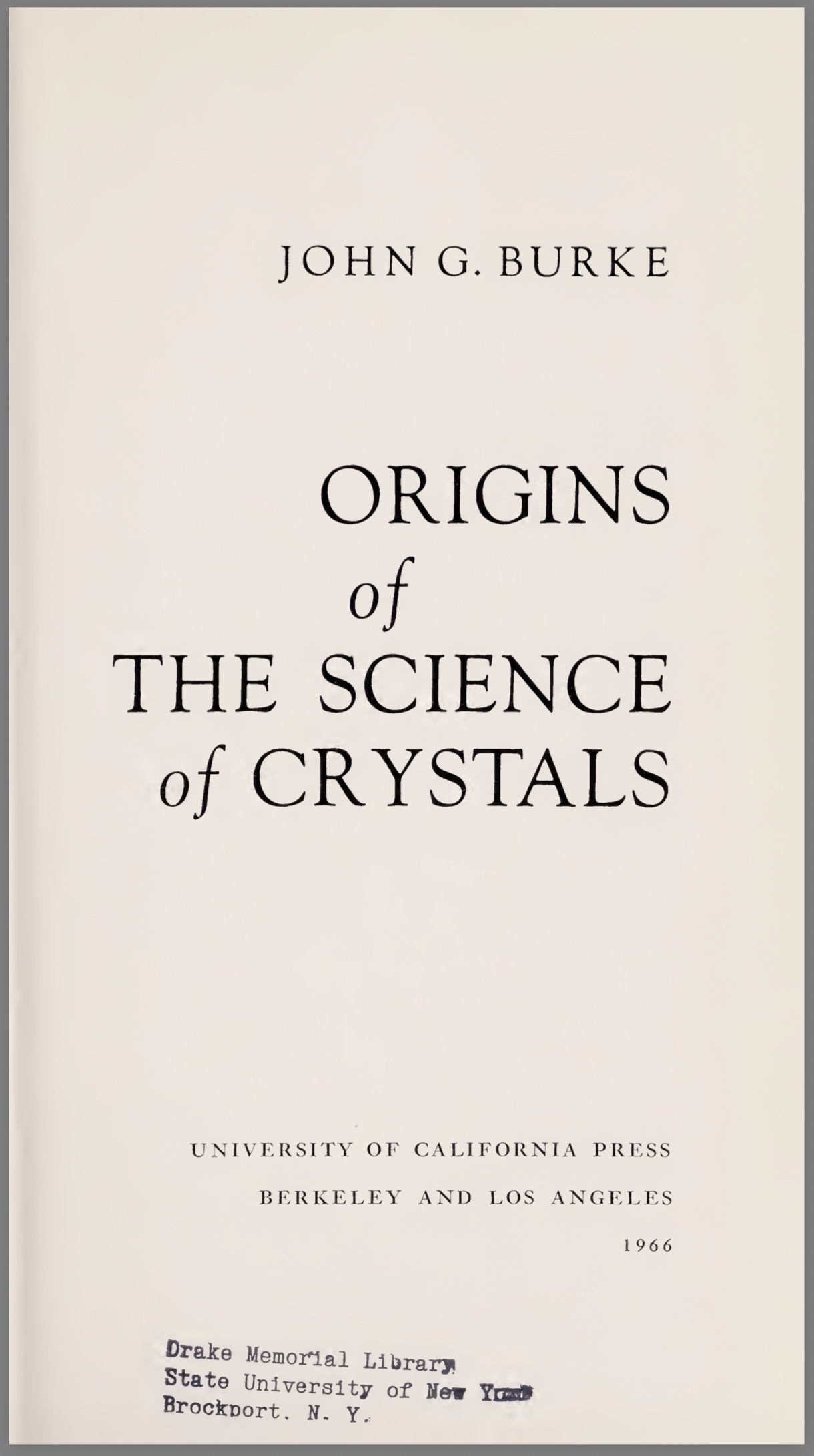
Origins of the Science of Crystals

Book
Burke, J.G. (1966) Origins of the Science of Crystals. Berkeley, University of California Press, 198 pp.
Record No. 28384  |  Sinkankas/Born No.: NIS/NIB  |  RWHL
View Individual Record ↗
This book is designed for the first part of a modern course on the physics of solids. It has been written from the author’s lecture notes for the first semester of a three-semester sequence on solids offered by the Physics Department at the University of Illinois. This first course is taken mainly by graduate students who have had an introductory course in quantum mechanics and the standard background of undergraduate physics courses including thermodynamics and elementary statistical mechanics.

Studies in Ancient Technology

Book
Forbes, R.J. (1966) Studies in Ancient Technology. Leiden, Brill, 9 Vols., Vol. 7: Ancient Mining and Quarrying | Ancient Mining Techniques , 253 pp.
Record No. 26933  |  ISBN/ISSN: 9789000000000  |  Sinkankas/Born No.: NIS/NIB  |  RWHL
View Individual Record ↗
R. J. Forbes pointed out nearly 60 years ago that more gemological and mineralogical analysis on many more gems in the extant corpus of ancient glyptic was sorely needed. It still is. He observed how gem catalogues typically handled the materials and sources of gems when he wrote: The handbooks have shown less energy in trying to identify the stones mentioned than in repeating these ancient fables over and over again. Their stories are still too much an account of the follies and fancies of mankind rather than the tracing of the slow accumulation of scientific data and theories about such stones…." It must be pointed out that analytical studies have appeared more regularly in recent decades on gems of Classical antiquity, which contrasts a long tradition of such studies on the glyptic of Western and South Asia and the Near East."

Greek Gold | Jewelry from the Age of Alexander
Book
Hoffman, H. and Davidson, P.F. (1966) Greek Gold | Jewelry from the Age of Alexander. Boston, Museum of Fine Arts, Boston, 312 pp.
Record No. 26519  |  ISBN/ISSN: LC: 6526949  |  Sinkankas/Born No.: NIS  |  RWHL
View Individual Record ↗
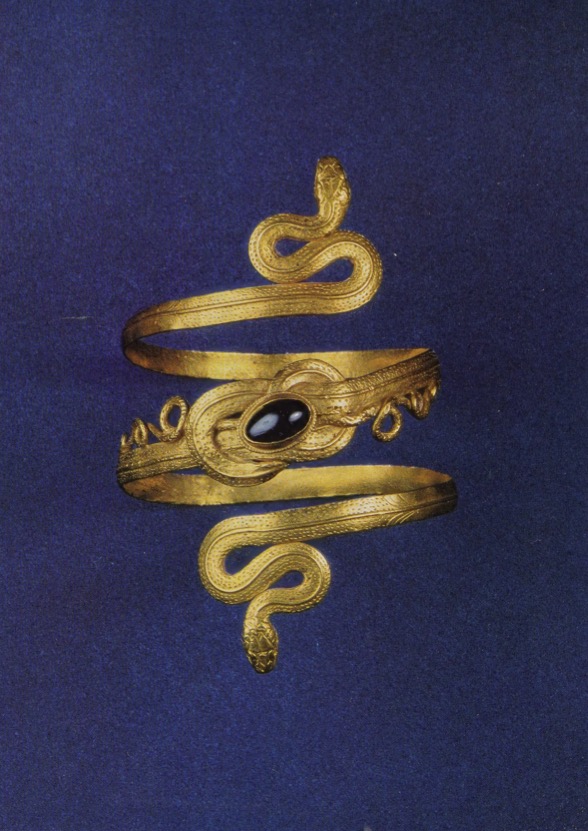
Until recently, our understanding of early Hellenistic jewelry relied almost entirely on the spectacular Greek gold finds made in South Russia during the nineteenth century, now housed in the Hermitage Museum. Between the two world wars, similar discoveries emerged in northern Greece—particularly in Thessaly and Macedonia—thanks to finds by local peasants. The most notable hoards, reportedly from Carpenisi and Demetrias, were divided between the Benaki and Stathatos collections in Athens, the latter now part of the National Museum. While the Hermitage’s holdings are primarily known through nineteenth-century publications and travel to Leningrad, the Benaki and Stathatos gold has been well documented in two exemplary catalogues. Nonetheless, knowledge of Greek jewelry from the Age of Alexander remained fragmented. In the past decade, however, this picture has changed dramatically. A wave of important discoveries—largely from clandestine excavations in northern Greece, Asia Minor, and other regions—has entered both private and institutional collections in Europe and America, while official excavations have also yielded substantial new material, much of which remains unpublished or entirely unknown. The exhibition Greek Gold from the Age of Alexander was conceived to bring together, for the first time, many of these remarkable works. Of the 148 groups of objects selected, 83 come from private collections, 68 are illustrated here for the first time, and three-quarters have never before been publicly exhibited. Dr. Herbert Hoffmann, drawing on his deep expertise and familiarity with European collections, assembled one of the most impressive displays of Greek jewelry ever seen. During a year at the University of Heidelberg’s Institute of Classical Archaeology, he traveled extensively across Europe to secure loans for the exhibition. Patricia F. Davidson, Research Associate at The Brooklyn Museum and a trained goldsmith, contributed her specialized knowledge of ancient techniques, reproducing methods based on her microscopic analyses using tools and materials believed to be historically accurate. She was assisted by William J. Young, Head of the Research Laboratory at the Museum of Fine Arts, Boston, who used X-ray fluorescence and other non-destructive tests to analyze alloy and inlay compositions. The catalogue addresses not only the stylistic, historical, and iconographic aspects of Hellenistic gold but also its technology, with schematic drawings by Suzanne E. Chapman of the MFA, Boston, some based on sketches by Helmut Prüickner of Heidelberg University.

Developments and Highlights at the Gem Trade Lab in New York: Unusual items encountered [sapphire with unusual fluorescence]
sapphire with unusual fluorescence
Journal Article
Crowningshield, G.R. (1966) Developments and Highlights at the Gem Trade Lab in New York: Unusual items encountered [sapphire with unusual fluorescence]. Gems & Gemology, Vol. 12, No. 3, Fall, p. 73.
Record No. 627  |  ISBN/ISSN: 0016626X  |  Sinkankas/Born No.: NIS/NIB  |  RWHL
View Individual Record ↗

Hydrothermal ruby

Journal Article
Anonymous (1966) Hydrothermal ruby. Journal of Gemmology, Vol. 10, No. 3, July, pp. 96–98.
Record No. 305  |  ISBN/ISSN: 221252  |  Sinkankas/Born No.: NIS/NIB  |  RWHL
View Individual Record ↗
A hydrothermal ruby acquired by the Gemmological Association is described, with emphasis on the microscopic features distinguishing its natural seed from the synthetic ruby grown around it. The specimen had a relatively thick hydrothermal overgrowth deposited on a natural ruby core. Examination by E. Gübelin confirmed observations he had published in 1961 on hydrothermal ruby produced in the United States. Under dark-field illumination, the seed was readily visible and clearly distinguishable from the surrounding synthetic material. Its natural inclusions consisted of microlites surrounded by liquid films, whose appearance led Gübelin to suggest that the seed was probably a ruby from Siam, now Thailand. The geographical attribution was tentative and based on the appearance of the natural inclusions. The hydrothermal overgrowth contained characteristic gaseous markings, illustrated as irregular tubes and hose-like forms. Photomicrographs taken in transmitted light showed these inclusions and their relationship to the natural core. Dark, paired growth lines meeting at angles characterised the natural seed, while numerous gaseous inclusions occurred along the boundary between the seed and its synthetic overgrowth. A further illustration showed the overall distinction between the two components and the natural inclusions retained within the core. The specimen’s physical properties corresponded to those reported by Gübelin in 1961, although numerical measurements were not supplied in this account. Its colour was dark red, an appearance the report considered sufficient to arouse suspicion. Nevertheless, a gemmologist who examined it briefly under a microscope incorrectly concluded that it was natural. This incident demonstrates the identification problem presented by a synthetic overgrowth surrounding a naturally included seed: observing natural inclusions in one part of a stone does not establish that the entire specimen is natural. The report therefore stresses careful microscopic examination before determining a ruby’s nature, particularly recognition of the boundary between the core and overgrowth and the contrasting inclusion populations on either side. Dark-field illumination was especially effective in revealing this distinction.

Les Bijoux de la Renaissance à la Belle Époque
Jewelry from the Renaissance to the Belle Époque
Book
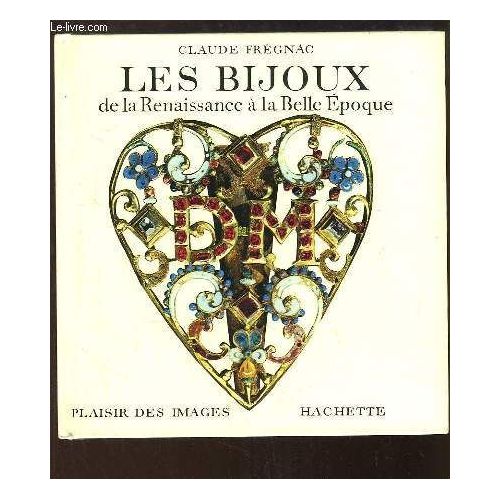
Frégnac, C. (1966) Les Bijoux de la Renaissance à la Belle Époque. [Jewelry from the Renaissance to the Belle Époque] Frankfurt-am-Main, Plaisir des Images, Hachette, 128 pp.
Record No. 178  |  Sinkankas/Born No.: NIS  |  Language: in French  |  RWHL
View Individual Record ↗
Frégnac surveys European jewelry from the Renaissance through the Belle Époque, presenting jewels as expressions of changing artistic styles, fashions, craftsmanship, and social customs. Beginning with the Renaissance, the book follows the development of jewelry through the Baroque and Rococo periods, Neoclassicism, the nineteenth-century historicist revivals, and the innovations of the late nineteenth and early twentieth centuries. Particular attention is given to the relationship between jewelry and contemporary decorative arts, costume, portraiture, and court fashion, as well as to changing preferences in gemstones, precious metals, enameling, and methods of setting and mounting stones. Rings, necklaces, pendants, brooches, earrings, bracelets, tiaras, and other personal ornaments illustrate successive stylistic developments, while important surviving jewels and the work of notable designers and jewelers provide examples of each period. Richly illustrated, the volume offers a predominantly historical and artistic rather than gemological account of European jewelry over approximately four centuries.

Nephrite jade in Mariposa County

Journal Article
Evans, J.R. (1966) Nephrite jade in Mariposa County. CA Div. Mines Min. Info. Service, Vol. 19, No. 9, pp. 135–147.
Record No. 142  |  Sinkankas/Born No.: NIS/NIB  |  RWHL
View Individual Record ↗
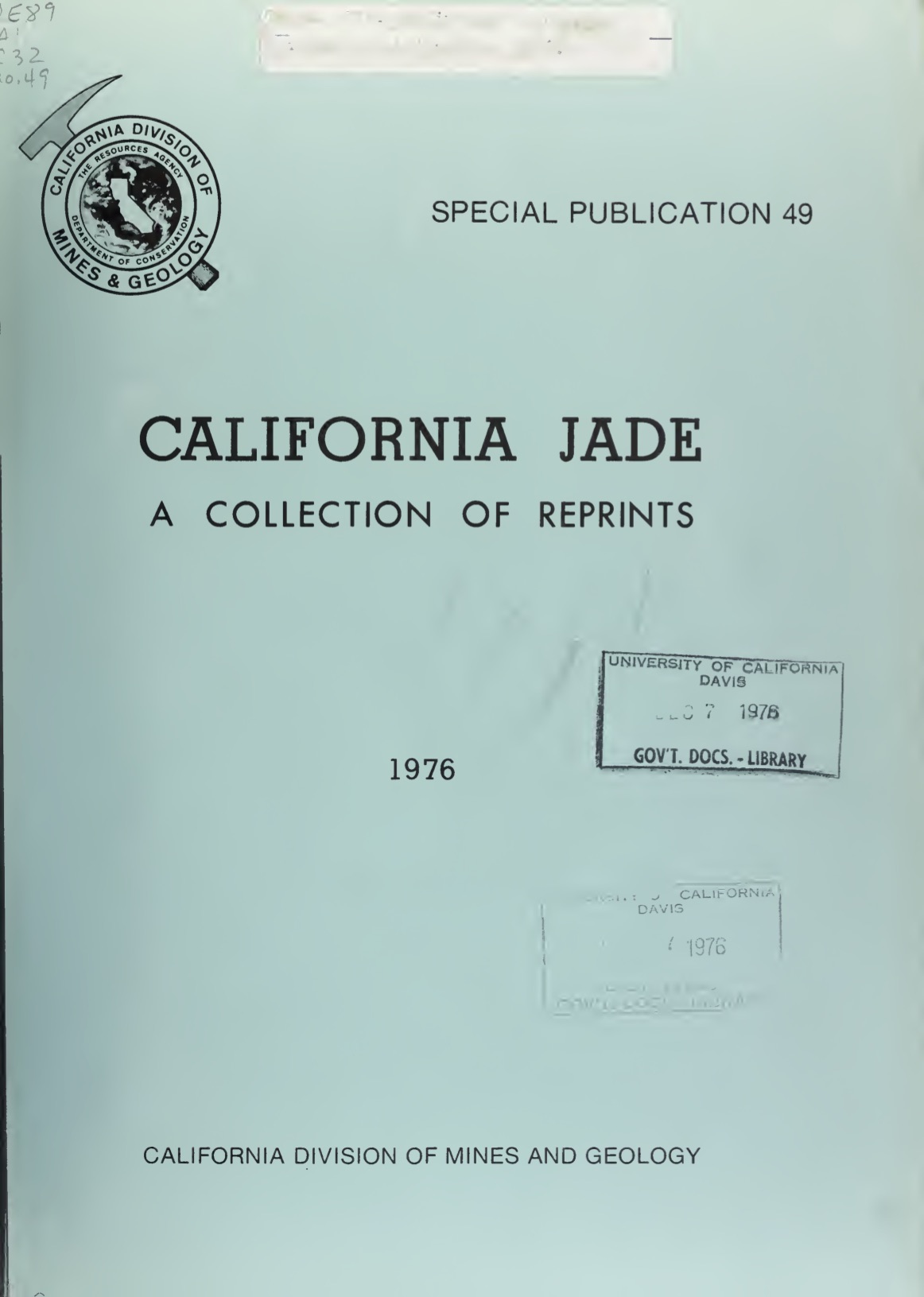
Diamonds are said to be forever, but there are very few gemstone materials about which there has developed throughout the ages such a curious lore as there has about jade. In California, this lore has attracted statewide attention, principally because deposits containing the jade minerals, jadeite and nephrite, occur at several places throughout the state and because gem or lapidary quality jade has been recovered in substantial amounts from several of these localities. Many dense, fine-grained, green-colored rocks have mistakenly been called jade; but, from a gemological point of view, jade is a name given to the massive, gem-quality varieties of the two rock-forming minerals nephrite and jadeite. Nephrite is an amphibole, a silicate of calcium and magnesium that usually contains a small amount of iron. Jadeite, on the other hand, is a pyroxene and is a silicate of sodium and aluminum; usually, however, it contains variable amounts of two other pyroxene minerals, diopside (silicate of calcium and magnesium) and acmite (silicate of sodium and iron), which, when present in sufficient amounts, produce a dark green variety of jade called chloromelanite. It is true that nephrite and jadeite resemble each other very closely, but they can be distinguished by their different physical and chemical properties. Not only is jadeite harder than nephrite but it has a higher specific gravity. In general, the specific gravity of jadeite is 3.32 and that of nephrite is 2.98. Both of these minerals have a wide range of colors and color shades. Jade ranges in color from pure white, through every possible shade of green to amethyst, mauve, violet and light blue, yellow, orange and diverse tints of brown, red, and black. Because the colors in nephrite and jadeite usually are distributed unevenly, descriptive terms such as mutton fat, spinach green, and onion green have been employed to describe jade. Successful use of jadeite or nephrite as gem quality jade depends upon several important properties, such as desirable color, color pattern, and a certain degree of translucency. Because of this, the amount of jadeite and nephrite that is of gem quality is rather small in comparison to the amounts of these materials that are of mineralogical significance only. The occurrences of nephrite and jadeite, especially nephrite, are comparatively widespread and common in California. Most deposits of these interesting gemstone materials have been found only in or adjacent to bodies of serpentine, an association that seems to be characteristic of nephrite and jadeite occurrences throughout the world. Exceptions to this, however, are the unusual occurrences of nephrite associated with magnetite, epidote, chlorite and garnet in irregular contact metamorphic zones between granitic rocks and dolomitic limestone, near Victorville in San Bernardino County and in the western part of the Eagle Mountains in Riverside County. Many of the occurrences of nephrite and jadeite in California are well known to individuals and groups of amateur mineralogists but the several reports that follow, which have been prepared and published by the Division of Mines and Geology, describe in detail a few of the best known and most significant occurrences of nephrite and jadeite in California.

[Two gemstones—blue chalcedony and nephrite—from eastern Taiwan]
Two gemstones—blue chalcedony and nephrite—from eastern Taiwan
Journal Article
Huang, C.K. (1965) [Two gemstones—blue chalcedony and nephrite—from eastern Taiwan]. Taiwan Mining Industry, Vol. 17, pp. 58–65.
Record No. 28770  |  Sinkankas/Born No.: 3058 (not seen); NIB  |  Language: in Japanese with English abstract  |  RWHL
View Individual Record ↗
Mineralogy of semi-precious gems, such as nephrite, tremolite cat's-eye, blue chalcedony and veined stones, from Taiwan are reviewed, supplemented with some data (Fig.1). Nephrite and cat's-eye tremolite occur at the contacts of graphite-sericite schist and serpentinite sills in association with asbestus, talc and diopside-dominant skarn near Hualien (Fig.2). Cat's-eye tremolite was formed evidently later than nephrite. Nephrite jade is spinach-green to yellowish green in color; translucent to opaque. H. : 6.5; G. : 3.007-3.014. It is composed of sub-parallel tufts of fibrous tremolite in interfelted base with nephritic texture, accompanied by minor chromite, magnetite, picotite, garnet and chlorite which give rise to black spots or streaks (Fig.3). α : 1.609-1.612, β : 1.620-1.621, γ : 1.631-1.633; γ-α : 0.021-0.022. Noteworthy is that the Taiwan jade is similar in mineralogy to the New Zealand jade. Tremolite cat's-eye varies in color, from greenish yellow to black; translucent to opaque. H : 6-7, G. : 3.000-3.045. It consists solely of fine, Ionger sub-parallel fibers of tremolite without nephritic texture. α : 1.612-1.613. β : 1.620-1.626, γ : 1.637=1.639; γ-α : 0.024-0.027. Both nephrite and cat's-eye are similar in X-ray data to tremolite from St. Gotthard, Switzerland (Table 1). Chemical analyses also revealed that no marked differences in cornposition exislt between nephrite jade and cat's-eye and between cat's-eyes of various colors, all showing about 10 % of the ferro-actinolite molecule (Tables 2 & 3). Minor uvarovite with 10% Cr_2O_3 and vesuvianite were first found in Taiwan (Tables 5 & 6). Blue chalcedony occurs as irregular small veins in andesitic agglomerate north of Taitung. It is deep sky-blue to greenish blue in color; opaque to translucent. H. : 7; G. : 2.581; n : 1.539. Traversed by veinlets of chalcedony-quartz and quartz-pyrite, it consists mainly of radial-fibrous aggregates of chalcedony, with minor chlorite, opal and iron hydroxides (Fig. 5). Veined stones are produced on the Penghu Islands as globular concentric aggregates chiefly of calcite, aragonite and siderite in the amygdaloidal cavities of olivine-augite basalt (Figs.5 & 6). H : 3-4; G. : 2.83-3.30. Some gemological features of these gem materials are also given (Fig.4).

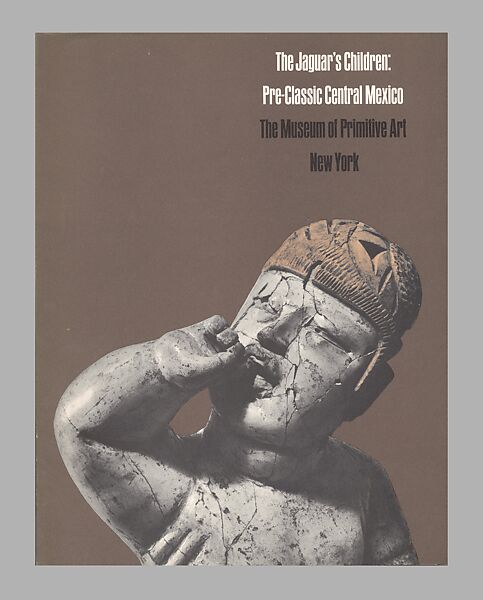
The Jaguar's Children: Pre-Classic Central America
Book
Coe, M.D. (1965) The Jaguar's Children: Pre-Classic Central America. New York, Museum of Primitive Art, 128 pp.
Record No. 28685  |  Sinkankas/Born No.: NIS/NIB  |  RWHL
View Individual Record ↗
The Jaguar’s Children: Pre-Classic Central Mexico has as its subject one of the most arresting topics of New World prehistory. The Olmec of Mexico—originators of the earliest great civilization in Middle America—produced an extraordinary art. Its impact on contemporary and subsequent Mexican developments was enormous. It is this impact on an area in the Central Highlands, parts of the states of Morelos, Puebla, and the Valley of Mexico, that is described here by Michael D. Coe of Yale University. Long a student of the Olmec era, Dr. Coe discusses the extensive site of Tlatilco, the transitional site of Tlapacoya, and the very important and previously unpublished site of Las Bocas. Problems of symbolism, iconography, and the close relation of Olmec art to religion are examined, as well as the relation of Olmec culture to that of Central Highland tradition. Illustrated by over 200 pieces, many published for the first time, the emphasis has been placed on material from Las Bocas. The most important “baby-face” figures of the period have come from that site. These are graphic and humanized representations of the major Olmec deity, a rain god whose shape was that of a were-jaguar, a fat, childlike creature with feline features. Believed to have been born of a jaguar father and a human mother, they are the Jaguar’s Children. Dr. Coe first published on Pre-Classic Middle America and the Olmec in 1957 and is the author of the important articles on them in the Handbook of Middle American Indians. His excavations at the early village site of La Victoria on the Pacific coast of Guatemala were reported in the Papers of the Peabody Museum of Archaeology and Ethnology, Harvard University (1961). He wrote the volume on Mexico (1962) in Praeger’s Ancient Peoples and Places series and was engaged in a work on the Maya to appear in the same series.

Traffic in stone axe and adze blades

Journal Article
Clark, G. (1965) Traffic in stone axe and adze blades. The Economic History Review, Vol. 18, No. 1, pp. 1–28.
Record No. 28554  |  ISBN/ISSN: 00130117, 14680289  |  DOI: https://doi.org/10.2307/2591871  |  Sinkankas/Born No.: NIS/NIB  |  RWHL
View Individual Record ↗
A basic condition for understanding the past is to avoid applying categories of thought and shades of meaning inappropriate to the period under review. This applies with special force to the study of the prehistoric past, by definition the phase of history most remote from the present and, for this very reason, most likely to be misunderstood. As Martin Jahn has well said, much of the controversy between those who write about prehistoric trade and those who deny its existence is semantic: it arises from the different meanings they attach to the word trade. If one takes a definition of trade proper to a society with an advanced division of labour and an economy based on money—if one chooses, for example, to define trade as an activity carried on by a class of traders for financial gain—it is understandable that no evidence for trade can be found in societies functioning at a simpler level, societies in which there is a bare minimum of specialization and to which the notion of profit, in the sense we understand it, may be quite foreign. Yet, if one sees it as, in the last resort, no more than the peaceful and systematic exchange of goods, one has no difficulty in recognizing that trade of a kind is practised among even the most primitive societies known to ethnologists; and, by implication, one is entitled to seek traces of it in the archaeological record of prehistory. The present contribution, offered to a scholar whose lively mind ranges widely but penetrates at all times to the physical realities of existence, will concentrate on the interpretation of a specific archaeological phenomenon in terms of primitive trade, namely the manufacture and distribution over extensive territories of the blades of axes and adzes made from particular kinds of stone. The evidence will be reviewed under two main headings: that from north-western and northern Europe between the fourth and second millennia B.C., and that from Australia, New Zealand, and Melanesia down to the nineteenth century, and even, in the case of New Guinea, to the mid-twentieth century A.D. In conclusion, some brief attempt will be made to collate these two sources of information and examine how the prehistoric data appear in the light of ethnography.

Developments and Highlights at the Gem Trade Lab in New York: Dyed nephrite jade
Journal Article
Crowningshield, G.R. (1965) Developments and Highlights at the Gem Trade Lab in New York: Dyed nephrite jade. Gems & Gemology, Vol. 11, No. 12, Winter, pp. 363–364.
Record No. 28105  |  Sinkankas/Born No.: NIS/NIB  |  RWHL
View Individual Record ↗
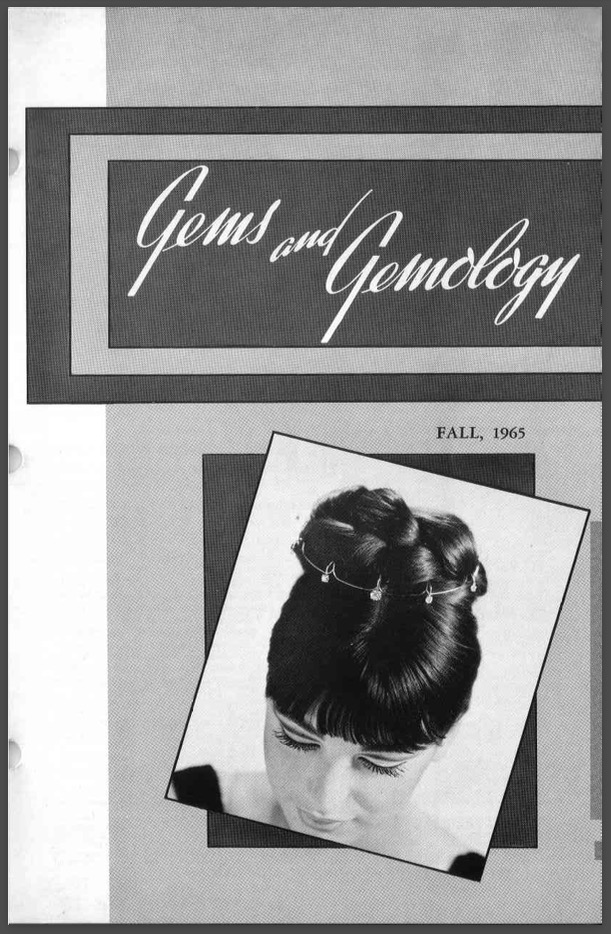
Since we first encountered dyed jadeite in 1956, we have expected the appearance of dyed nephrite, but until recently we had not seen or heard of any. Figure 13 is a photograph of a well-carved nephrite tablet with chrome-green mottling. Spectroscopic examination of the green areas proved to us that the color is due to dye. Possibly, nephrite does not take the dye uniformly; therefore, this accounts for the absence of dyed material in the trade.

La « Mummia di Grottarossa »

Journal Article
Scamuzzi, U. (1965) La « Mummia di Grottarossa ». Aegyptus, Vol. 45, No. 1/2, pp. 74–83.
Record No. 27554  |  Sinkankas/Born No.: NIS/NIB  |  RWHL
View Individual Record ↗
On February 5, 1964, during excavation work carried out on the outskirts of Rome, in an area known as the Tomb of Nero, specifically along the Via Cassia at the junction with Via di Grottarossa, a small but valuable marble sarcophagus came to light, containing the embalmed body, wrapped in bandages, of a little girl, estimated to be about seven years old and 1.20 meters tall. Newspapers of the time reported that the sarcophagus in question was not extracted with care: in fact, during the aforementioned excavation work, it was seized by a bulldozer, overturned, broken, and thrown amid the spoil earth. It was only later that the competent authorities, who arrived at the site, were able to recover the sarcophagus, the small mummy, and various objects belonging to her; a careful examination of the individual finds also allowed us to date the girl’s life to between 160 and 180 CE, as well as to propose the possibility that the girl herself was a descendant of the gens Cornelia, since she was found adorned, on the little finger of her left hand, with a large gold ring bearing an engraving on its bezel of the emblem of Winged Victory, a signum believed to have been exclusive to that gens.

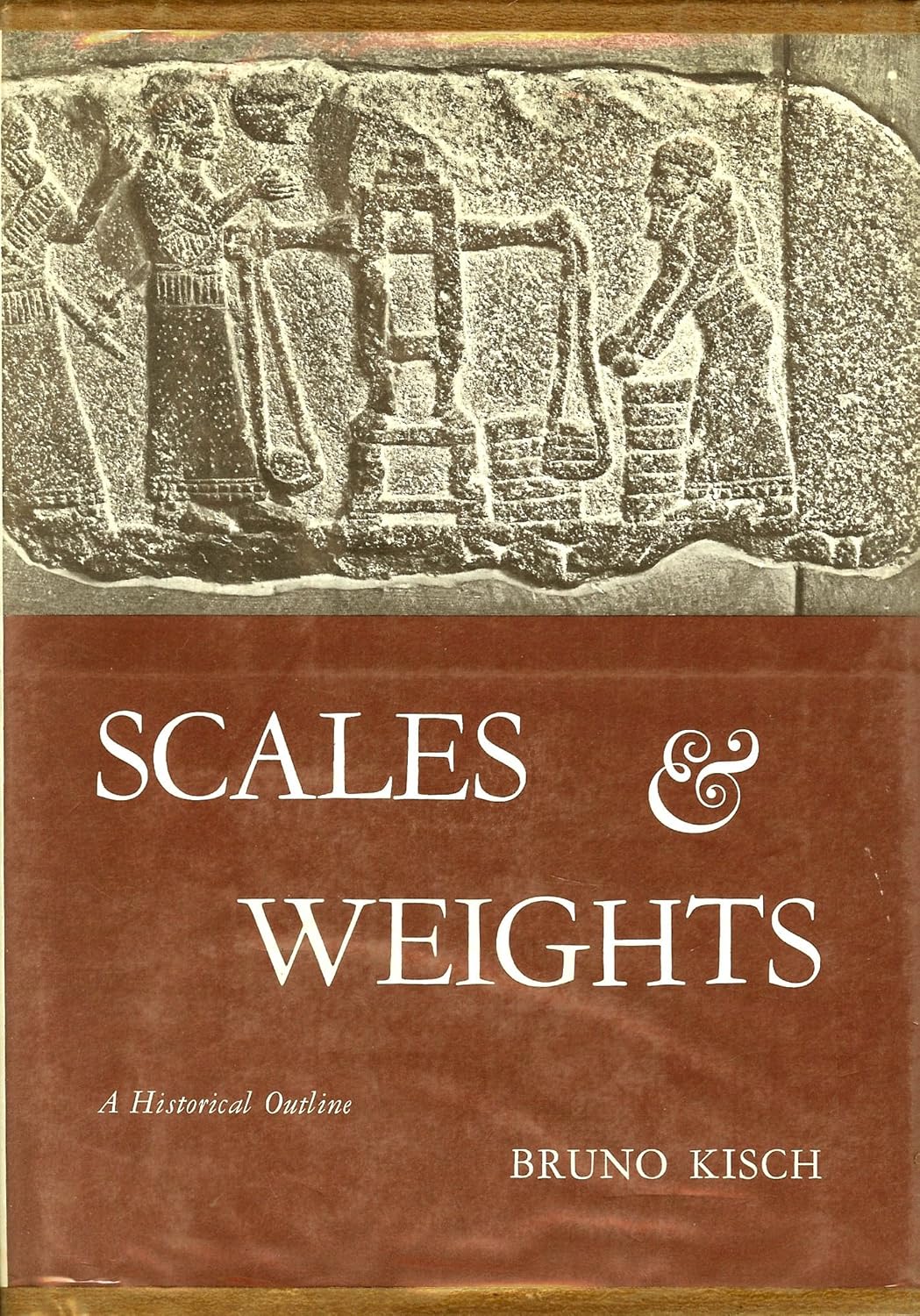
Scales and Weights | A Historical Outline
Book
Kisch, B. (1965) Scales and Weights | A Historical Outline. New Haven, CT, Yale University Press, 297 pp.
Record No. 26819  |  ISBN/ISSN: 9780300000000  |  Sinkankas/Born No.: NIS/NIB  |  RWHL
View Individual Record ↗
This unique survey of the history of weighting and its instruments, from the earliest known examples in the millennia before Christ to the modern era, is generously illustrated with 98 plates depicting scales, weights, and containers from the great collections of the world. It includes the known hallmarks of the scale and weight makers of Western Europe and lists of the weights of the world and their metric equivalents, by country and by name of weight. [RWH: Like most Western works, this book completely ignores the tremendous work done by Arabic-language scholars like al-Bīrūnī and al-Khazinī, who were measuring specific gravity hundreds of years before European scholars.]

Developments and Highlights at the Gem Trade Lab in New York: Pre-1952 Synthetic Star Rubies
Journal Article
Crowningshield, G.R. (1965) Developments and Highlights at the Gem Trade Lab in New York: Pre-1952 Synthetic Star Rubies. Gems & Gemology, Vol. 11, No. 11, Fall, pp. 331–333.
Record No. 16790  |  ISBN/ISSN: 0016626X  |  Sinkankas/Born No.: NIS/NIB  |  RWHL
View Individual Record ↗

Developments and highlights at GIA’s Gem Trade Lab in Los Angeles: Dyed nephrite jade
Journal Article
Liddicoat, R.T. (1965) Developments and highlights at GIA’s Gem Trade Lab in Los Angeles: Dyed nephrite jade. Gems & Gemology, Vol. 11, No. 12, Winter, pp. 363–364.
Record No. 3643  |  ISBN/ISSN: 0016626X  |  Sinkankas/Born No.: NIS/NIB  |  RWHL
View Individual Record ↗
Liddicoat reports the identification of dyed nephrite jade at the Gem Trade Laboratory in Los Angeles, describing a carved tablet whose green coloration was established by spectroscopic examination to be artificial. The observation follows an interval during which dyed jadeite was already known to the laboratory but comparable treatment of nephrite had remained unconfirmed in its experience. The author states that dyed jadeite was first encountered in 1956 and that the subsequent appearance of dyed nephrite had therefore been anticipated. Until the specimen described in this note was examined, however, the laboratory had neither seen nor heard of such material. The object is characterized as a well-carved nephrite tablet with chrome-green mottling and is illustrated in a photograph showing its ornamental openwork design. The description of its colour records the visual appearance of the green patches; the note attributes their coloration to dye on the basis of spectroscopy. Examination specifically targeted the green areas, linking the identification of treatment to the coloured portions of the carving. Although the spectroscopic conclusion is stated unequivocally, no absorption wavelengths, spectral illustration, instrumental details, or comparison with untreated nephrite are supplied. The account likewise provides no information about the tablet’s geographical origin, the identity of the colouring substance, the method of application, or the depth and durability of the treatment. Liddicoat suggests that nephrite may not take dye uniformly and offers this as a possible explanation for the previous absence of dyed nephrite from the trade. This explanation remains tentative rather than an experimentally demonstrated property of the material. The report thus combines a definite identification of artificial coloration in an individual nephrite carving with a cautious suggestion concerning the practical limitations of dyeing nephrite. Its principal contribution is to document the laboratory’s encounter with a treatment it had expected following the recognition of dyed jadeite, while identifying spectroscopy as the means by which the artificial origin of the specimen’s green coloration was established.

Developments and highlights at the Gem Trade Lab in Los Angeles: New type of jadeite triplet
Journal Article
Liddicoat, R.T. (1965) Developments and highlights at the Gem Trade Lab in Los Angeles: New type of jadeite triplet. Gems & Gemology, Vol. 11, No. 12, Winter, pp. 369–370.
Record No. 3642  |  ISBN/ISSN: 0016626X  |  Sinkankas/Born No.: NIS/NIB  |  RWHL
View Individual Record ↗
Describes a jadeite triplet submitted to the Los Angeles Gem Trade Laboratory. The long, thin, narrow cabochon consisted of two pieces of translucent jadeite joined by a layer of colouring that imparted a rich green appearance. A side-view photograph illustrates the composite construction.

Maw-sit-sit proves to be jade-albite

Journal Article
Gübelin, E.J. (1965) Maw-sit-sit proves to be jade-albite. Journal of Gemmology, Vol. 9, No. 11, July, pp. 372–379.
Record No. 2256  |  ISBN/ISSN: 221252  |  Sinkankas/Born No.: NIS/NIB  |  RWHL
View Individual Record ↗
Further investigation of maw-sit-sit, a vivid green ornamental stone from northern Burma, identifies its colouring constituent as a chromium-rich alkali pyroxene dispersed through a predominantly albite groundmass and leads to the proposed descriptive name jade-albite. Earlier examination had established the rock’s albite-rich composition but failed to identify the extremely small green pigment grains because they could not be adequately separated for chemical or X-ray analysis. Electron microprobe examination of a polished specimen demonstrates that chromium and iron are concentrated in the pigment rather than the surrounding albite. The reported chromium-to-iron ratio is approximately 3:1, with silicon also abundant and smaller quantities of titanium, calcium, and potassium detected. The article explains the principles and capabilities of electron-probe analysis, emphasizing its value for examining minute constituents in heterogeneous rocks. Although the initial measurements narrow the identification to a chromium-bearing pyroxene related to jadeite or aegirine, the grains remain too small for a satisfactory quantitative analysis. Improved concentration is achieved by grinding the rock to particles smaller than 10 micrometres and centrifuging them in a heavy-liquid mixture with a density of 2.75. The resulting sediment is substantially greener than either the original material or the lighter fraction. Comparative X-ray powder diffraction places the pigment within the alkali-pyroxene group, with lattice spacings intermediate between those of jadeite and aegirine. Partial chemical analysis of an approximately 70 per cent pigment concentrate yields about 10 per cent Na₂O, 7 per cent Cr₂O₃, and 4 per cent Fe₂O₃. Allowing for residual albite and possible iron contamination during preparation, Gübelin estimates that the pigment contains approximately 10 per cent Cr₂O₃ and constitutes roughly 20–25 per cent of the rock. He interprets it as jadeite in which substantial aluminium is replaced by chromium and iron, represented approximately by Na(Al,Cr,Fe)Si₂O₆, and proposes the name chrome-jadeite. Complete chemical characterization remains unattained because the minute, intimately intergrown crystals cannot be isolated in sufficient purity. The nomenclatural conclusion distinguishes the composite ornamental rock from jadeite itself, chloromelanite, and epidote: its dominant constituent is albite, while its striking colour arises from disseminated chrome-jadeite. Jade-albite is therefore recommended as a mineralogically informative designation, with maw-sit-sit retained as an acceptable local name.

Gems in the Smithsonian Institution

Book
Desautels, P.E. (1965) Gems in the Smithsonian Institution. Washington, DC, Smithsonian, 74 pp.
Record No. 661  |  Sinkankas/Born No.: NIS/NIB  |  RWHL
View Individual Record ↗
This illustrated introduction to the Smithsonian Institution’s National Gem Collection combines an account of its development with an accessible survey of gemstone properties, cutting, identification, substitutes, and cultural associations. The collection originated in an exhibit of American precious stones assembled by F.W. Clarke in 1884 and expanded through acquisitions, gifts, and endowments, notably those associated with Isaac Lea and Leander T. Chamberlain. By 1965, more than one thousand selected items were displayed to illustrate the diversity of gem materials and the effects of skilled cutting and polishing. Desautels explains gemmology as a specialized branch of mineralogy, relating gemstone appeal to beauty, durability, rarity, brilliance, and fashion. Hardness, specific gravity, chemical composition, colour, transparency, refraction, double refraction, and dispersion are introduced through practical explanations and diagrams. Chatoyancy, asterism, and other optical effects are illustrated with collection specimens. The discussion of lapidary work connects facet arrangement and proportions with the control of light, contrasting brilliant, step, rose, and fancy cuts and describing sawing, grinding, polishing, and cabochon fashioning. Separate treatment of gem substitutes distinguishes imitations, assembled stones, reconstructed or altered materials, and synthetic products. Examples include doublets and triplets, coatings, dyes, heat treatment, irradiation, and laboratory growth, with emphasis on the identification problems created when appearance or conventional tests conceal a stone’s construction or treatment. Flame-fusion and hydrothermal synthesis are outlined, and synthetic gemstones are distinguished by their chemical and structural correspondence with natural counterparts. A section on gem lore surveys religious symbolism, astrological associations, medicinal beliefs, and birthstones as historical and commercial influences on public appreciation. Accounts of the principal gem species describe their composition, varieties, distinguishing properties, geographical sources, and suitability for jewellery, using notable Smithsonian specimens as examples. Jade is treated as two distinct materials, jadeite and nephrite, whose toughness supports carving; the discussion includes the Maude Monell Vetlesen collection of Chinese jades. Rarer faceted minerals receive attention as collectors’ stones, including materials limited commercially by scarcity, softness, or cleavage. Photographs document exceptional gems, jewellery, and carvings, while comparative tables summarize identifying properties. A concluding inventory records approximately one-third of the collection, listing selected specimens by weight, colour, origin, catalogue number, and donor. The volume presents the collection as both a public treasury and an educational resource connecting mineral science, craftsmanship, collecting history, and the cultural appeal of gems.

Developments and Highlights at the Gem Trade Lab in New York: Unusual 10–carat Montana sapphire
Journal Article
Crowningshield, G.R. (1965) Developments and Highlights at the Gem Trade Lab in New York: Unusual 10–carat Montana sapphire. Gems & Gemology, Vol. 11, No. 11, Fall, pp. 331–332.
Record No. 626  |  ISBN/ISSN: 0016626X  |  Sinkankas/Born No.: NIS/NIB  |  RWHL
View Individual Record ↗
Lab notes - NY. Note on 10 ct. stone (with photograph). Probably not Yogo (as it has rutile silk)

Maw-sit-sit: A new decorative gemstone from Burma

Journal Article
Gübelin, E.J. (1965) Maw-sit-sit: A new decorative gemstone from Burma. Journal of Gemmology, Vol. 9, No. 10, April, pp. 329–344.
Record No. 144  |  ISBN/ISSN: 221252  |  Sinkankas/Born No.: NIS/NIB  |  RWHL
View Individual Record ↗
Describes maw-sit-sit, a distinctive bright to dark green ornamental rock from northern Burma (Myanmar), occurring near the jadeite deposits of the Hpakan region. Gübelin examines its appearance, gemological properties, texture and mineralogical composition, distinguishing it from jadeite jade and other green ornamental materials. The material is characterized by an intimate mixture of contrasting green and dark minerals that produces its characteristic mottled appearance. Microscopic and mineralogical observations demonstrate that maw-sit-sit is not a single mineral but a complex rock composed of several constituents. The article documents its occurrence, properties and identification and represents one of the earliest detailed gemological descriptions of this unusual Burmese gem material. Also contains brief mention of the Naniazeik ruby/spinel mines.

Building a Gemological Library

Gemological books range from general identification manuals and textbooks to specialized works on individual gems, mineralogy, jewelry, treatments, synthesis, history and gem-producing regions.

For a curated selection of particularly useful books, read The Gemologist's Core Library — Classic Books on Gemology, Jewelry and Mineralogy.

About Four Treasures

Four Treasures is Lotus Gemology's freely accessible gemological reference database. Use the full database to search by author, title or keyword and explore literature on gemology, mineralogy, jewelry and related fields. Where available, hyperlinks on titles may lead directly to the full publication.

Search the Complete Four Treasures Database