Sapphire Inclusions
Explore sapphire inclusions in Hyperion, the Lotus Gemology inclusion database. Hyperion contains photomicrographs of inclusions and internal features in natural sapphire, documented with information on geographic origin, treatment, lighting conditions, field of view, photographer and published references.
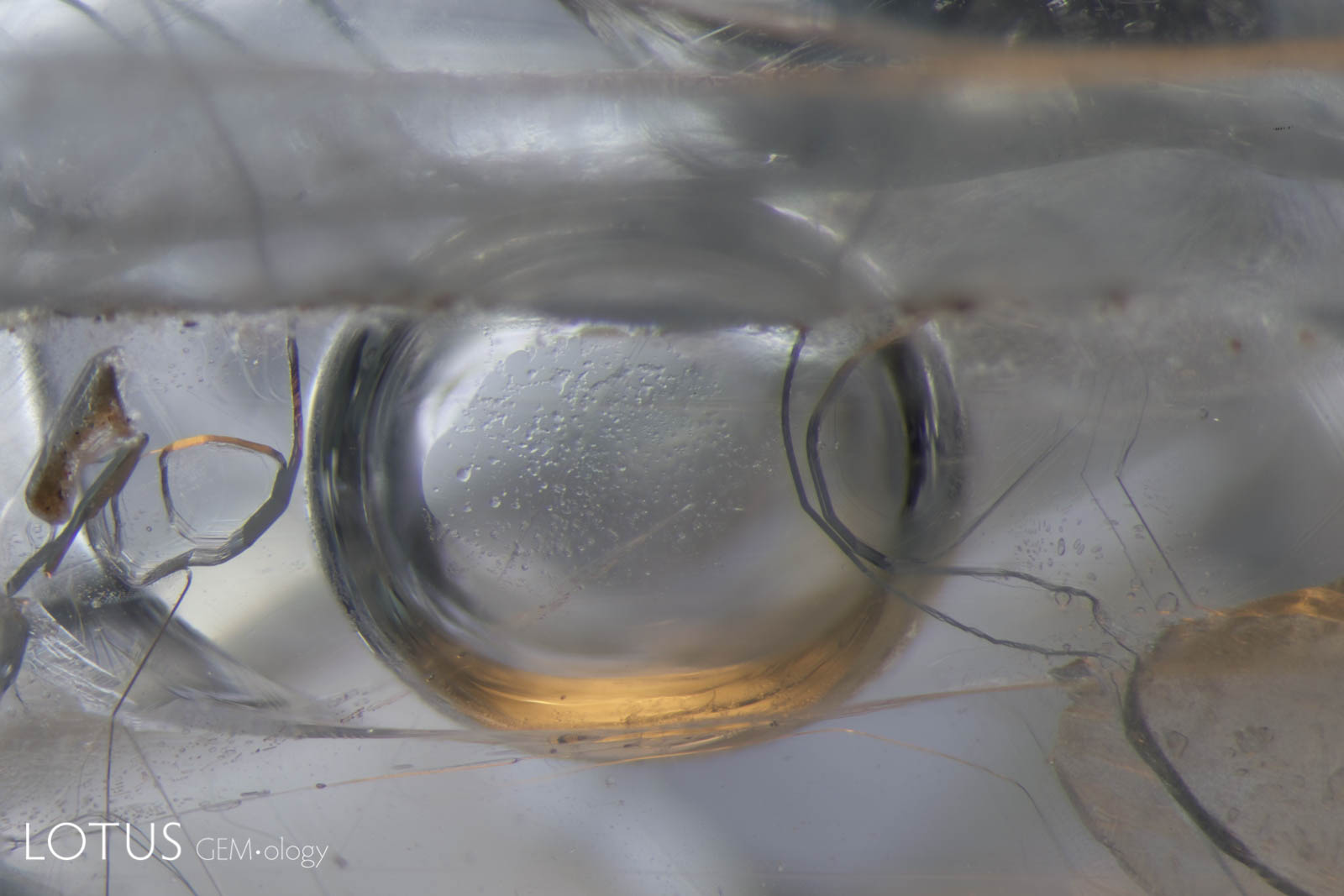
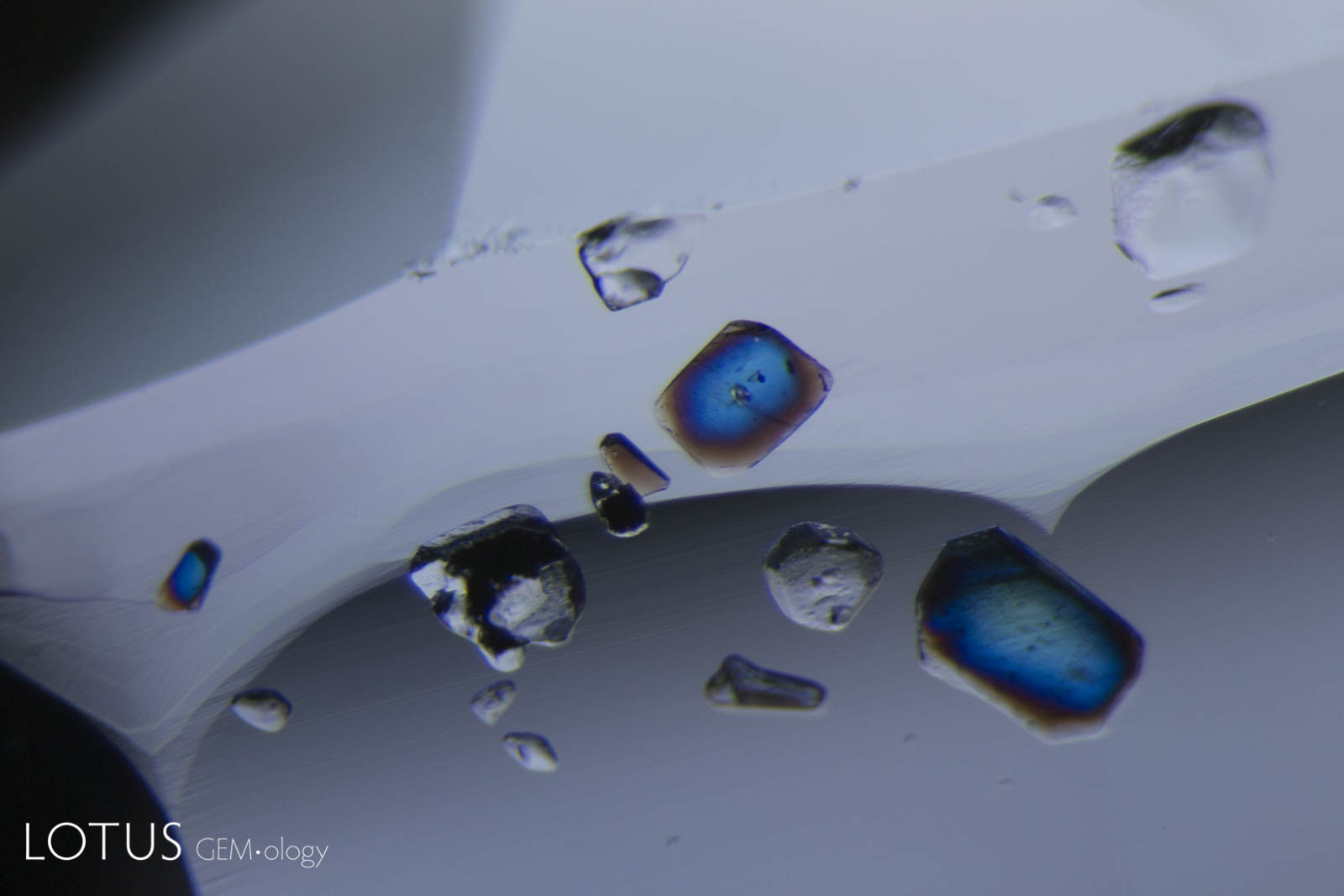
This sapphire crystal from Burma’s Mogok Stone Tract featured extremely large negative crystals with mobile carbon dioxide bubbles. These inclusions would rupture if heated, and so are proof of natural, untreated origin.
Natural Sapphire •
Myanmar (Burma); Mogok •
Enhancements:
None Detected (None) •
Lighting Conditions:
Diffuse Light Field (Transmitted Light)
Photographer:
E. Billie Hughes •
Image Number:
A-001-1484-1
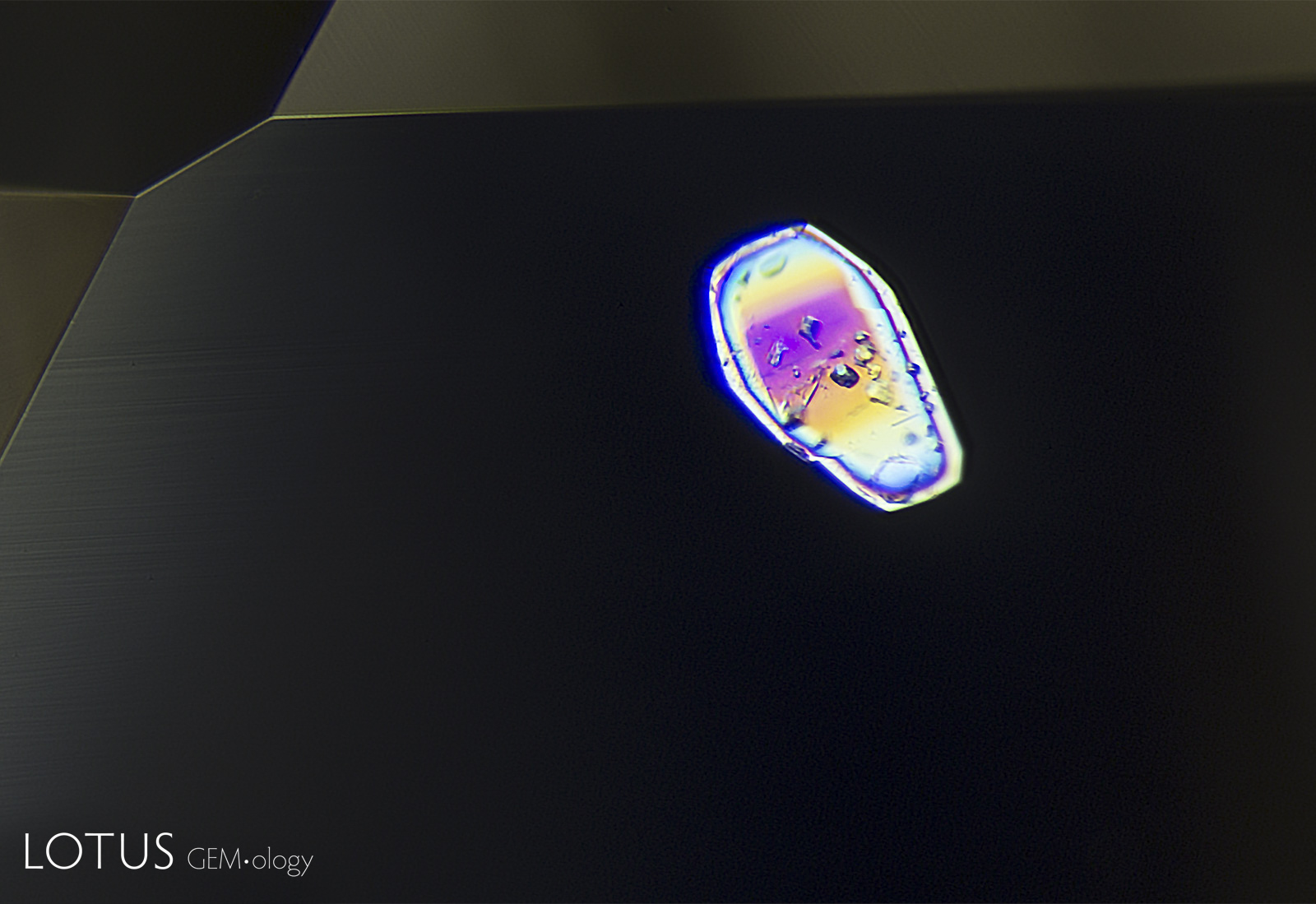
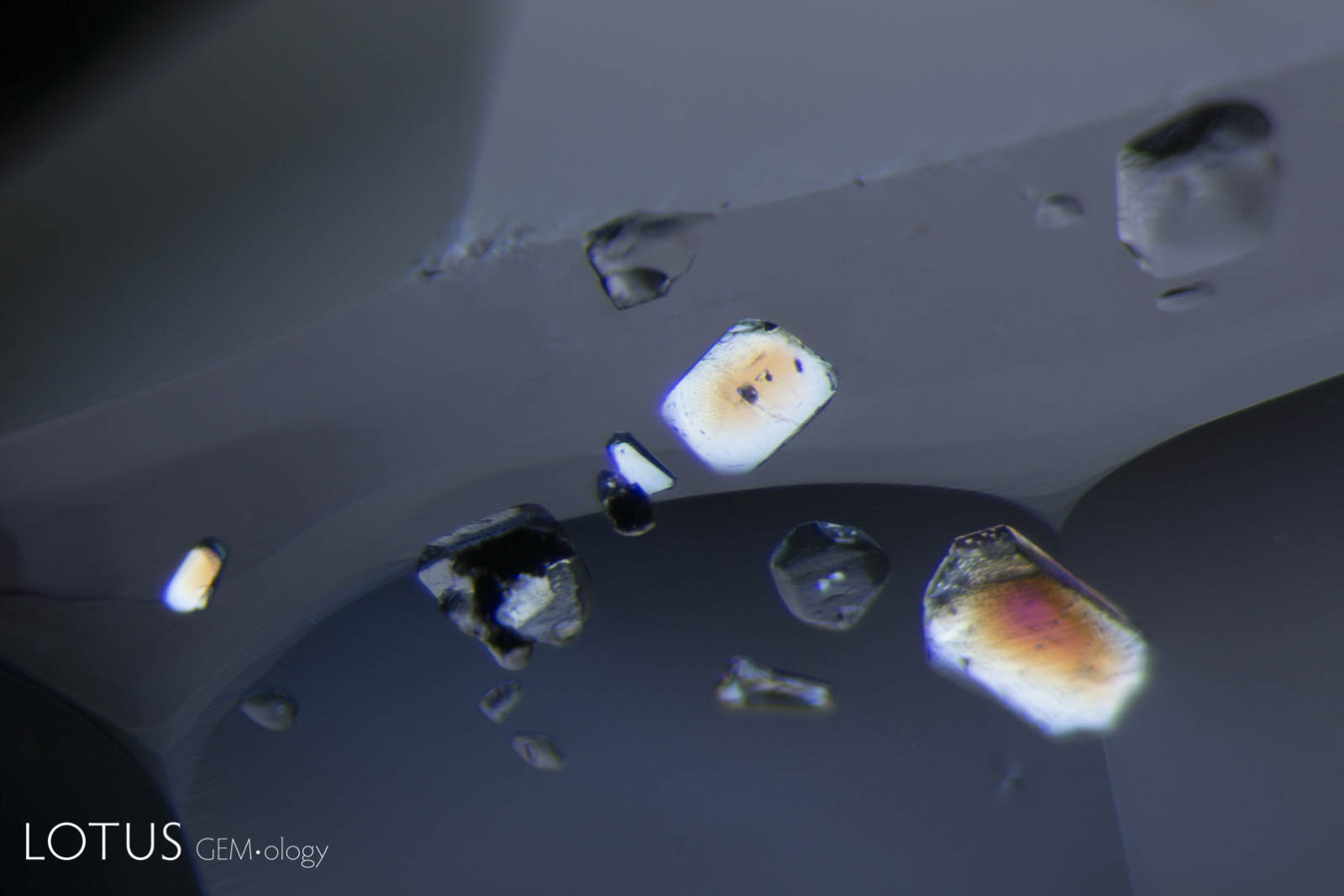
The solid nature of the sapphire inclusion in a Sri Lankan yellow sapphire is dramatically revealed when viewed between crossed polars.
Natural Sapphire •
Sri Lanka (Ceylon) •
Enhancements:
None Detected (None) •
Lighting Conditions:
Diffuse Light Field + Crossed Polars
Photographer:
Richard W. Hughes •
Image Number:
A-001-1443-1
• Field of View = 4mm
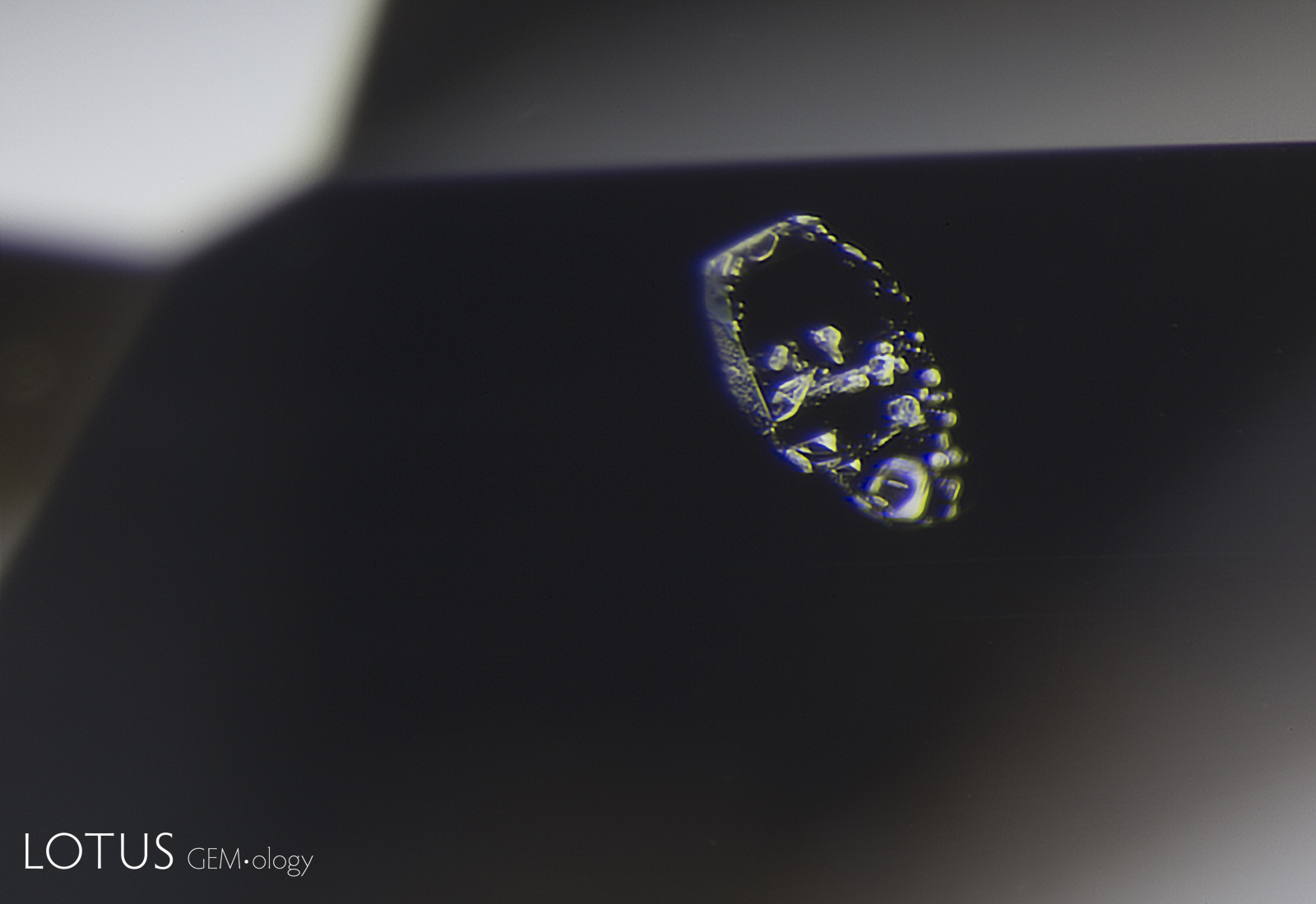
Here we have a sapphire crystal included in a Ceylon yellow sapphire. When viewed in darkfield illumination the outline of the sapphire crystal is hard to discern because the refractive indices of the host and inclusion are identical. Thus like an ice cube in water, the only way the inclusion is visible is because it has inclusions of its own.
Natural Sapphire •
Sri Lanka (Ceylon) •
Enhancements:
None Detected (None) •
Lighting Conditions:
Diffuse Light Field + Crossed Polars
Photographer:
Richard W. Hughes •
Image Number:
A-001-1443-2
• Field of View = 4mm
Sharp angular growth zoning in a heat-treated yellow sapphire from Sri Lanka.
Natural Sapphire •
Sri Lanka (Ceylon) •
Enhancements:
Heat (H) •
Lighting Conditions:
Shadowing
Photographer:
Richard W. Hughes •
Image Number:
A-001-1407-1
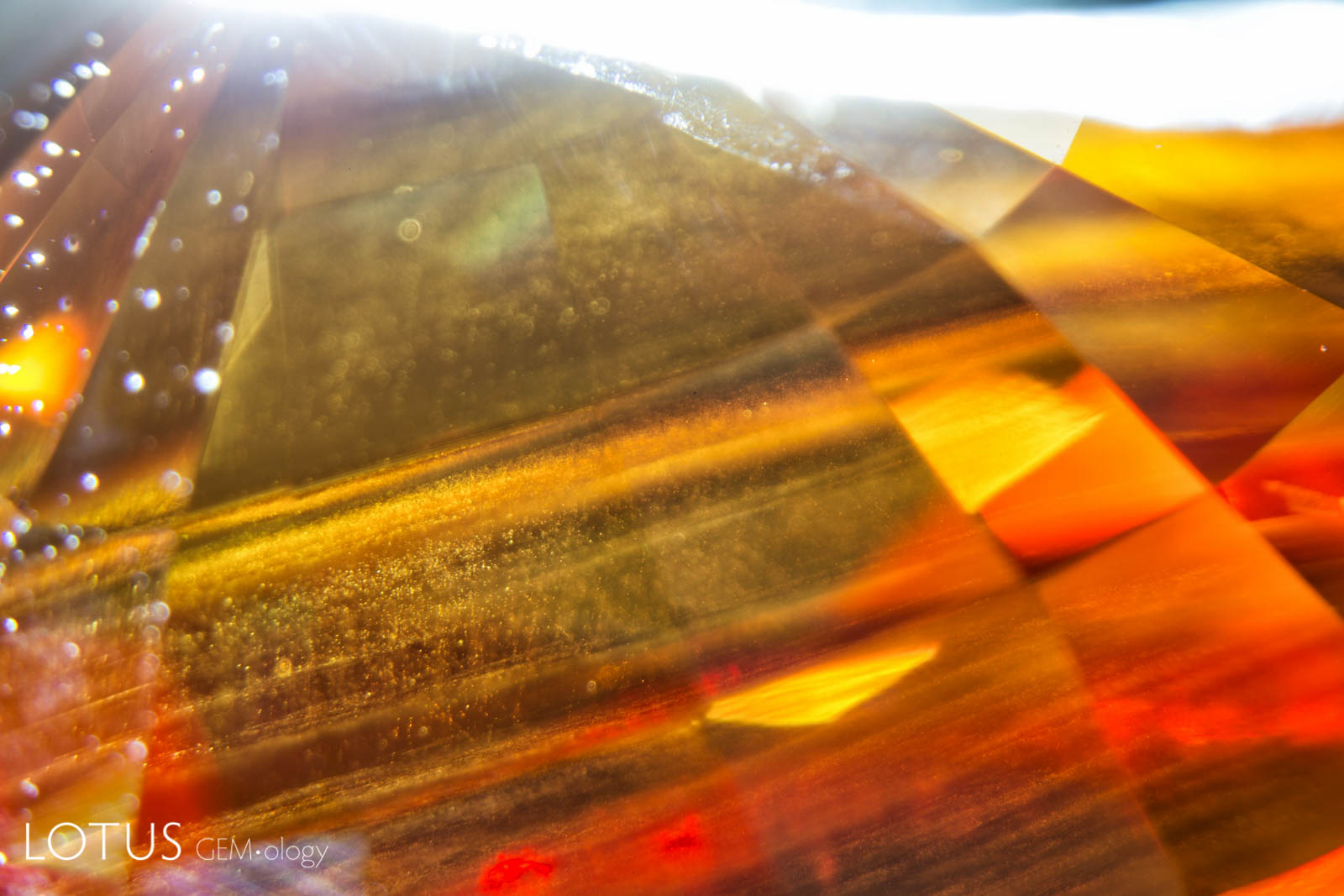
When Sri Lankan yellow sapphires with exsolved particles are heat treated, magnesium exits the particles and creates yellow-producing trapped-hole color centers. The result is color concentration around the particles, a process termed “internal diffusion” by gemologist, John Koivula.
Natural Sapphire •
Sri Lanka (Ceylon) •
Enhancements:
Heat (H) •
Lighting Conditions:
Fiber Optic: Oblique
Photographer:
Richard W. Hughes •
Image Number:
A-001-1406-2
Koivula, J.I. (1987) Internal diffusion. Journal of Gemmology, Vol. 20, No. 7/8, pp. 474–477; RWHL*.
When Sri Lankan yellow sapphires with exsolved particles are heat treated, magnesium exits the particles and creates yellow-producing trapped-hole color centers. The result is color concentration around the particles, a process termed “internal diffusion” by gemologist, John Koivula.
Natural Sapphire •
Sri Lanka (Ceylon) •
Enhancements:
Heat (H) •
Lighting Conditions:
Diffuse Light Field (Transmitted Light)
Photographer:
Richard W. Hughes •
Image Number:
A-001-1406-1
Koivula, J.I. (1987) Internal diffusion. Journal of Gemmology, Vol. 20, No. 7/8, pp. 474–477; RWHL*.
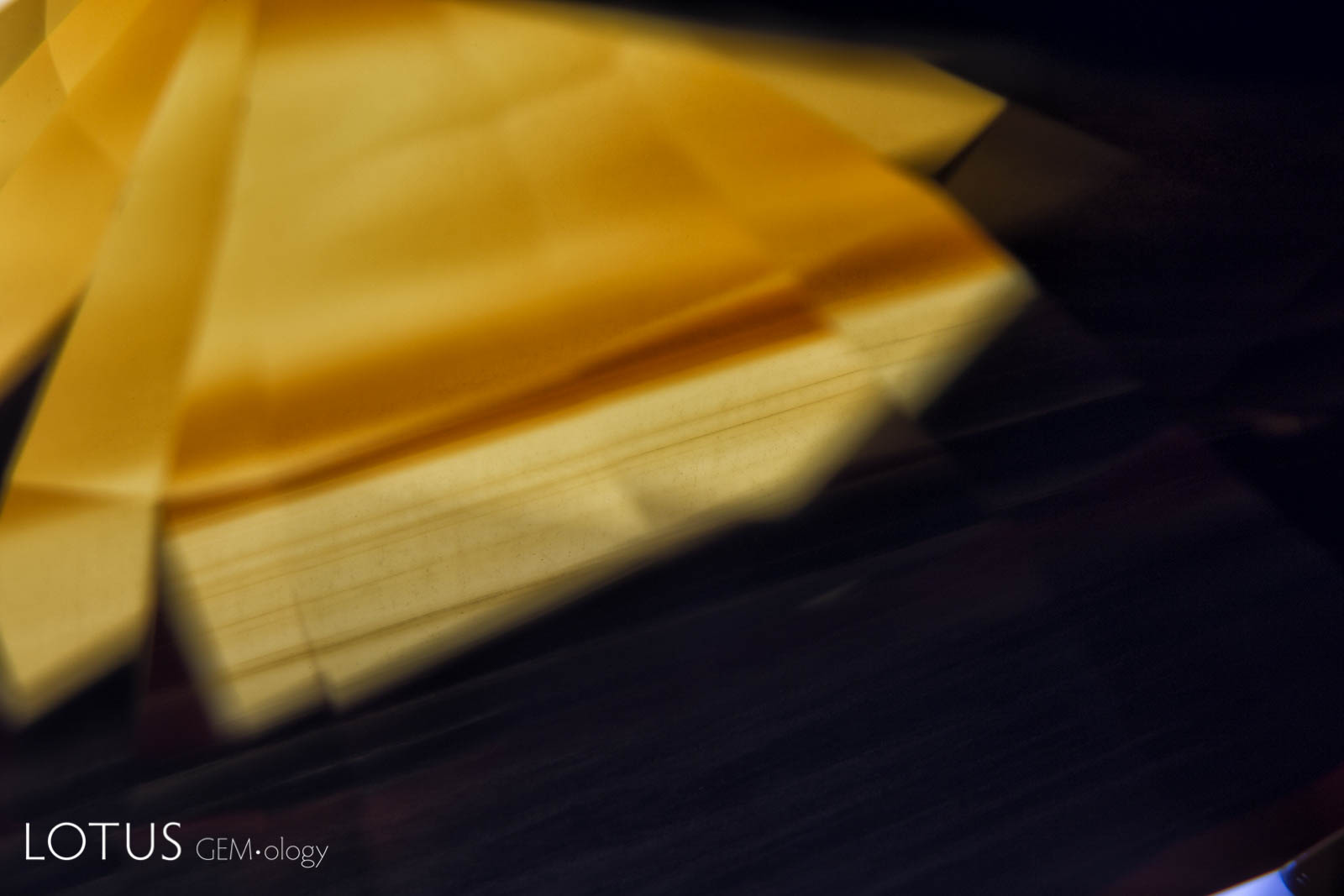
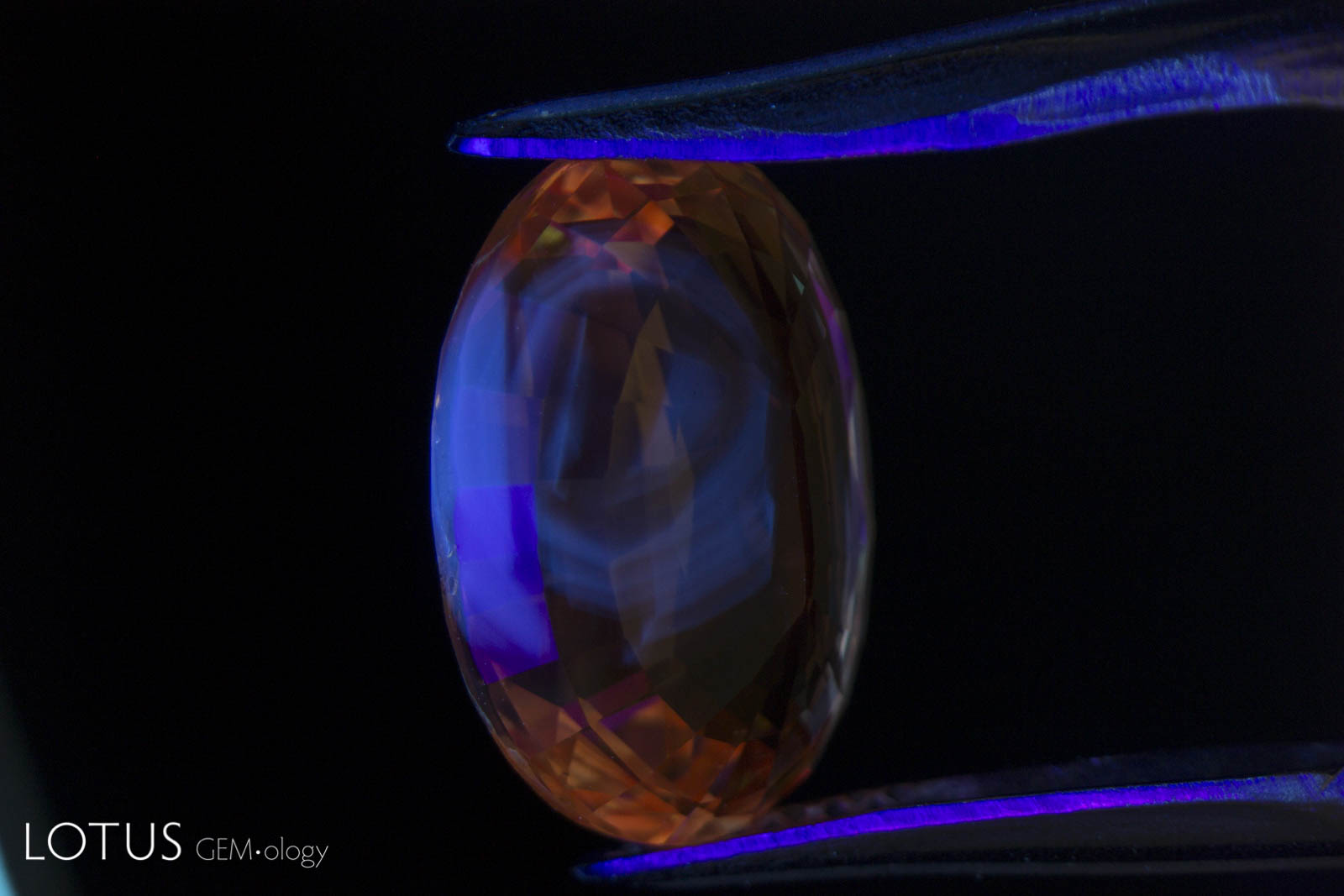
While chalky shortwave fluorescence is generally a strong indication of heat treatment, in rare cases untreated Madagascar sapphires can display superficial chalky patches associated with colorless zones in the stone, as shown here.
Natural Sapphire •
Madagascar •
Enhancements:
None Detected (None) •
Lighting Conditions:
Ultraviolet: Shortwave
Photographer:
Richard W. Hughes •
Image Number:
A-001-1183-1
Coarse exsolved plates against a backdrop of rutile silk in a sapphire from Mogok, Myanmar.
Natural Sapphire •
Myanmar (Burma); Mogok •
Enhancements:
None Detected (None) •
Lighting Conditions:
Fiber Optic: Diffuse Overhead
Photographer:
Richard W. Hughes •
Image Number:
A-001-1176-1
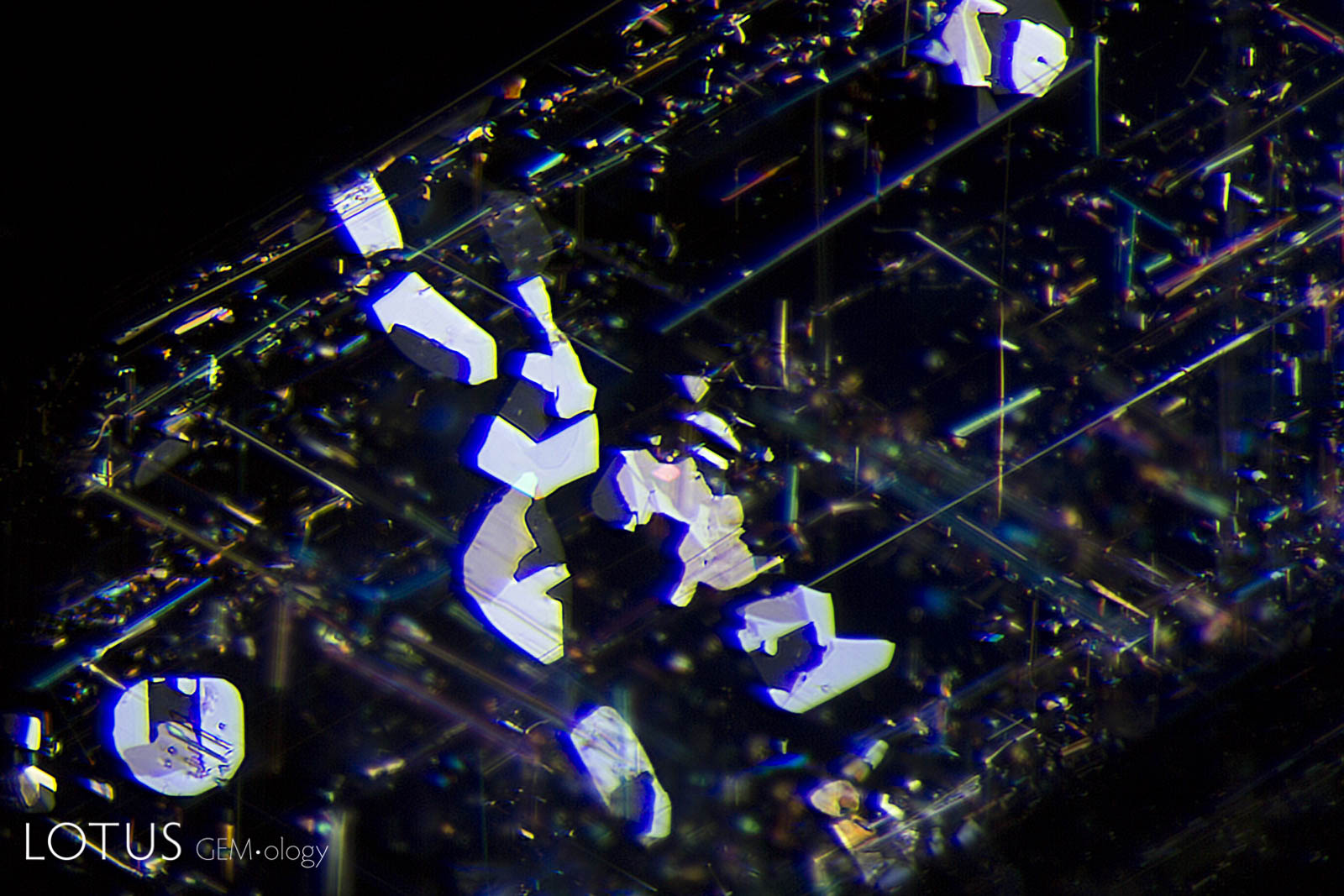
Birefringent crystals light up between crossed polars in this Ceylon sapphire.
Natural Sapphire •
Sri Lanka (Ceylon) •
Enhancements:
None Detected (None) •
Lighting Conditions:
Diffuse Light Field + Crossed Polars
Photographer:
E. Billie Hughes •
Image Number:
A-001-1164-2
Birefringent crystals light up between crossed polars in this Ceylon sapphire.
Natural Sapphire •
Sri Lanka (Ceylon) •
Enhancements:
None Detected (None) •
Lighting Conditions:
Diffuse Light Field + Crossed Polars
Photographer:
E. Billie Hughes •
Image Number:
A-001-1164-1
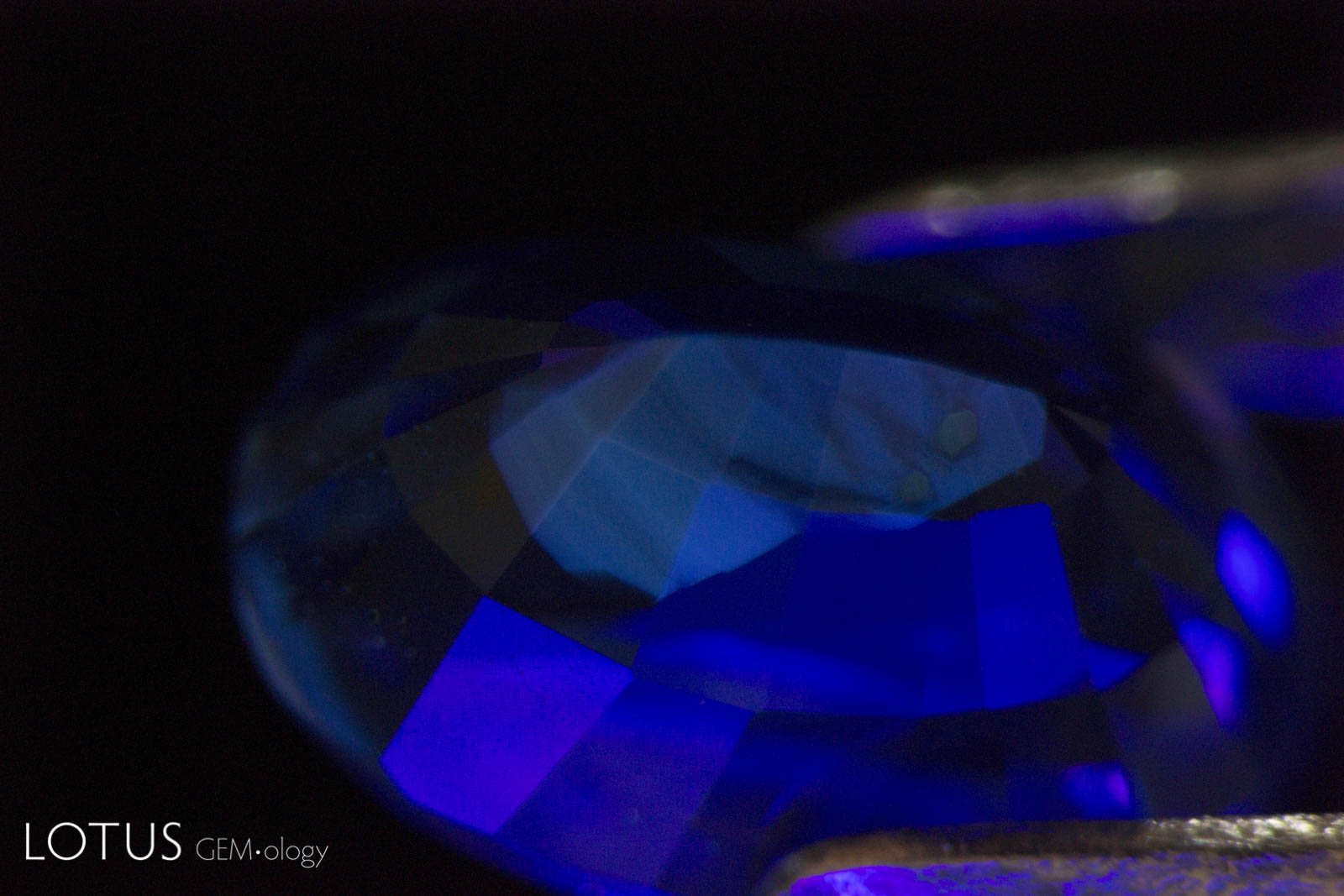
Low iron rubies (and pink and padparadscha sapphires) from localities like Mogok, Mong Hsu (Myanmar) and Sri Lanka will often display chalky zones in short wave ultraviolet after heat treatment. Here we see an excellent example in a heat-treated padparadscha sapphire from Sri Lanka. This fluorescence is positive proof of heat treatment.
Natural Padparadscha Sapphire •
Sri Lanka (Ceylon) •
Enhancements:
Heat (H) •
Lighting Conditions:
Ultraviolet: Shortwave
Photographer:
E. Billie Hughes •
Image Number:
A-001-1161-1
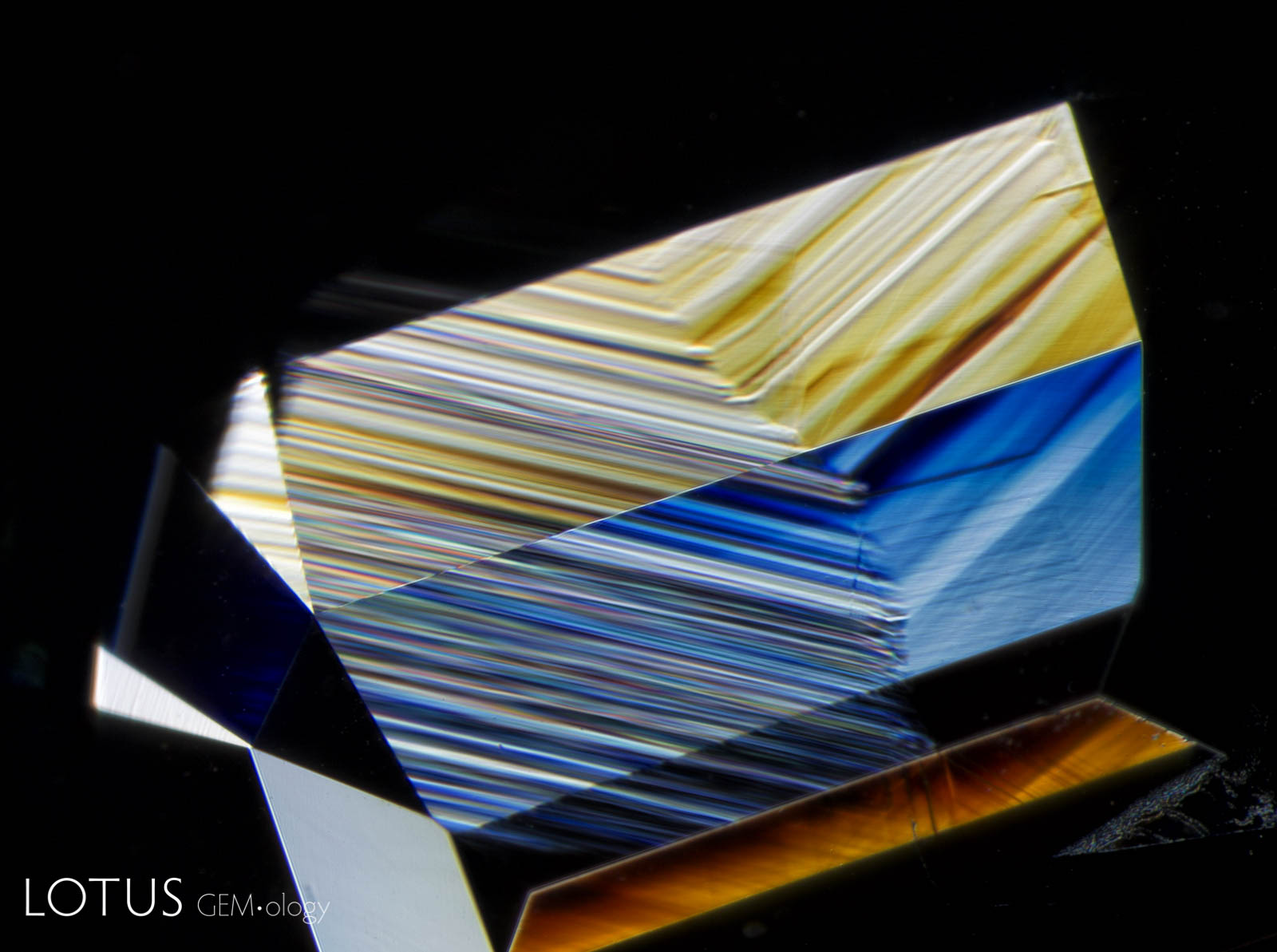
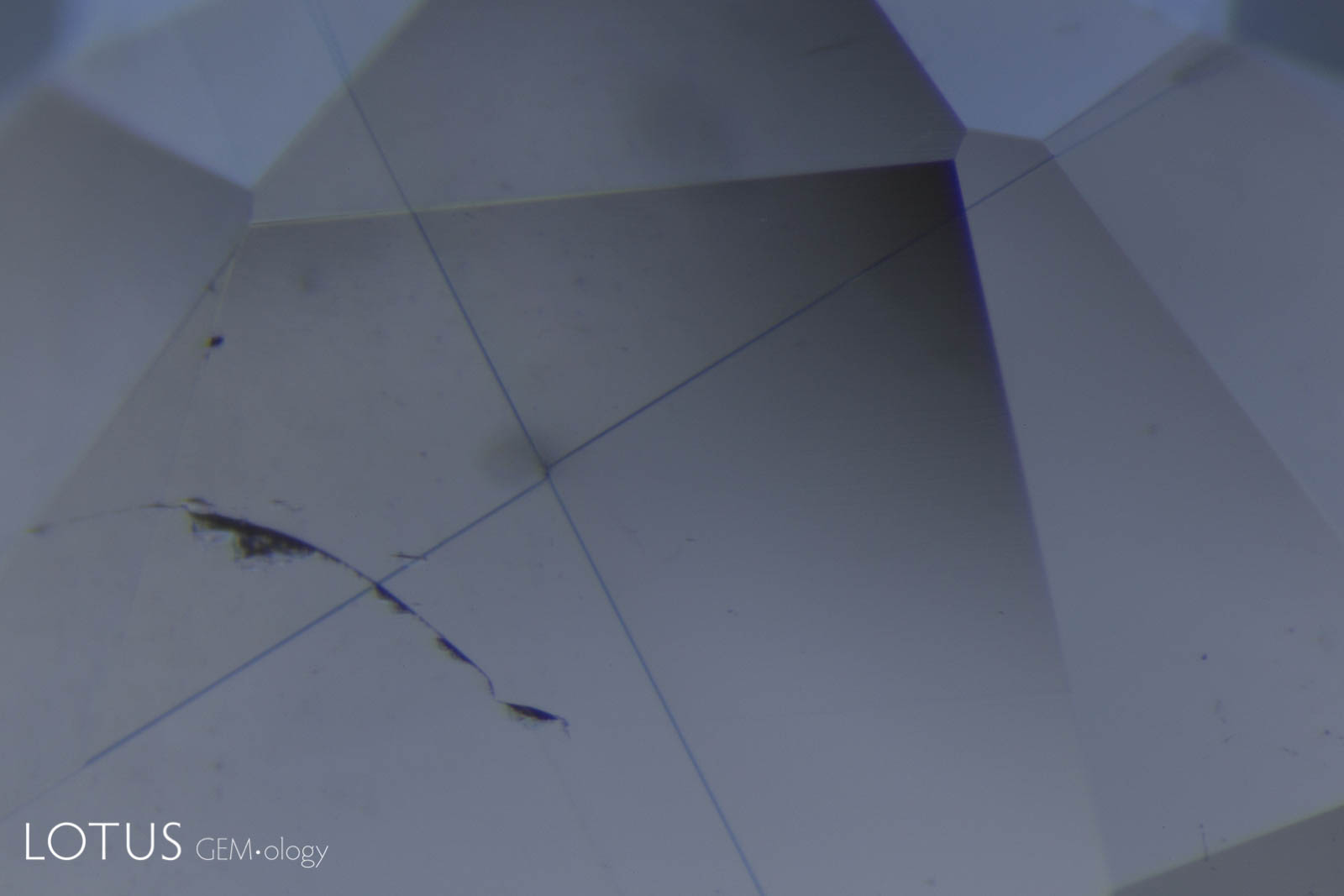
Crossing twin planes in a sapphire from a basaltic source. These are secondary glide twins, created by pressure after the stone grew, and form parallel to the rhombohedron faces, intersecting at 86.1 and 93.9°.
Natural Sapphire •
Not Determinable •
Enhancements:
Heat (H) •
Lighting Conditions:
Diffuse Light Field (Transmitted Light)
Photographer:
Richard W. Hughes •
Image Number:
A-001-1099-1
Hughes, R.W. (1997) Ruby & Sapphire. Boulder, CO, RWH Publishing, 512 pp.; RWHL*.
Search the Complete Hyperion Database
Sapphire inclusions may include mineral crystals, rutile silk, healed fissures, fluid inclusions, negative crystals, color zoning and other features formed during or after crystal growth. Such features are important to gemologists because they can provide evidence useful in identifying sapphire, understanding its geological history, recognizing treatment and, in some cases, determining geographic origin.
Sapphire Inclusion Photomicrographs
The Hyperion sapphire gallery includes microscopic features found in sapphires from major deposits around the world. Each entry is accompanied by descriptive information and, where available, references to the gemological literature.
What Inclusions Can Reveal About Sapphire
Inclusions are an important part of sapphire identification. Their form, composition, orientation and alteration can help gemologists distinguish natural sapphire from synthetic material, recognize evidence of heat treatment, and study the geological environment in which the sapphire formed.
Hyperion combines inclusion photomicrography with supporting gemological information so that individual features can be compared with documented examples from known sapphire deposits.
About Hyperion
Hyperion is the Lotus Gemology searchable inclusion database. It allows users to browse gemstone inclusions by gem type, geographic origin, treatment and keyword.