
Four Treasures Reference Database
Record No. 829
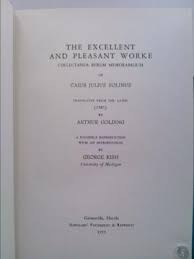
The Excellent and Pleasant Worke Collectanea Rerum Memorabilium of Caius Julius Solinus
Book
Solinus, C.J. (1955) The Excellent and Pleasant Worke Collectanea Rerum Memorabilium of Caius Julius Solinus. Gainesville, FL, Scholars’ Facsimiles & Reprints
Sinkankas/Born No.: NIS/NIB | RWHL
corundum, history.1, Sri Lanka.12, pearls, gems, jade, Fischer-Other
A facsimile reproduction of Arthur Golding’s 1587 English translation of the Collectanea Rerum Memorabilium (Collection of Memorable Things) by the third-century Roman writer Caius Julius Solinus, also known as Polyhistor, with an introduction by George Kish. Drawing extensively on Pliny the Elder’s Natural History and other classical authorities, Solinus presents an encyclopedic geographical survey of the ancient world, describing its countries, peoples, customs, animals, plants, minerals, and natural wonders. Particularly valuable for the history of gemology are numerous accounts of precious stones, their geographical sources, physical characteristics, supposed medicinal virtues, and supernatural properties. Among the materials discussed are emerald, sapphire (under the name cyanus), crystal, agate, jasper, onyx, sardonyx, coral, amber, and numerous obscure stones known principally through classical lapidary traditions. Solinus describes the celebrated emeralds of Scythia, their exceptional green colour and beneficial effect upon eyesight, as well as the difficulties of obtaining them from territories supposedly guarded by griffins. His descriptions of agates include the famous stone belonging to King Pyrrhus, in which the nine Muses and Apollo were believed to appear naturally without carving. Other passages discuss the legendary lyncurium, supposedly formed from the urine of the lynx, and various stones credited with extraordinary powers. The work also preserves ancient traditions concerning the mineral wealth of India, Ethiopia, Egypt, Arabia, and other regions associated with the early gemstone trade. Although much of the material is fabulous or derived uncritically from earlier writers, Solinus exerted considerable influence upon medieval geographical literature, encyclopedias, and lapidaries. Kish’s introduction places the author within the intellectual and political circumstances of the declining Roman Empire and traces the extraordinary popularity of his writings through the Middle Ages and Renaissance. The volume is an important source for understanding the transmission of classical mineralogical knowledge, gemstone lore, and geographical misconceptions into early modern Europe.