
Four Treasures Reference Database
Record No. 27894
Werke Alberts des Grossen als Quellen der Summa philosophiae unter dem Namen des Robert Grosseteste
Works of Albert the Great as sources of the Summa philosophiae under the name of Robert Grosseteste
Journal Article
Fries, A. (1963) Werke Alberts des Grossen als Quellen der Summa philosophiae unter dem Namen des Robert Grosseteste. [Works of Albert the Great as sources of the Summa philosophiae under the name of Robert Grosseteste] Freiburger Zeitschrift für Philosophie und Theologie, Vol. 10, No. 3, pp. 257–290.
DOI: https://doi.org/10.5169/seals-761530 | Sinkankas/Born No.: NIS/NIB | Language: in German | RWHL
gems, early lapidaries, early gemology, early mineralogy, Albertus Magnus
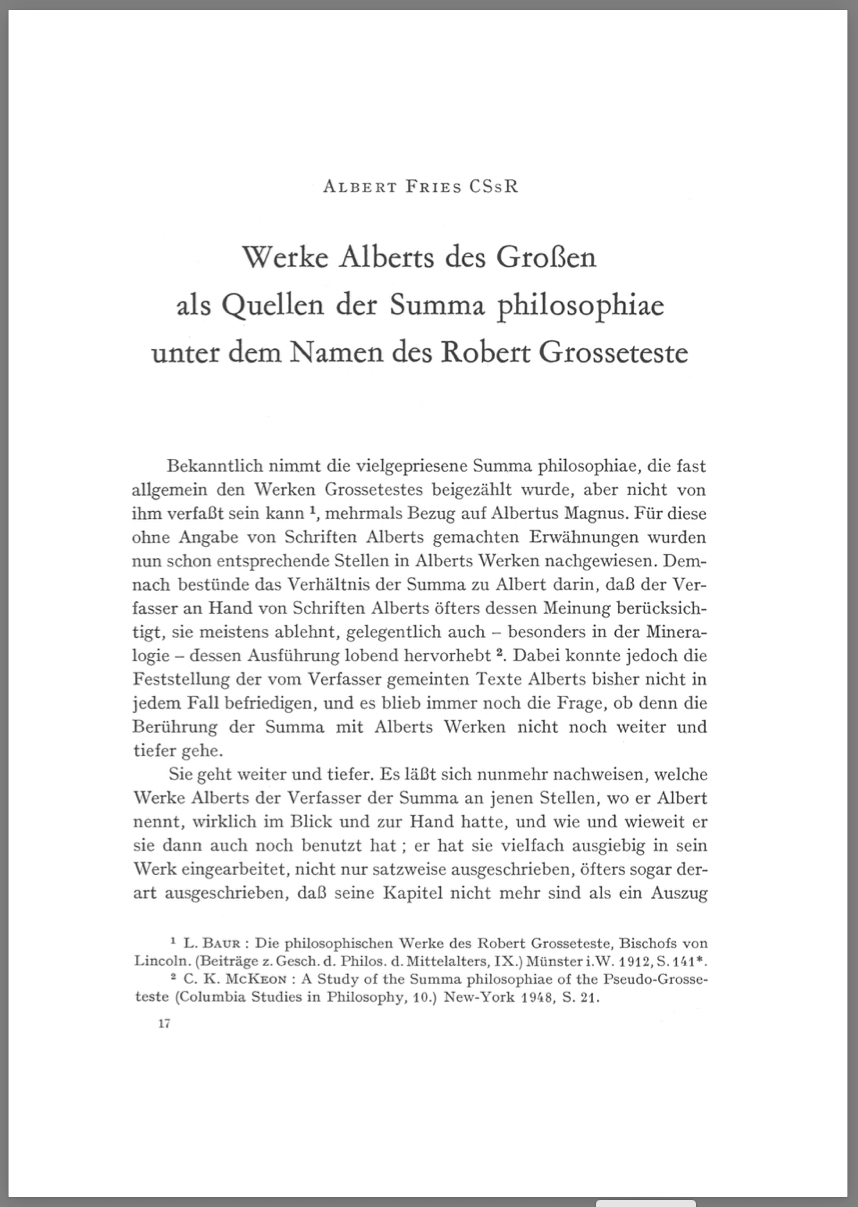
As is well known, the much-praised Summa philosophiae, which was almost universally counted among the works of Grosseteste but cannot have been written by him, refers several times to Albertus Magnus. For these references—made without citing specific works by Albert—corresponding passages have already been identified in Albert’s writings. According to this, the relationship of the Summa to Albert consists in the fact that the author frequently considers Albert’s opinions based on his writings, generally rejects them, but occasionally—especially in mineralogy—praises his explanations. However, the identification of the texts by Albert meant by the author has not been fully satisfactory in every case, and the question remains whether the Summa’s engagement with Albert’s works might not go even further and deeper. It goes further and deeper. It can now be demonstrated which works of Albert the author of the Summa actually had in view and at hand in the passages where he refers to Albert, and how and to what extent he used them. He frequently incorporated them extensively into his own work—not merely quoting them sentence by sentence, but often copying them so fully that entire chapters are little more than extracts from a work by Albert. This order of presentation, however, does not reflect the order of discovery; in this case, recognition of dependency preceded the identification of the citations. The result will likely have less impact on the dating of the Summa than on its evaluation, which in the future will probably be more tempered than it has been up to now.