
Four Treasures Reference Database
Record No. 166
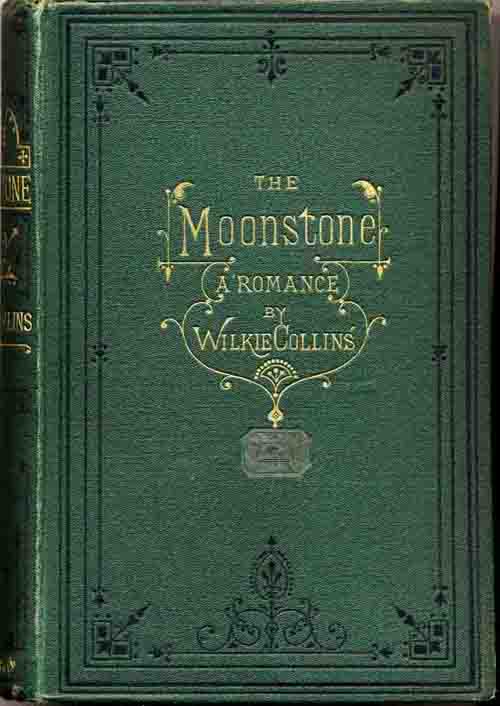
The Moonstone
Book
Collins, W. (1946) The Moonstone. Garden City, NY, Doubleday & Co., 444 pp.
Sinkankas/Born No.: NIS/NIB | RWHL
fiction, moonstone, gems
Wilkie Collins’s The Moonstone, first published in 1868, is a pioneering English detective novel centered on the theft of a magnificent yellow diamond and the mystery surrounding its disappearance. The story begins during the British assault on Seringapatam (Srirangapatna), India, in 1799, when Colonel John Herncastle acquires a celebrated diamond under circumstances suggesting murder and plunder. According to the fictional history recounted in the novel, the diamond originally adorned the forehead of a Hindu moon deity and was guarded for centuries by hereditary Brahmin priests. Its name, the Moonstone, derives from its unusual yellow color and the belief that its brilliance waxes and wanes with the phases of the moon. Collins carefully distinguishes this diamond from the semitransparent gemstone moonstone, which was likewise associated in ancient European traditions with lunar influences. The diamond’s history encompasses the temples of Somnath and Benares (Varanasi), successive military conquests, and the determination of its religious guardians to preserve or recover the sacred jewel. Herncastle eventually bequeaths the diamond to his niece, Rachel Verinder, who receives it on her eighteenth birthday at her family’s Yorkshire estate. When the gem disappears from her bedroom that night, suspicion falls upon several members of the household and a group of Indian visitors believed to be searching for the stone. Sergeant Cuff, a celebrated detective, is called upon to investigate, but the circumstances surrounding the theft prove unusually complicated. The narrative unfolds through the testimony of several characters, each offering a different perspective on the mystery and revealing the prejudices, assumptions, and personal interests that influence their accounts. Of particular gemological interest are the descriptions of the diamond’s remarkable size, yellow color, supposed supernatural properties, and considerable monetary value. Collins also introduces the commercial realities of the nineteenth-century diamond trade, including valuation, the significance of flaws, and the possibility of recutting a large, recognizable diamond into smaller stones to facilitate its disposal. The contrast between the diamond’s enormous financial value in England and its sacred significance in India provides an important underlying theme. The novel also reflects contemporary European fascination with famous Indian diamonds, particularly those associated with royal treasuries, warfare, and colonial acquisition. Although the Moonstone itself is fictional, its history evokes the complicated movements of celebrated gems between Indian rulers and European collectors. Beyond its gemological interest, the novel is notable for its sophisticated construction, distinctive narrators, psychological observations, and early use of investigative techniques that subsequently became conventions of detective fiction. The Moonstone remains a significant literary treatment of gemstones as objects of wealth, religious devotion, political power, and personal obsession, while offering a revealing perspective on nineteenth-century British attitudes toward India and its precious stones.