Gemology Books Bibliography

Gemology Books Bibliography

Explore books on gems, gemology, jewelry and mineralogy in Four Treasures, the Lotus Gemology reference database. This bibliography brings together matching book records from the collection, with publication details, abstracts and cover images where available.

Gemology Book References

The list below matches books concerning gemology and related subjects in the database's searchable fields. Some works cover several branches of gems, jewelry or mineralogy.
3,261–3,280 of 3,598 matching references

Aetii medici graeci Contractae ex veteribus medicinae tetrabiblos: hoc est quaternio, id est libri uniuersales quator sermones complectentes, ut sint in summa quatuor sermonum quaterniones, id est sermones XVI
The Compendium of the Greek physician Aetius, Compiled from the Ancient Medicine in Four Books: That is, a Quaternio, which is a collection of four universal books, so that in total there are four collections of four books, that is, sixteen books
Book
Aecio de Amida (1542) Aetii medici graeci Contractae ex veteribus medicinae tetrabiblos: hoc est quaternio, id est libri uniuersales quator sermones complectentes, ut sint in summa quatuor sermonum quaterniones, id est sermones XVI. [The Compendium of the Greek physician Aetius, Compiled from the Ancient Medicine in Four Books: That is, a Quaternio, which is a collection of four universal books, so that in total there are four collections of four books, that is, sixteen books], Froben, 932 pp.
Record No. 7501  |  Sinkankas/Born No.: NIS/NIB  |  Language: in Latin  |  RWHL
A Renaissance Latin edition of the medical writings of Aetius of Amida, the sixth-century Byzantine physician, whose Tetrabiblos compiles Greek medical knowledge from numerous earlier authorities into sixteen books arranged in four groups. The work covers diseases, diagnosis, pharmacology, surgery, ophthalmology, toxicology, and therapeutic substances of vegetable, animal, and mineral origin. Of particular gemological interest are passages concerning precious stones and minerals used medicinally, preserving elements of the classical lapidary and pharmacological traditions and their supposed therapeutic properties.

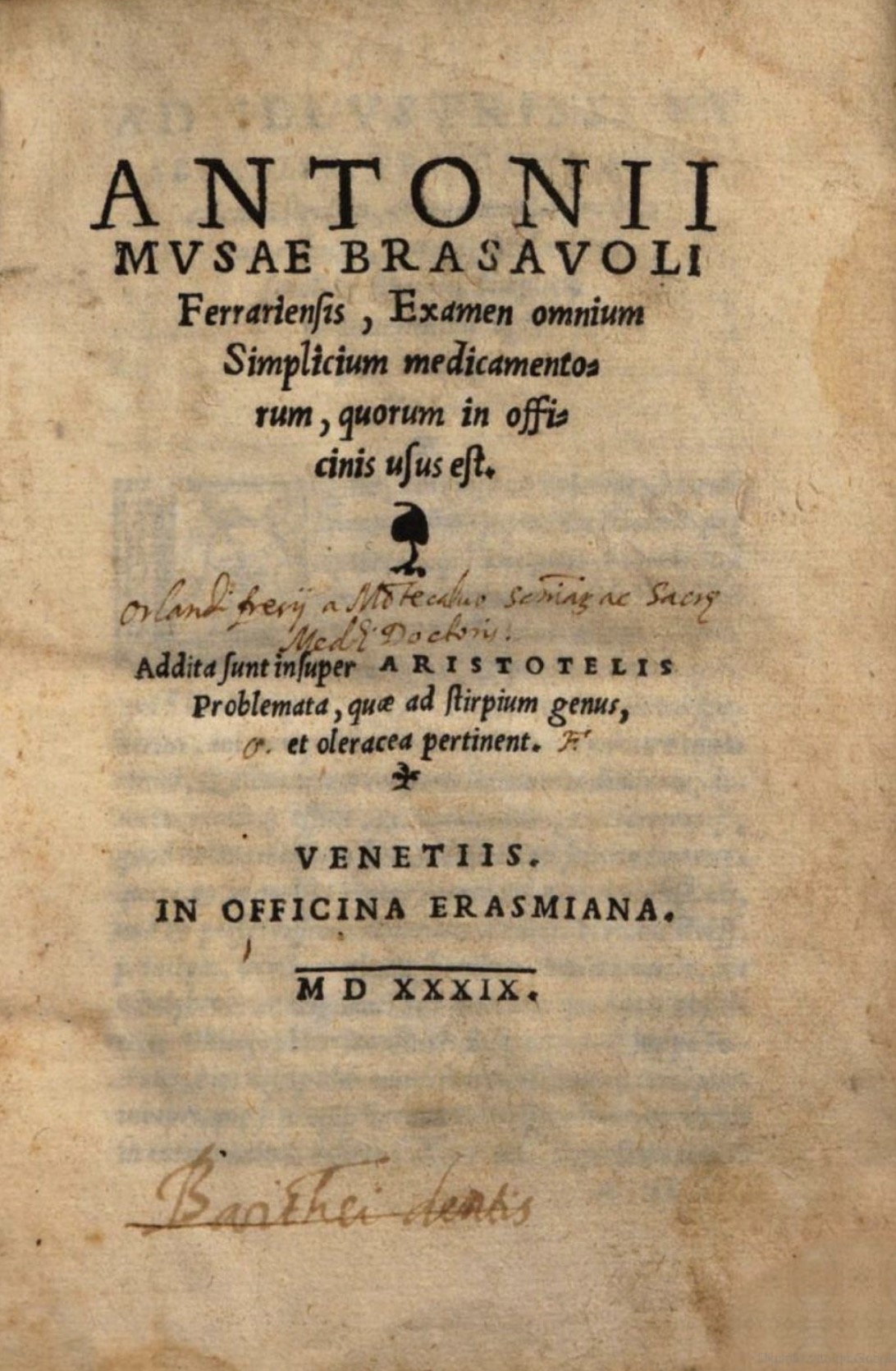
Antonii Musae Brasavoli Ferrariensis, Examen omnium simplicium medicamentorum, quorum in officinis usus est
Antonius Musa Brasavolus Ferrariensis, Examination of all simple medicines, which are used in pharmacies
Book
Brasavola, A.M. (1537) Antonii Musae Brasavoli Ferrariensis, Examen omnium simplicium medicamentorum, quorum in officinis usus est. [Antonius Musa Brasavolus Ferrariensis, Examination of all simple medicines, which are used in pharmacies] Lugduni, Apud Joannem et Franciscum Frellaeos, 544 pp.
Record No. 7505  |  Sinkankas/Born No.: NIS/NIB  |  Language: in Latin  |  RWHL
A pharmacological work by the Italian physician and botanist Antonio Musa Brasavola examining the “simples”—individual substances used medicinally in contemporary pharmacies. Drawing on classical authorities while also critically assessing actual apothecary practice, Brasavola discusses substances of vegetable, animal, and mineral origin, their identification, properties, preparations, and medicinal uses. Of particular gemological interest are precious stones and other mineral substances employed as medicines, reflecting Renaissance beliefs concerning the therapeutic properties of gems and the continuing influence of classical and medieval lapidary traditions on sixteenth-century pharmacy.

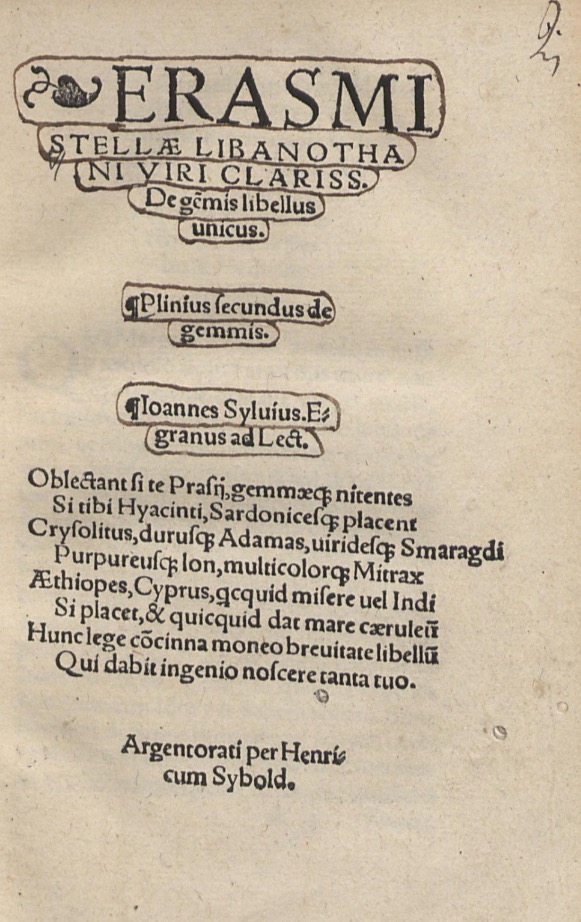
Erasmi Stellae Libanotha Ni Viri Clariss. De Gemis Libellus Unicus
Erasmus’ Star of Libanotha: A Unique Treatise on Gems by the Most Illustrious Man
Book
Stella, E. (1517–1530) Erasmi Stellae Libanotha Ni Viri Clariss. De Gemis Libellus Unicus. [Erasmus’ Star of Libanotha: A Unique Treatise on Gems by the Most Illustrious Man] Nümberg, Friedrich Peypus, unpaginated (~130 pp.)
Record No. 7550  |  Sinkankas/Born No.: NIS/NIB  |  Language: in Latin  |  RWHL
Schuh: Very rare. One of the earliest 16th century treatises on mineralogy and precious stones. It is a different type of lapidary, with its arrangement of gems and minerals according to color rather than the typical alphabetical sequence. The four classes are white, green, red and blue or black. Thus are classified: I. De gemmis candidis, including diamond, rock crystal, iris, ceraunia & astroite, pederote, asteria, achate, draconite, allectorio, and margaritis. II. De gemmis viridibus, including smaragdo (emerald), beryllis, chrysoprasio, topatio, callaide, prasio, heliotropio, jaspide. III. De gemmis rubeis, including carbunculorum generibus, amthysto, hyacintho, sarda, sardonyce, anyce, hematite, corallio, hephesite, chrysolito, electro, and opalo. IV. Gemmis coeruleis & nigris, including cyaneo, saphiro, calaide & ceraunia, de moris gemmis, de gemmis ad ectypam, etc. Adams (1938) notes that the descriptions are better than earlier works, although Thorndike (1923-58) declares the work little more than a compilation from Greek and Latin writers, above all, Pliny ...""

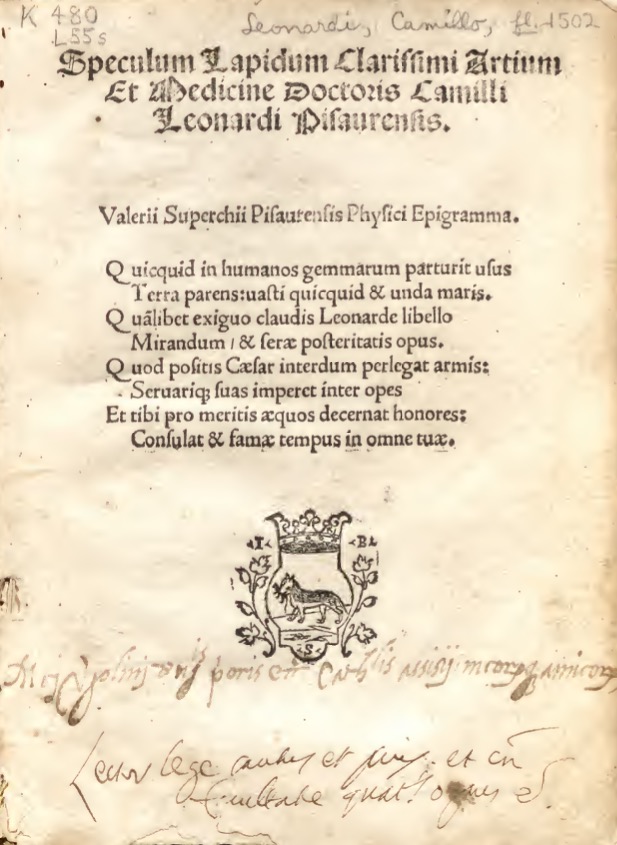
Speculum Lapidum Clarissimi Artium

The Mirror of Stones
Book
Leonardus, C. (1502) Speculum Lapidum Clarissimi Artium. [The Mirror of Stones] Venice, 66 pp.
Record No. 6816  |  Sinkankas/Born No.: 3891  |  Language: in Latin  |  RWHL
Sinkankas: This work is ably described by Thorndike, History of Magic, 6, p 298-302, ie, the Speculum lapidum or Mirror of Stones of 1502 was dedicated to Caesar Borgia. Camillo justified the writing of it by the assertion that he had not found the subject treated completely by any previous author, although it had been touched on by divers doctors, both ancient and modern. It does not seem, however, that his book represents any distinct advance over the treatment of gems and their sculpture in the De mineralibus of Albertus Magnus, from whom he has borrowed extensively. Neither in tone nor content does Camillo make any noteworthy departure from the traditional treatment of gems common to the previous authors. Indeed, his book is merely a compilation with little trace of independent or scientific observation ... Brasavola, writing in 1534, said that he knew of no one who had written more ineptly on any subject than Lunardi on stones ... The Speculum is not a long treatise, running to about thirty thousand words. More than a third of the space is devoted to an alphabetical listing and description of particular stones, while another third is occupied with astrological and magic images carved on gems and is in large part made up of chapters drawn from various books of magic. In both cases it is the occult virtues of gems or of images engraved upon them that especially attract the author's attention." Leonardus lists, among others, the following authorities from which he drew information, Dioscorides, Aristotle, Hermes, Evax, Serapion, etc., as well as Albertus Magnus, all of which were noted by Thorndike, who also concludes that Leonardus believed in the magical properties of gemstones, and after noting the various editions, includes therein the plagiarism of Ludovico Dolce, which see. This work was described by Conrad Gesner in his Bibliotheca universalis, 1545, f 161 r. See also comments of Mariette, Trait/ de Pierres Gravies, 1, p 248–9 concerning the credulity of Leonardus in respect to engraved gem magical powers. A modern extended review by J H Oughton, Austral Gemm, 74, 1967, 20–6, who calls it "the very first[!] gemmologist's compendium.""

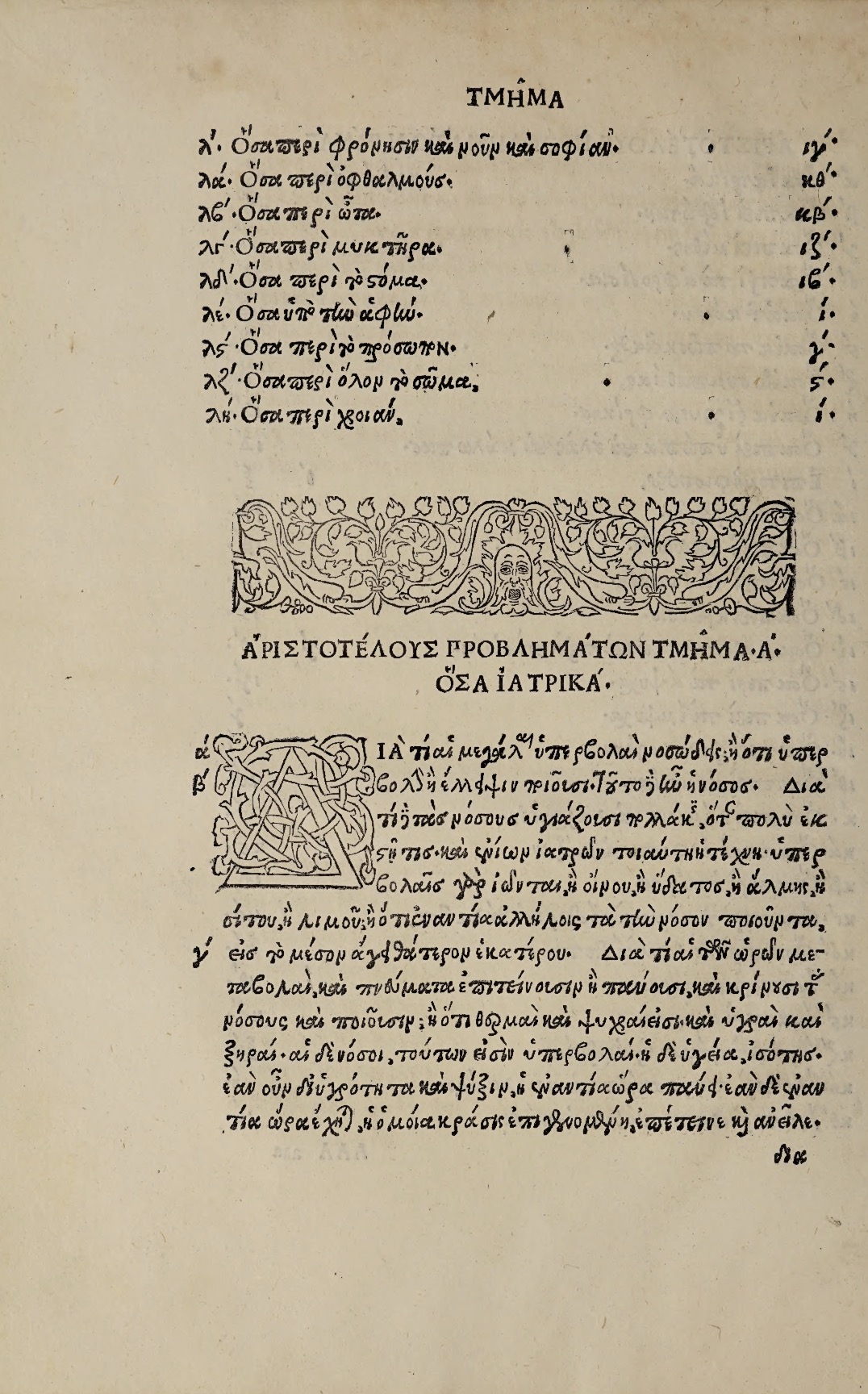
Aristoteles et Theophrastus

Aristotle and Theophrastus. Venice, at the house of Aldus Manutius, a Roman and a lover of Greek letters
Book Section
Aldus (1497) Aristoteles et Theophrastus. [Aristotle and Theophrastus. Venice, at the house of Aldus Manutius, a Roman and a lover of Greek letters] In: domo Aldi Manutii Romani et Graecorum studiosi, Venice, Vol. 2 , folios 254–260.
Record No. 27432  |  Sinkankas/Born No.: NIS/NIB  |  Language: in Greek with notes in Latin  |  RWHL
The first printed Greek language edition of Aristotle's collected works, with the exclusion of the Poetica and Rhetorica. Includes works of Galen, Philo of Alexandria, Theophrastus, and Alexander of Aphrodisias, among others. Edited by Aldus Manutius with the assistance of Alexander Bondinus (Agathermeros), Scipio Forteguerri, and Franciscus Caballus.

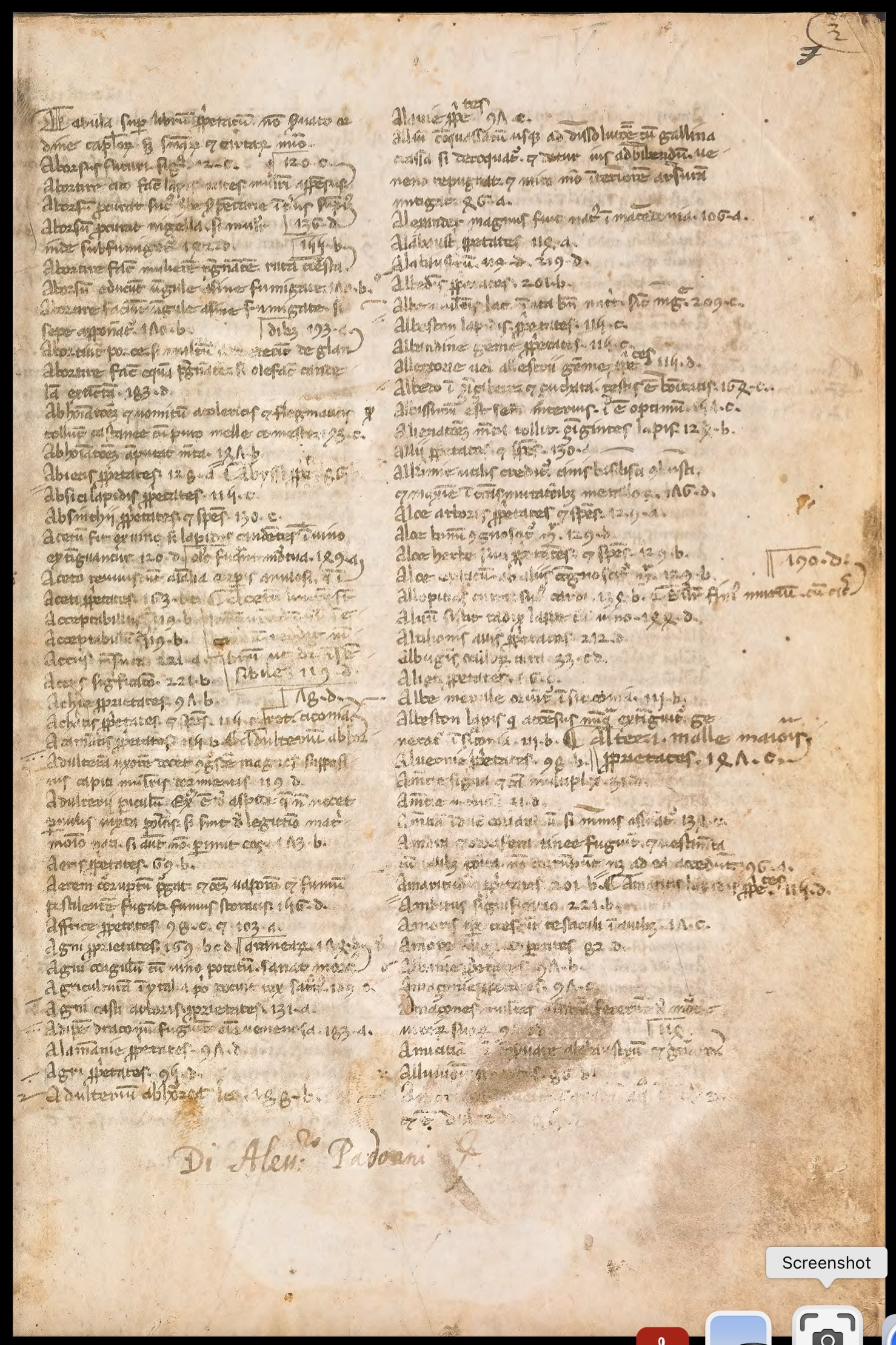
De proprietatibus rerum

On the Properties of Things
Book
Anglicus, B. (1494) De proprietatibus rerum. [On the Properties of Things]
Record No. 6905  |  Sinkankas/Born No.: 423 (not seen); NiB  |  Language: in Latin  |  RWHL
A medieval encyclopedia by Bartholomaeus Anglicus (Bartholomew the Englishman), originally composed in the thirteenth century and covering theology, medicine, natural history, geography, astronomy, animals, plants, minerals, and other aspects of the natural world. Of particular gemological interest is Book XVI, De lapidibus (On Stones), which describes numerous precious stones and minerals, including their appearance, supposed origins, physical characteristics, medicinal properties, and magical or talismanic virtues. Drawing heavily on earlier authorities such as Pliny, Isidore of Seville, and medieval lapidary traditions, the work became one of the most influential encyclopedic sources on gemstones in medieval Europe.

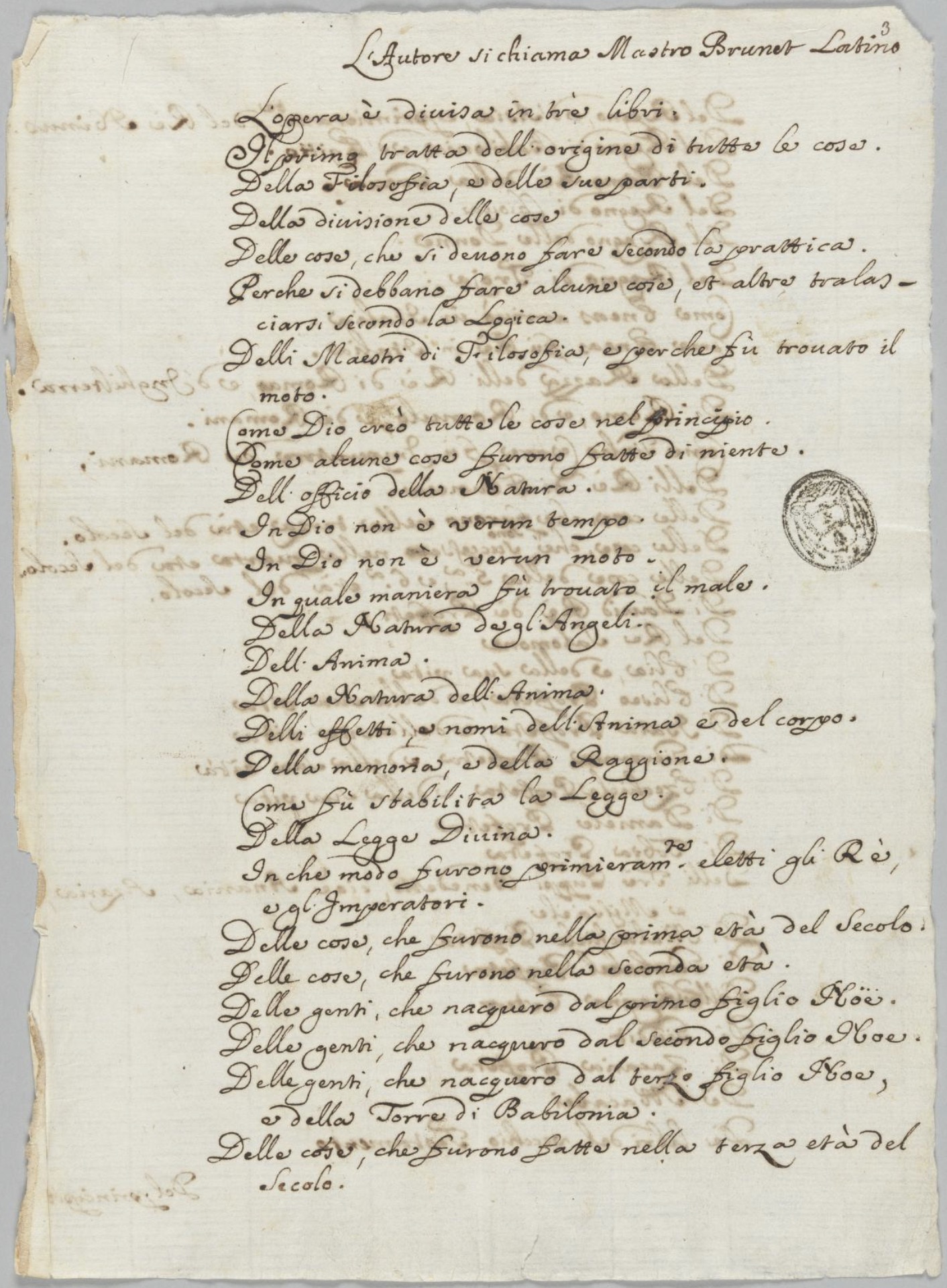
Li livres dou tresor

The Book of Treasures
Manuscript
Latini, B. (ca. 1400) Li livres dou tresor. [The Book of Treasures], 176 folios
Record No. 29937  |  Sinkankas/Born No.: NIS/NIB  |  Language: in Old French  |  RWHL
A major medieval vernacular encyclopedia by the Florentine statesman and scholar Brunetto Latini (ca. 1220–1294), Li livres dou tresor was composed in Old French during Latini’s exile in France in the 1260s. Organized in three books, it assembles a broad compendium of contemporary knowledge: the first treats theology, universal history, geography, astronomy, natural history, animals, plants, stones, and other aspects of the physical world; the second concerns ethics, virtues, and vices, drawing particularly upon Aristotle; and the third addresses rhetoric, politics, and the government of cities. Of particular gemological interest are the sections dealing with minerals and precious stones, which preserve medieval European conceptions of their names, characteristics, origins, and reputed properties. The work circulated extensively in manuscript and was translated into several European languages, making it an important source for the transmission of natural-history and lapidary traditions in the later Middle Ages.

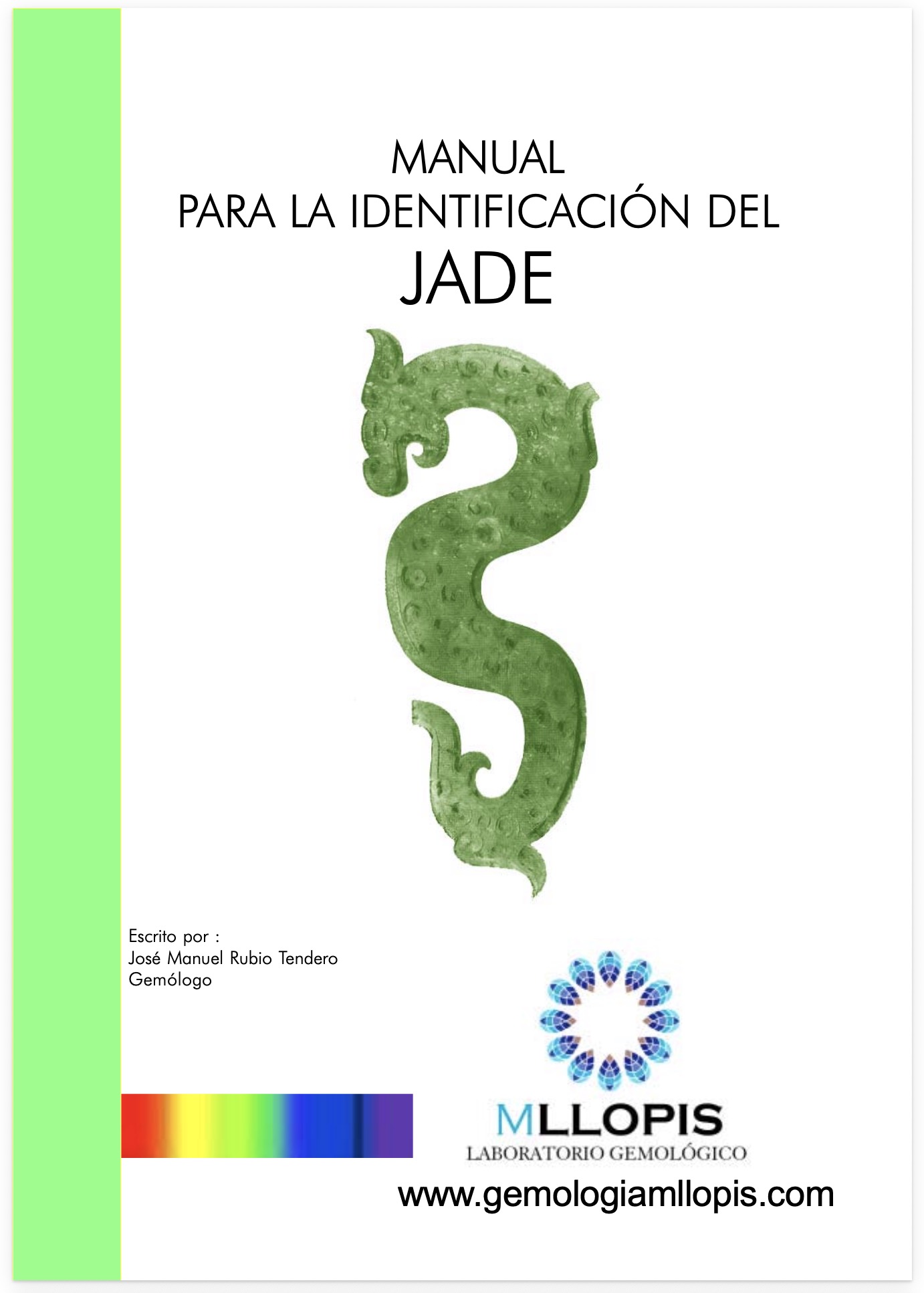
Manual para la identification del Jade
Manual for the Identification of Jade
Book
Tendero, J.M.R. (n.d.) Manual para la identification del Jade. [Manual for the Identification of Jade], www.gemologiamllopis.com, 46 pp.
Record No. 28727  |  Sinkankas/Born No.: NIS/NIB  |  Language: in Spanish  |  RWHL
The purpose of this manual is to provide an introductory knowledge of jade to all those who, for one reason or another, are interested in this material, which has been used to create luxury and jewellery objects from prehistory to the present day. This text is intended to be read by gemologists, but it is also designed to be useful to anyone seeking information about the diverse group of minerals of similar appearance that are confused with jade and used in the manufacture of carvings and gemstones intended for jewellery. Throughout this work, jadeite and nephrite—the two minerals that are properly considered jade—are continuously compared with the materials that most closely resemble them and are most frequently encountered in the marketplace, such as serpentine, chalcedony, and prehnite, while also considering artificial materials such as plastics and glass. This manual for the identification of jade is, as a whole, a synthesis of other works cited in the bibliography at the end and the result of my own laboratory experience in the identification and study of jade. Since it cannot exactly be said that bookshops are overflowing with gemological works published in Spanish, I hope that this modest contribution will help, in some measure, to fill that gap.

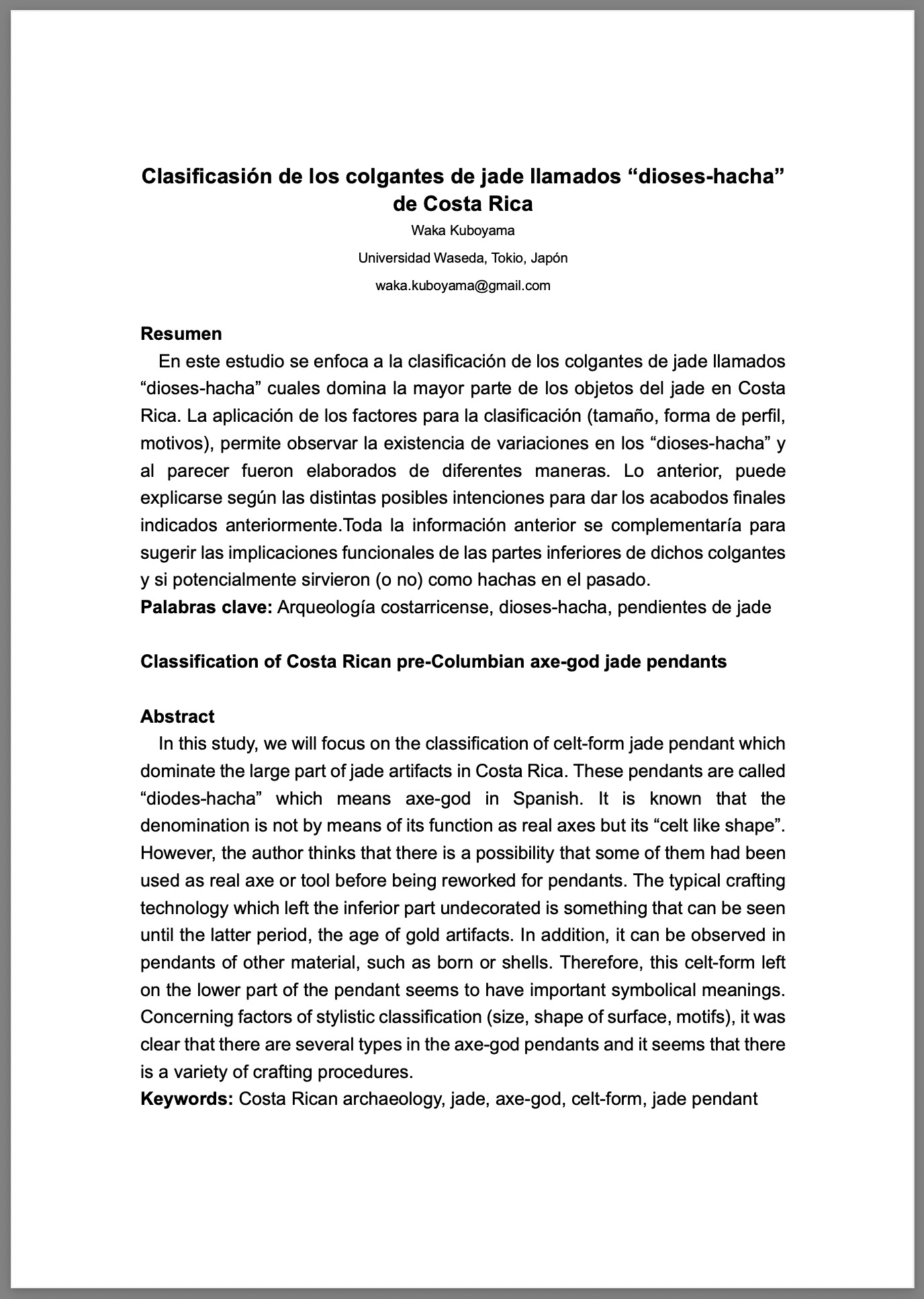
Clasificasión de los colgantes de jade llamados “dioses-hacha” de Costa Rica
Classification of the jade pendants known as “axe-gods” from Costa Rica
Unpublished Work
Kuboyama, W. (n.d.) Clasificasión de los colgantes de jade llamados “dioses-hacha” de Costa Rica. [Classification of the jade pendants known as “axe-gods” from Costa Rica] 13 pp.; unpublished report.
Record No. 28519  |  Sinkankas/Born No.: NIS/NIB  |  Language: in Spanish  |  RWHL
In this study, we focus on the classification of celt-form jade pendants, which constitute the majority of jade artefacts in Costa Rica. These pendants are called “dioses-hacha,” meaning “axe-gods” in Spanish. It is understood that this designation does not refer to their function as actual axes, but rather to their celt-like shape. However, the author suggests that some of them may originally have been used as real axes or tools before being reworked into pendants. The characteristic manufacturing technology, which left the lower part undecorated, continued to be seen into the later period, during the age of gold artefacts. In addition, it can be observed in pendants made from other materials, such as bone or shell. Therefore, the celt form retained on the lower part of the pendant appears to have held important symbolic meaning. Regarding the factors used for stylistic classification (size, surface shape, and motifs), it is clear that there are several types of axe-god pendants, and there appears to have been a variety of manufacturing procedures.

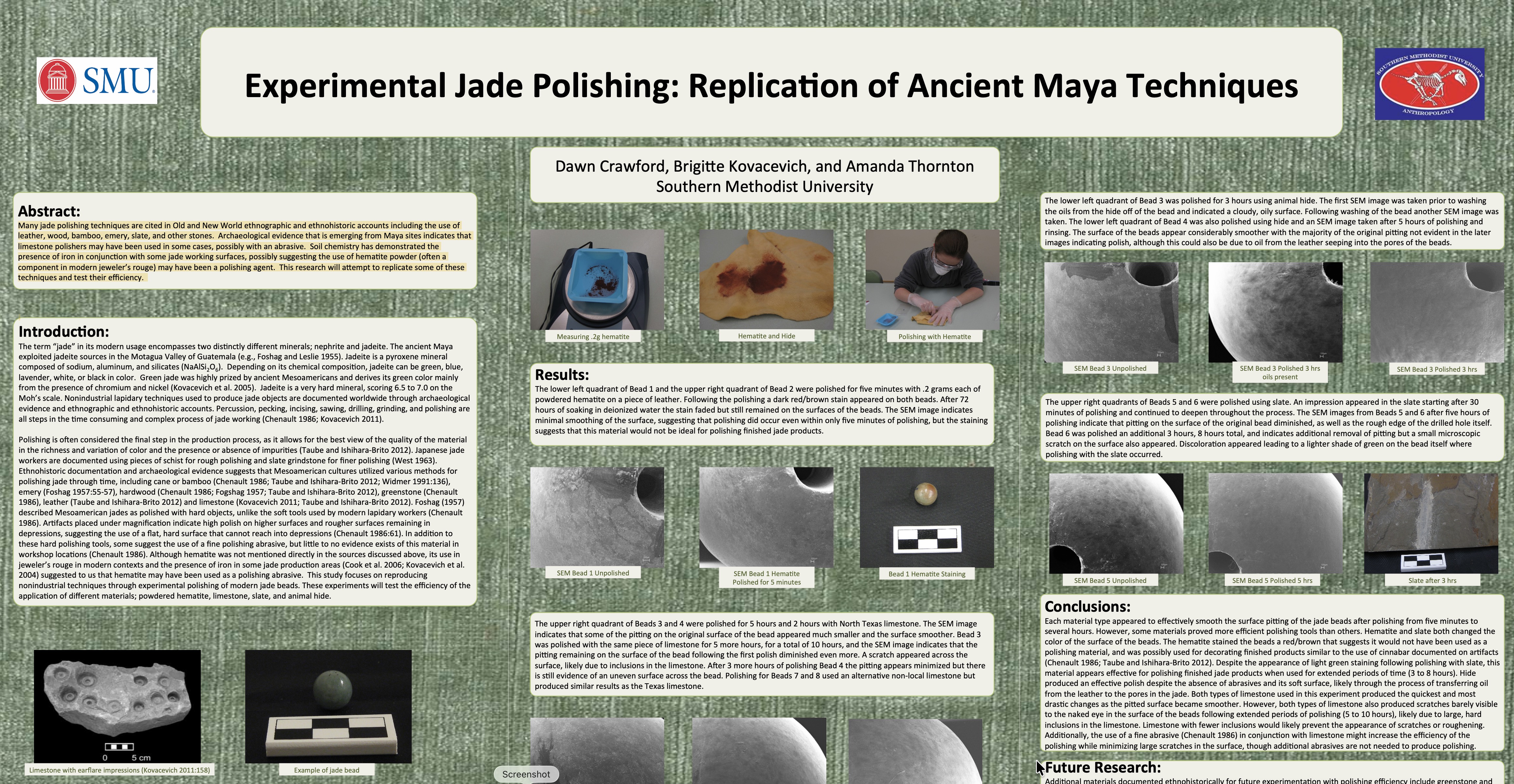
Experimental Jade Polishing: Replication of Ancient Maya Techniques
Report
Crawford, D., Kovacevich, B. and Thornton, A. (n.d.) Experimental Jade Polishing: Replication of Ancient Maya Techniques. Southern Methodist University, 1 page poster
Record No. 28402  |  Sinkankas/Born No.: NIS/NIB  |  RWHL
Many jade polishing techniques are cited in Old and New World ethnographic and ethnohistoric accounts, including the use of leather, wood, bamboo, emery, slate and other stones. Archaeological evidence emerging from Maya sites indicates that limestone polishers may in some cases have been used, possibly in conjunction with an abrasive. Soil chemistry has demonstrated the presence of iron associated with some jade-working surfaces, possibly suggesting the use of hematite powder — often a component of modern jeweller’s rouge — as a polishing agent. This research will attempt to replicate some of these techniques and test their efficiency.Many jade polishing techniques are cited in Old and New World ethnographic and ethnohistoric accounts, including the use of leather, wood, bamboo, emery, slate and other stones. Archaeological evidence emerging from Maya sites indicates that limestone polishers may in some cases have been used, possibly in conjunction with an abrasive. Soil chemistry has demonstrated the presence of iron associated with some jade-working surfaces, possibly suggesting the use of hematite powder — often a component of modern jeweller’s rouge — as a polishing agent. This research will attempt to replicate some of these techniques and test their efficiency.

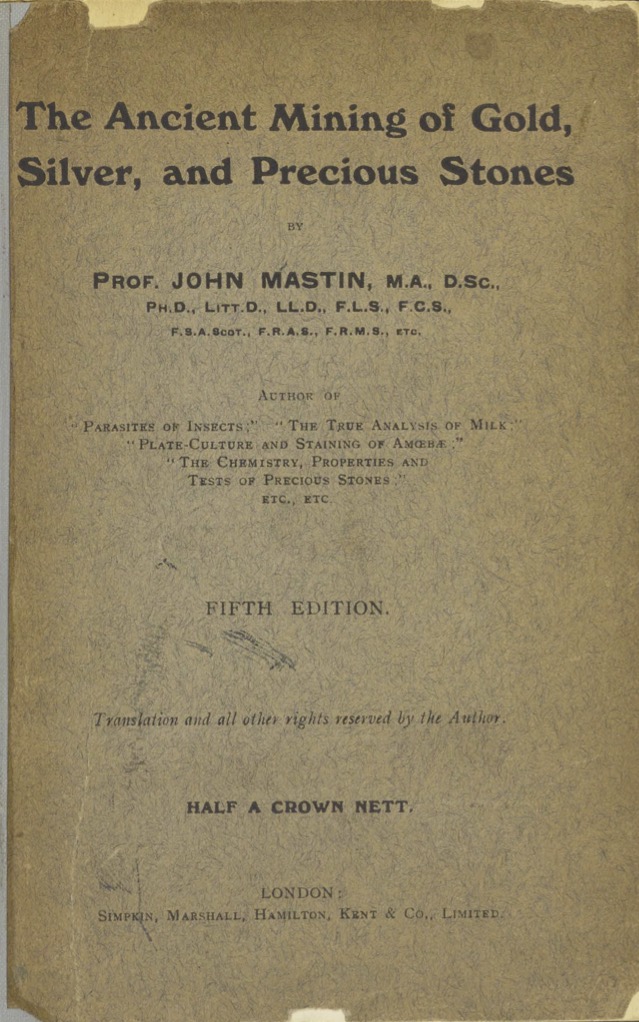
Roman glass and painted vessels in Kushana funerary cult
Electronic Article
Sengupta, A.R. (n.d.) Roman glass and painted vessels in Kushana funerary cult. online publication, 21 pp.
Record No. 27535  |  Sinkankas/Born No.: NIS/NIB  |  RWHL
Examines Roman glass vessels and painted vessels associated with Kushana-period funerary contexts, considering them within the wider cultural and ritual environment of the Kushana realm. Particular attention is given to imported Roman glass and its occurrence in Central and South Asian archaeological contexts, including the luxury material from Begram, and to the role such prestigious vessels may have played in funerary practices. The study places these objects within the broader interchange between the Mediterranean world, Central Asia, and the Indian subcontinent during the Kushana period.

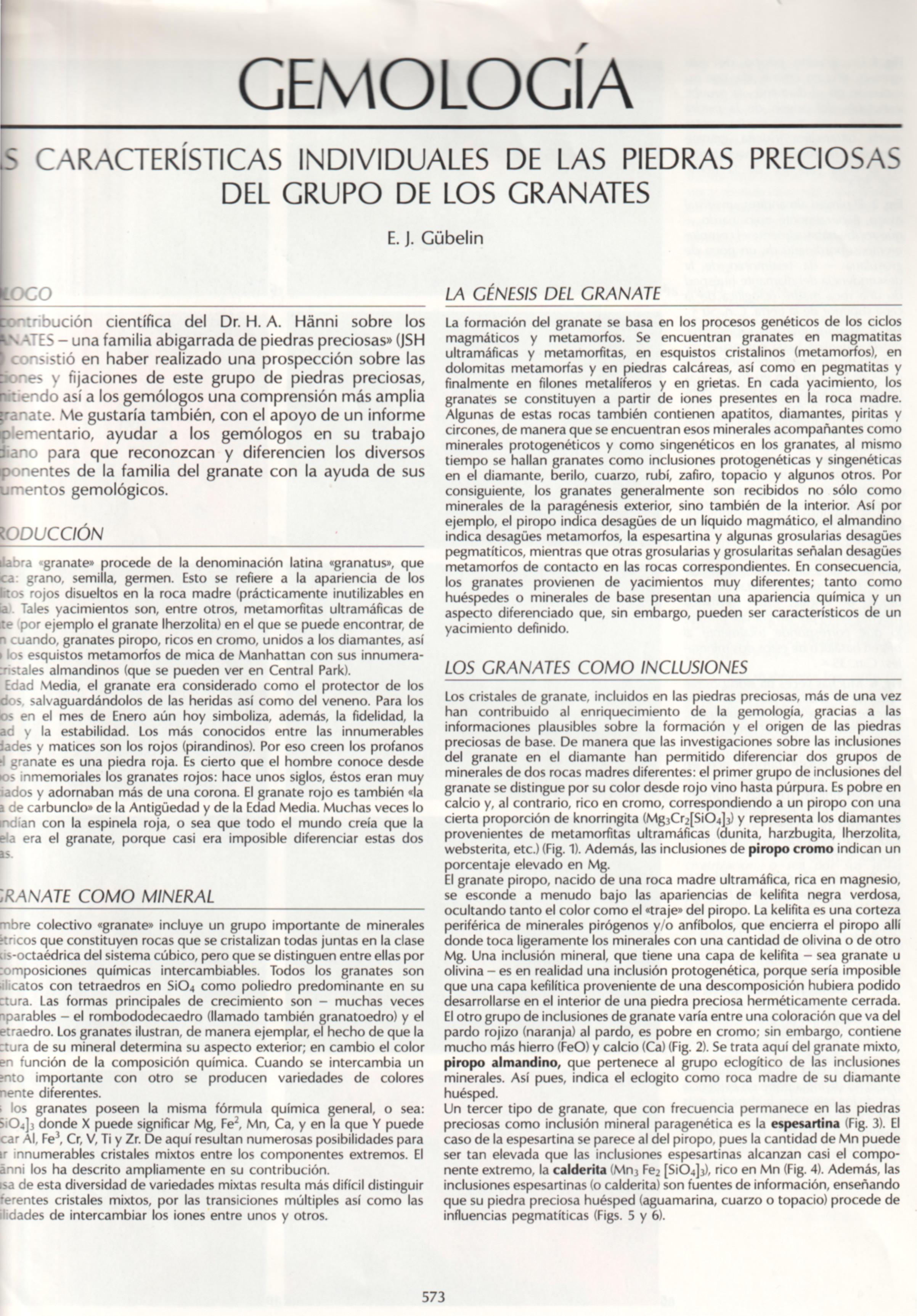
The Ancient Mining of Gold, Silver and Precious Stones
Book
Mastin, J. (n.d., c. 1912) The Ancient Mining of Gold, Silver and Precious Stones. London, Simpkin, Marshall, Hamilton, Kent & Co., 50 pp.
Record No. 26338  |  Sinkankas/Born No.: NIS/NIB  |  RWHL
Sinkankas: A disappointing work, and considering the author’s qualifications, one of very little merit—obviously hastily composed and written as a speculative essay with virtually no facts, figures, or references to support its statements. Overall, it consists of broad generalizations about what might have happened in antiquity during humanity’s search for and exploitation of underground mineral wealth. As far as I can find, the only mention of gemstones—specifically diamond and ruby—appears on page 41, and even that is grossly inaccurate.

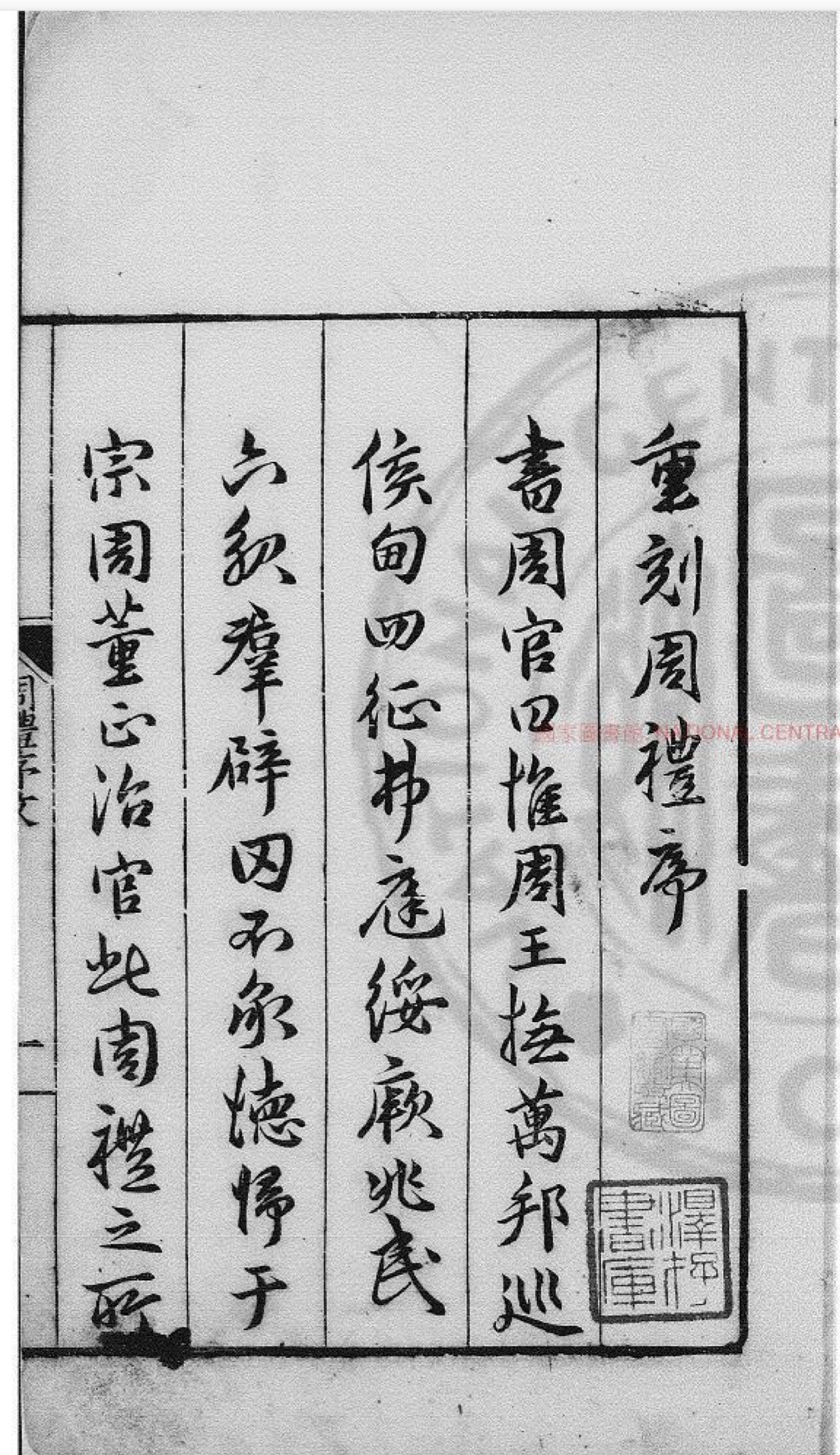
Gemología | Las características individuales de las piedras preciosas del grupo de los granates
Gemology | The individual characteristics of the precious stones of the group of garnets
Journal Article
Gübelin, E.J. (n.d.) Gemología | Las características individuales de las piedras preciosas del grupo de los granates. [Gemology | The individual characteristics of the precious stones of the group of garnets] [journal unknown], pp. 573–580.
Record No. 16949  |  Sinkankas/Born No.: NIS/NIB  |  Language: in Spanish  |  RWHL
Inclusions in various types of garnets are illustrated and discussed.

Record of Craftsmen’s Work

Kao Gong Ji 考工记
Book
[author unknown] (~3rd century BCE) Record of Craftsmen’s Work. [Kao Gong Ji 考工记]
Record No. 16543  |  Sinkankas/Born No.: NIS/NIB  |  Language: in Chinese  |  RWHL
The Kao Gong Ji [考工記; Record of Craftsmen’s Work] is an ancient Chinese technical text concerned with the organization, materials, methods, and standards of state-controlled craft production. Probably compiled during the late Warring States period and subsequently incorporated into the Zhou Li [周禮; Rites of Zhou], it describes specialists engaged in metalworking, woodworking, leatherwork, pottery, vehicle construction, weapon manufacture, architectural planning, and other crafts. Of particular interest to historians of materials and gemology are its discussions of the selection and working of natural materials such as jade, systems of measurement, standards of workmanship, and the relationship between material properties and successful manufacture. Although it is not principally a lapidary text, the Kao Gong Ji provides exceptionally early evidence for systematic Chinese technological thought and for the sophisticated classification and manipulation of materials in ancient craft production.

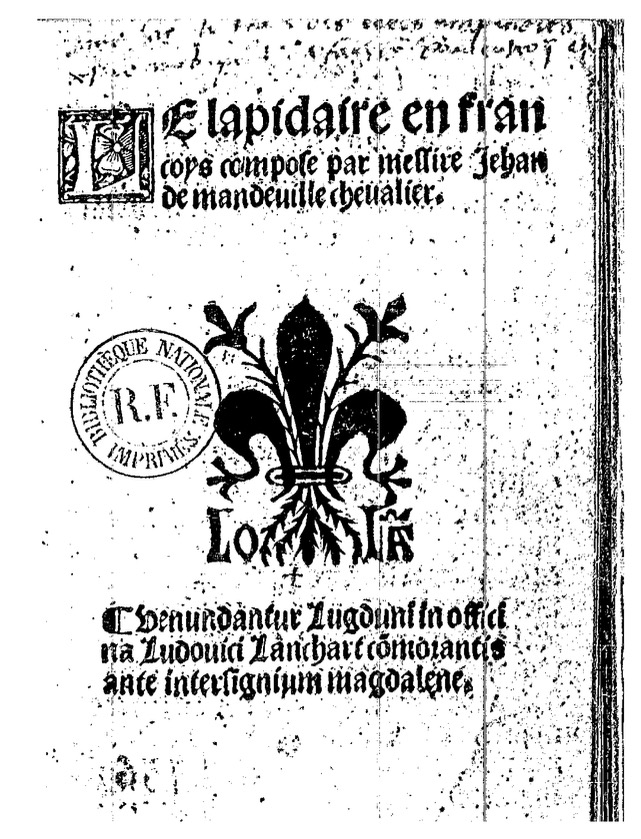
Le lapidaire en francoys coittpose par messire Jehan de mandeville chevalier
The Lapidary in French, composed by Sir Jehan de Mandeville, Knight
Book
Mandeville, J. (n.d., ca. 1495) Le lapidaire en francoys coittpose par messire Jehan de mandeville chevalier. [The Lapidary in French, composed by Sir Jehan de Mandeville, Knight] Lyon, Bernardus de Gordonio, 18 leaves
Record No. 6809  |  Sinkankas/Born No.: NIS/NIB  |  Language: in French  |  RWHL
Schuh: Extremely rare. Editio Princeps. Attributed to Mandeville this lapidary written in the French language first appeared in manuscripts that date from the middle 14th century. Pannier (1882) describes and compares several such manuscripts that had come under his inspection, and concludes that the text was probably not an authentic work of Mandeville. Instead, Pannier believes it to be the work of an unnamed jeweler. The text describes the most important precious stones and many others of a fantastic nature. It begins by coping from Marbode, the leading lapidary of the period, descriptions of about two dozen stones. Then are given descriptions of other stones and minerals both imaginary and real including pumice, mica, alabaster, and lapis lazuli. Stones formed in the human body or the bodies of animals are very prominent, as these bezoar and eaglestones were believed to bestow on their owner marvelous or supernatural power. Due to the extreme rarity of all of the early editions the printing history of this work is a difficult bibliographical problem. The widely unknown incunabula edition described above was first noticed and examined in detail by David J. Shaw, whose information is copied (person communication). This is most probably the first printing of Mandeville's Lapidaire, although Klebs (1938) who copies Claudin (1900) briefly describes a tantalizing Lapidaire written in French and published at Lyon in 1477 that is perhaps a still earlier printing. The difficult to read manuscript description of this 1477 book published in Pellechet (1970) does not mention Mandeville's name, but the work deserves closer examination.

Geology and Exploration of Gem Deposits at Mt. Carmel, Northern Israel: Natural Moissanite, Sapphire, Ruby & Diamond
Report
Coopersmith, H., Toledo, V., Ward, J., Wit, M., de, Spaggiari, R. and Fritsch, E. (n.d.) Geology and Exploration of Gem Deposits at Mt. Carmel, Northern Israel: Natural Moissanite, Sapphire, Ruby & Diamond. 29 pp.
Record No. 5601  |  Sinkankas/Born No.: NIS/NIB  |  RWHL
H. Coopersmith and colleagues present exploration results and a geological model for diamond, natural moissanite and gem corundum occurrences around Mount Carmel and the Kishon River catchment in northern Israel. The illustrated presentation places Shefa Yamim’s prospecting programme within a regional succession of Cretaceous marine sediments and volcanic rocks, Neogene basalts, younger sediments and alluvial deposits. Heavy-mineral prospecting had generated 1,127 samples, supplemented by bulk sampling, large-diameter drilling, core drilling and geological logging of placer targets. A source-to-sink model divides the Kishon drainage into proximal, middle and distal reaches, relating volcanic source areas to sediment transport and concentration. Limited placer development is envisaged upstream, improved concentration in the structurally confined middle reach receiving coarse material from Mount Carmel, and further enrichment through marine reworking near the river’s coastal outlet. Target minerals occur with garnet, ilmenite, zircon, rutile, pyroxene, amphibole, olivine, spinel, kyanite and an iron–titanium alloy. The authors associate this assemblage with mafic volcanic rocks containing mantle xenoliths and indications of high-pressure mineral phases. Ruby and sapphire, recovered in sizes up to 5.8 carats, are described as xenocrysts in volcanic pipes and basalts, with inclusions under investigation as evidence of origin. Laser-ablation inductively coupled plasma mass spectrometry provides compositional data for corundum, including variable titanium, chromium, gallium, magnesium and vanadium contents. Particular emphasis is placed on natural moissanite in volcanic rocks and derived alluvium. Discrete grains range from less than 0.5 mm to 4.1 mm and are described as predominantly deep blue, with some green gem-quality material; the authors report confirmation by modern gemmological techniques and regard their size and abundance as exceptional. Diamond recoveries total 77 stones, mostly alluvial, including a 0.88 ct gem diamond and one microdiamond reported in situ in volcaniclastic rock. The Rakefet Volcaniclastic Complex, comprising vents and pyroclastic deposits with kimberlitic appearance and indicator minerals, is identified as a source of high-pressure and gem minerals. The proposed interpretation invokes transport from depth by convergent-margin arc volcanism, followed by erosion and alluvial accumulation. A shallow peridotitic lithosphere and a possible deeper eclogitic component are suggested, while mineral paragenesis and the precise origins of the assemblage remain under study.

Gemstone analysis by FT-IR: Identifying treated jades
Report
Bradley, M. (n.d.) Gemstone analysis by FT-IR: Identifying treated jades. 2 pp.
Record No. 3132  |  Sinkankas/Born No.: NIS/NIB  |  RWHL
Michael Bradley demonstrates the use of Fourier-transform infrared spectroscopy to distinguish natural fei cui from material subjected to acid bleaching and impregnation, treatments that may escape routine gemmological testing. The application note contrasts three commercial categories: A material, described as natural; B material, chemically cleaned and subsequently impregnated; and C material, artificially colour-enhanced. In the treatment described, strong mineral acids remove brown or black staining but also leach constituents and weaken the stone. Wax or polymer resin fills the resulting pores, improving appearance through its optical similarity to the host, and an additional surface hardener may be applied. Bradley emphasizes that the principal identification problem concerns disclosure, since treated stones can retain refractive indices consistent with fei cui and show no spectroscopic evidence of artificial dyes. Microscopic recognition may also require considerable experience. Infrared spectroscopy instead detects absorption associated with the organic impregnant. Measurements were made using a Thermo Scientific Nicolet spectrometer with OMNIC software. Samples were mounted with adhesive putty, with precautions against contamination, and a fourfold beam condenser was employed, although the note states that such an accessory is not generally essential. Resin could be recognized using only 4–16 scans; the illustrated spectra were collected with 64 scans to improve signal-to-noise ratio, at a resolution of 4 cm⁻¹. Strong absorption by the gemstone obscured signals below approximately 2,300 cm⁻¹, but the diagnostically important region between 2,600 and 3,800 cm⁻¹ remained accessible. The B-material spectrum showed a conspicuous absorption in the aliphatic hydrocarbon region that was readily distinguishable from the illustrated A-material spectrum. Searching the 4,000–2,500 cm⁻¹ region against infrared reference libraries returned epoxy resins as the closest matches, demonstrating that the method can indicate the class of impregnant as well as its presence. Bradley presents the procedure as rapid and non-destructive and proposes standardized software workflows suitable for bulk testing or use by operators without specialist infrared experience. Chemometric classification and automated reporting are suggested as possible extensions, rather than demonstrated outcomes of the experiments presented. The spectra and experimental details were supplied by the GIA Gem Laboratory. The note concludes that infrared detection of treatment-related organic substances provides a practical means of supporting identification and disclosure of impregnated fei cui.

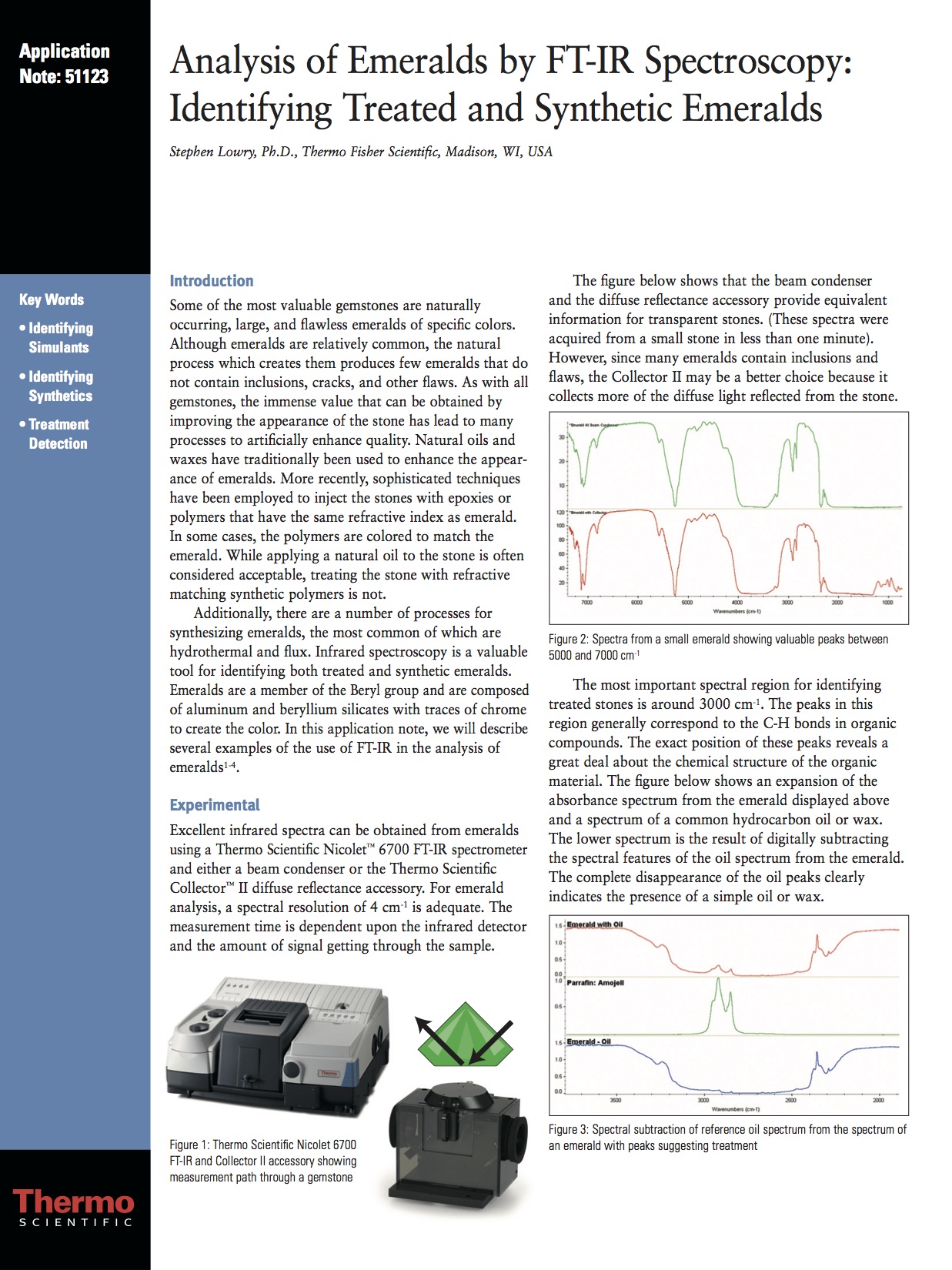
Analysis of emeralds by FT-IR spectroscopy: Identifying treated and synthetic emeralds
Report
Lowry, S. (n.d.) Analysis of emeralds by FT-IR spectroscopy: Identifying treated and synthetic emeralds. 2 pp.
Record No. 3131  |  Sinkankas/Born No.: NIS/NIB  |  RWHL
A technical application note describing the use of Fourier-transform infrared (FTIR) spectroscopy to identify clarity-enhanced and synthetic emeralds. Using a Thermo Scientific Nicolet 6700 FTIR spectrometer equipped with either a beam condenser or Collector II diffuse-reflectance accessory, the author demonstrates how infrared absorption spectra can reveal organic substances introduced into emerald fractures and distinguish certain synthetic growth processes. Particular attention is given to the C–H stretching region near 3000 cm⁻¹, where absorption bands indicate the presence of oils, waxes, epoxies, and polymers. Spectral subtraction and comparison with reference materials permit identification of common hydrocarbon fillers, while aromatic C–H absorptions may indicate synthetic resins, although some natural oils can produce similar features. The article also examines infrared characteristics useful in distinguishing natural from synthetic emeralds. Flux-grown synthetics generally exhibit weak hydroxyl absorption between 3400 and 4000 cm⁻¹, reflecting their low water content, while some hydrothermal synthetics display diagnostic features associated with chloride and ammonium species. Russian hydrothermal emeralds present greater difficulties because their spectra can closely resemble those of natural stones. The author concludes that FTIR spectroscopy provides a rapid, largely nondestructive method for detecting emerald treatments and assisting in natural-versus-synthetic identification, although interpretation requires appropriate reference spectra and recognition of the technique’s limitations.

Sri Lanka—A gemstone buyer’s dream

Journal Article
Coughlin, D.G. (n.d.) Sri Lanka—A gemstone buyer’s dream. Gemmology Canada, Special Edition, pp. 1–16.
Record No. 614  |  Sinkankas/Born No.: NIS/NIB  |  RWHL

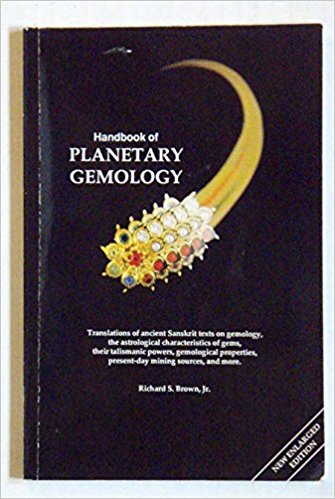
Handbook of Planetary Gemology

Book
Brown, R.S. (n.d., ca. 1988) Handbook of Planetary Gemology. Hong Kong, McKinney International (Publication Concepts), 88 pp.
Record No. 537  |  Sinkankas/Born No.: NIS/NIB  |  RWHL
Sinkankas: This work presents translations of chapters 68–80 of the Sanskrit Garuḍa Purāṇa, which “elaborately describes the supernatural origin of gems and their mineralogical properties,” along with the Graha-cocāra Jyautiṣa, a text that “gives complete information on the astrological characteristics and effects of the principal gemstones” and “explains how auspicious gems help remove obstructions in various areas of life by appeasing planets that are having unfavorable effects.” The first thirteen chapters focus on planetary gemstones, offering summary translations of relevant Garuḍa Purāṇa passages concerning ruby, pearl, yellow sapphire, hessonite, emerald, diamond, cat’s-eye chrysoberyl, blue sapphire, coral, red garnet, jade (including jadeite), rock crystal, and bloodstone. Secondary planetary gemstones, or uparatnas, such as red spinel, moonstone, yellow topaz, citrine, hyacinth, peridot, tsavorite, green tourmaline, white zircon, turquoise, goshenite, amethyst, apatite cat’s-eye, blue spinel, tanzanite, lapis lazuli, and carnelian, are not directly traced to specific textual sources, and some—like tsavorite, goshenite, and tanzanite—were unknown to the ancients, suggesting these may have been included at the authors’ discretion. Each gemstone description includes its properties and modern sources, and although there is no bibliography, a valuable feature of the work is its inclusion of alternative Sanskrit names for the gemstones.

Building a Gemological Library

Gemological books range from general identification manuals and textbooks to specialized works on individual gems, mineralogy, jewelry, treatments, synthesis, history and gem-producing regions.

For a curated selection of particularly useful books, read The Gemologist's Core Library — Classic Books on Gemology, Jewelry and Mineralogy.

About Four Treasures

Four Treasures is Lotus Gemology's freely accessible gemological reference database. Use the full database to search by author, title or keyword and explore literature on gemology, mineralogy, jewelry and related fields. Where available, hyperlinks on titles may lead directly to the full publication.

Search the Complete Four Treasures Database